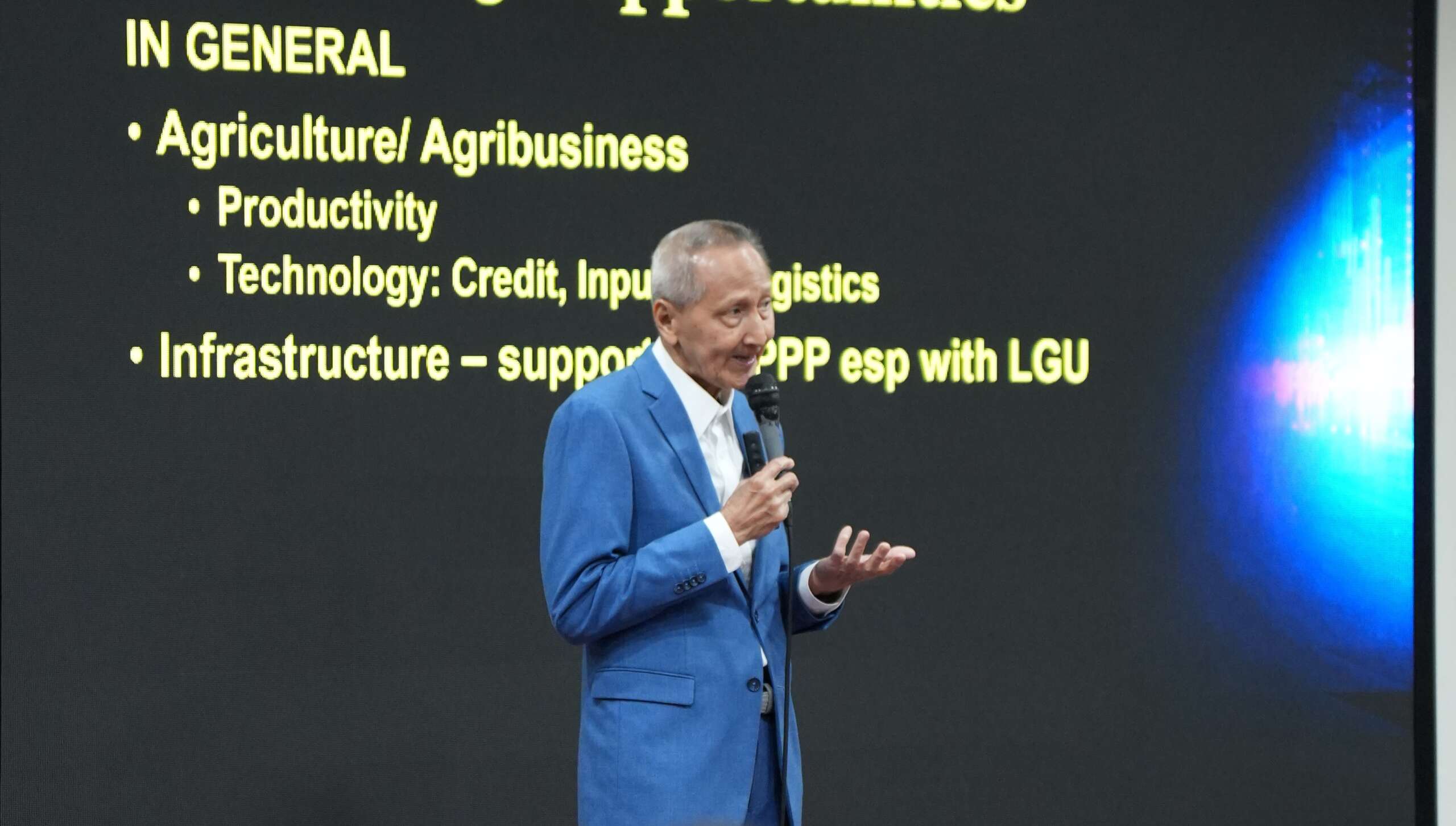
The food that reaches a Filipino consumer’s table has passed through as many as seven to eight hands before getting there, and each transfer comes with a markup—a problem deeply embedded in how Philippine agriculture works, and one that an economist says is compounding the damage of the current oil crisis on food prices.
University of Asia and the Pacific (UA&P) Senior Economist Dr. Victor Abola identified the layers of intermediaries in the Philippine agricultural supply chain as one of the root causes of persistently high food costs, arguing that the problem is not just production but distribution.
“In agriculture, our structure currently requires seven to eight transfers before a product reaches the consumer, with massive markups at each stage,” he said during a forum on macroeconomic prospects held Wednesday, April 29.
The economist pointed to a concrete example of what happens when those layers are removed.
He described how his team helped connect an agricultural cooperative in Novaliches directly to restaurants, hotels, and large supermarkets in Metro Manila through a digital platform, bypassing the chain of middlemen that would ordinarily stand between the farm and the buyer.
The result was immediate and significant. “By bypassing middlemen, they expanded their capacity by 30 percent,” Dr. Abola said.
That figure matters beyond one cooperative. With food carrying the single largest weight in the Philippine consumer price index, the markup burden accumulated across seven to eight transfer points feeds directly into headline inflation—meaning supply chain inefficiency is itself an inflation driver, one that existed long before the current oil shock and is now piling on top of it.
His proposed solution centers on technology and corporate involvement as enablers of scale. The Novaliches model—linking producers directly to institutional buyers through a digital platform—is replicable, he argued, but only if the agricultural sector moves away from its current fragmented setup.
“Productivity is key,” he said. “Corporate involvement can provide the necessary systems and scale.” Without that, small and scattered farms will remain dependent on the intermediary networks that eat into both farmer income and consumer affordability.
The economist also took aim at farm size as part of the problem. With most Philippine farms covering less than a hectare, individual producers lack the volume to negotiate directly with large buyers or invest in logistics and storage.
Dr. Abola called for land consolidation as the practical path forward—not through forced restructuring, but through leasing arrangements that keep farmers on the land while allowing larger operators to bring in better technology and supply chain management.
“This can be done through leasing, allowing farmers to earn rental income while benefiting from better technology, logistics, and less reliance on middlemen,” he said.
He was direct in his challenge to the prevailing agrarian reform orthodoxy. While acknowledging the political weight behind the Comprehensive Agrarian Reform Program (CARP), Dr. Abola argued that land fragmentation—whatever its origins—is now working against the very farmers it was meant to protect.
Small plots mean low productivity, high per-unit costs, and continued dependence on traders and consolidators who capture much of the value that should flow to producers. “What we need now is land consolidation,” he said.