Low-income households in Metro Manila could see their savings erased even under a conservative 5 percent inflation scenario driven by the ongoing oil crisis, an economist warned.
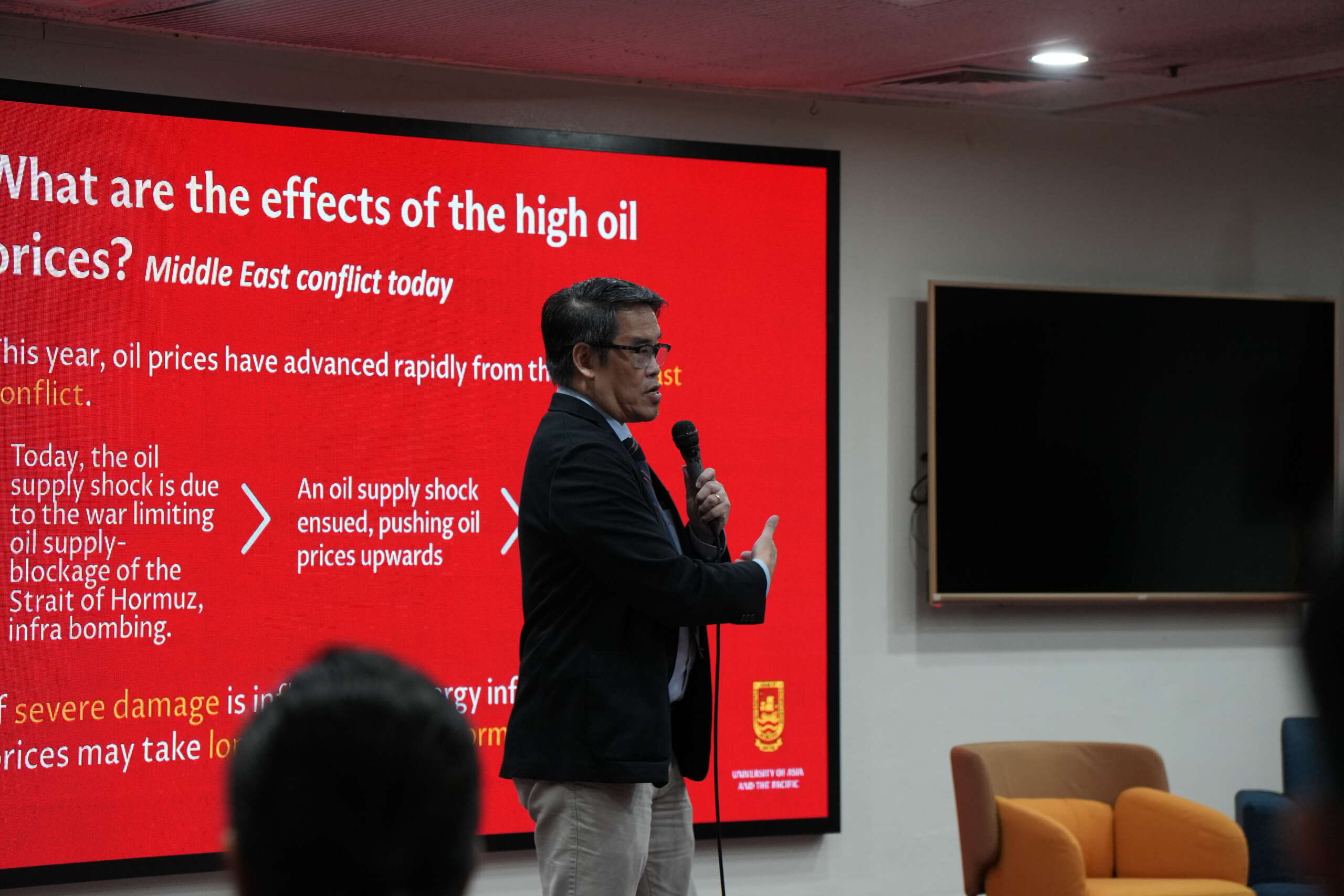
University of Asia and the Pacific (UA&P) School of Economics Dean Dr. Peter Lee U put the numbers plainly during a recent forum on the energy sector on Wednesday, April 29.
A 5 percent rise in overall expenditure—a plausible outcome under current conditions—would add roughly ₱1,000 to the monthly costs of the poorest 10 percent of NCR households, practically wiping out their savings.
“We’re looking at all the numbers, and I thought: well, we still have to consider that behind it, behind this episode, there are real people going to be hit,” he said. “And it’s going to be the poor.”
His data came from the Family Income and Expenditure Survey, which he used to illustrate just how little cushion the lowest-income NCR households are working with. The figures, he said, leave almost no room for error—and the oil crisis is now squeezing from multiple directions at once.
The pain does not stop at the pump. Dr. Lee U walked through how oil price shocks move through the economy—hitting transport first, then food, which carries the single largest weight in the Philippine consumer price index.
“Because transport will probably be the most affected sector, this will mean knock-on effects in terms of inflation first—food—and then eventually through the other sectors,” he said. Low-income households, which spend a disproportionate share of their earnings on both, absorb the double hit hardest.
He pointed to 2008 as a reference, when food inflation peaked at 17 percent—though he was quick to note that a simultaneous rice crisis, triggered when Vietnam and Indonesia halted exports, had inflated that figure.
“I don’t think it’s going to hit that level this time around,” he said, “because that was a rice crisis also combined with an oil crisis.” The more likely path still points to significant food and transport inflation, he said, just not at those historic extremes.
What worries him more is how long the pain might last. Physical damage to energy infrastructure—including a facility in Ras Laffan, Qatar, which he described as the world’s biggest natural gas processing plant, with 20 percent of its capacity knocked out and a three-to-five-year repair window—means this crisis does not have an easy off switch.
“Even if there’s going to be a ceasefire and everything stops tomorrow, the high prices will probably persist a bit until the repairs are able to be done,” he said. That distinguishes the current shock from 2008, when prices eventually fell once global demand cooled.
One group that may come out slightly better are low-income households in Cebu. Not because they earn more—they earn less—but because they spend less too.
“It’s also nice to show how frugal the Cebuanos are—their incomes are less, but their savings are more than for NCR,” Dr. Lee U noted. Under his 5 percent inflation scenario, the lowest-income Cebuano households would still manage to stay marginally in the black, while their NCR counterparts would not.