Senators cannot invoke legislative immunity to evade arrest under an International Criminal Court (ICC) warrant, former Integrated Bar of the Philippines President Atty. Domingo Cayosa said Tuesday, May 12.
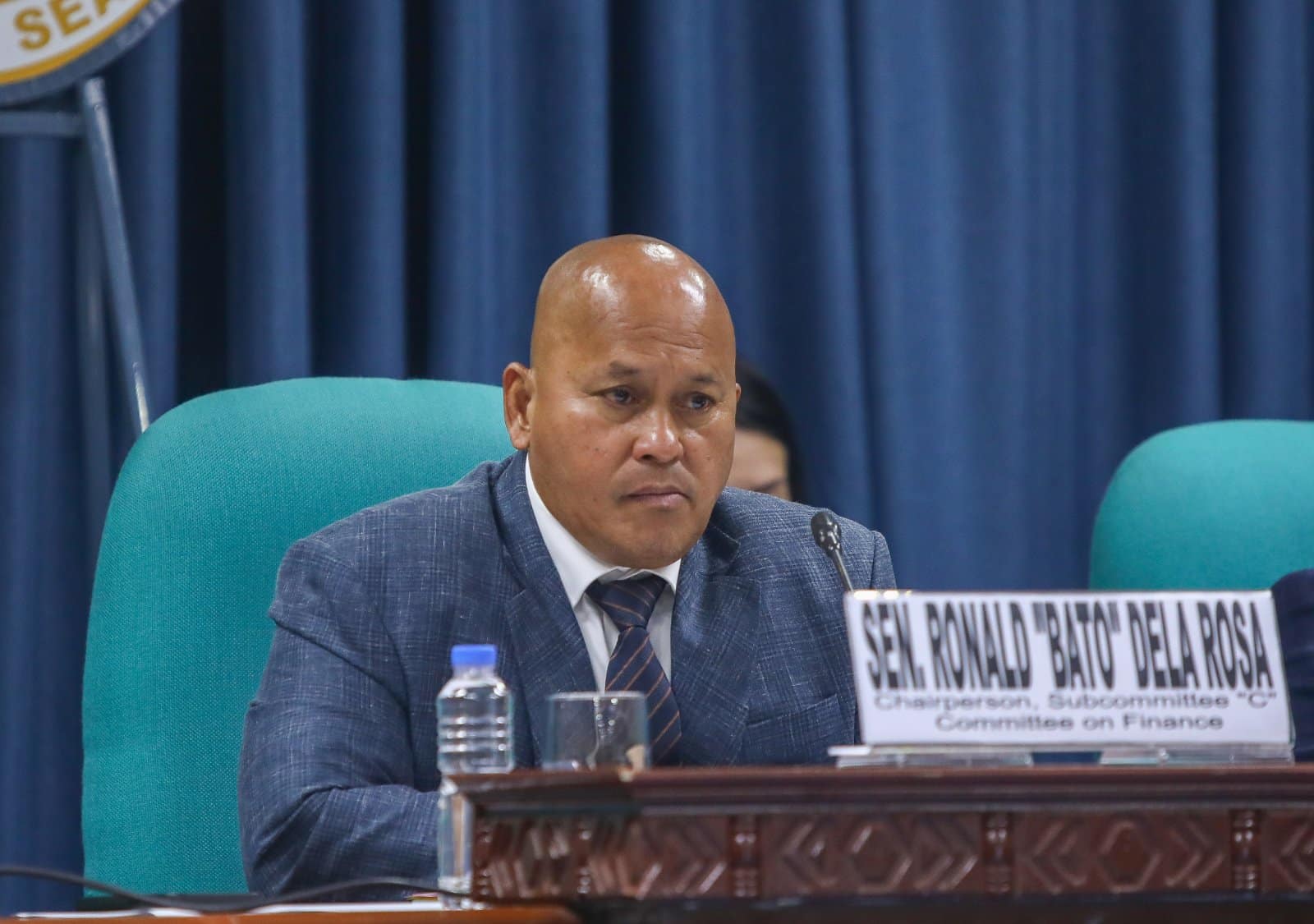
This as Senator Ronald “Bato” dela Rosa remained under the protective custody of the Senate following a standoff with National Bureau of Investigation (NBI) agents who attempted to serve the ICC arrest warrant against him.
Cayosa, interviewed on DZRH News, explained that the constitutional privilege of immunity from arrest enjoyed by members of Congress applies only to offenses carrying a penalty of six years or below.
“Kung may pinapakitang warrant of arrest ang ICC at ang crime ho dito is crime against humanity, ang penalty ho diyan umaabot ng 30 years. So it is clearly beyond the temporary privilege ng isang mambabatas to be immune from arrest while Congress is in session,” he said.
The former IBP president clarified that the immunity is temporary in nature and exists solely to protect the orderliness of legislative sessions, not to shield lawmakers from arrest for serious offenses. “It’s the orderliness of the session na pinoprotektahan ng temporary immunity,” Cayosa said.
Cayosa also addressed the question of whether the ICC warrant could be served inside a government building, stating that neither the Senate nor any government office is exempted from the service of a valid arrest warrant.
“Whether it’s a public or a government building or area, the warrant of arrest has to be served,” he said.
On the Senate’s decision to place dela Rosa under protective custody, Cayosa acknowledged that fellow senators may have acted out of collegiality, but warned that the chamber cannot use its authority to obstruct the lawful enforcement of a warrant. “The Senate cannot coddle a fugitive from justice,” he said.
The former IBP chief further warned that senators who knowingly hinder, impede, or frustrate the service of a warrant of arrest risk violating Presidential Decree 1829, or the obstruction of justice law, which carries the penalty of imprisonment and perpetual disqualification from public office. “I don’t think the honorable senators would want to risk that also,” Cayosa said.
Cayosa also dismantled the argument that the Philippines’ withdrawal from the ICC erases its obligation to cooperate with the court, explaining that the Rome Statute contains a residual obligation provision covering cases that were already under investigation before the withdrawal took effect.
“Kahit na kumalas tayo, may malinaw na probisyon ang Rome Statute na kahit na kumalas yung bansa na unang pumirma dito, yung mga pangyayari, o yung mga procedures o mga kaso na nauna nang tiningnan, inimbestigahan, at dininig bago kumalas ang Republika ng Pilipinas, meron tayong residual obligation to cooperate with the ICC,” he said.
He added that the legal basis for enforcing the ICC warrant is no longer the Rome Statute but Republic Act 9851, the Philippine law on crimes against humanity, which he described as practically a copy of the international treaty and which explicitly allows for the surrender of accused individuals to an international tribunal that has taken cognizance of the case. “Hindi na ho ito international law, local law natin ito,” Cayosa said.
Cayosa noted that dela Rosa and former President Rodrigo Duterte cannot invoke the Rome Statute’s procedural protections—including the provision requiring local court review before surrender—precisely because the Philippines has already withdrawn from the treaty. “Ang ginawa nilang pagkalas became parang nakarma sila at hindi na nila magamit,” he said.
The former IBP president closed by saying that until a court issues a valid temporary restraining order preventing the service of the warrant, it must be enforced, and that no institution has the authority to frustrate it.
“Pwede ‘yang i-question sa mga korte, but that’s the option. But until and unless there’s a validly issued temporary restraining order preventing the service of that warrant of arrest, then it has to be enforced at walang kapangyarihan ang Senado na i-frustrate ‘yan,” Cayosa said.