Singapore urged the United States on Thursday to rethink its latest tariffs imposed on the city-state, saying it was “very disappointed” the decision failed to take the structure of its economy into consideration.
Deputy Prime Minister Gan Kim Yong said at a press briefing on Thursday that the government was also “very surprised” by the US tariff proposal, adding that such a move was not expected from a major trading partner.
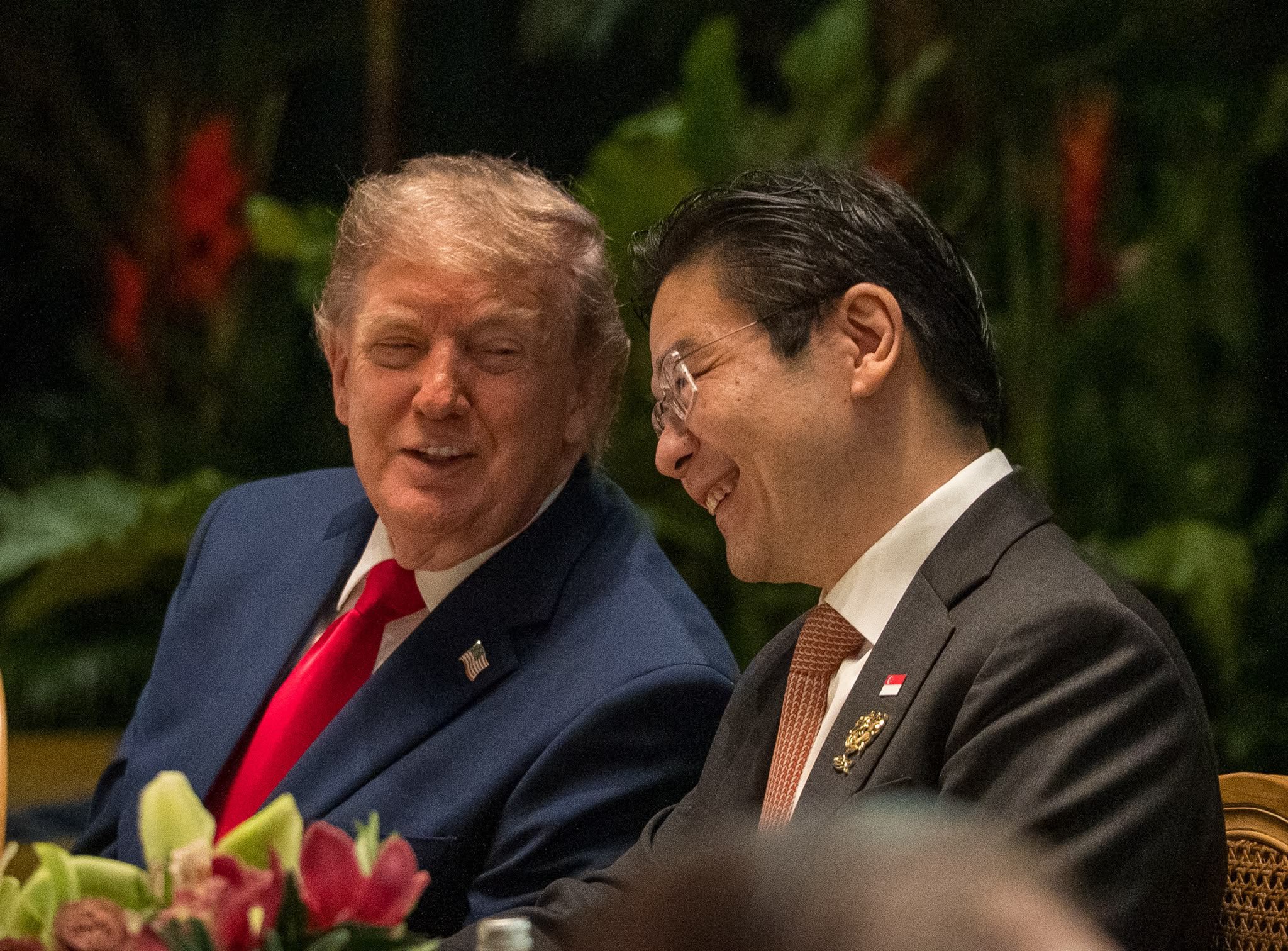
There had been no discussion of any new tariffs when Singapore’s Prime Minister Lawrence Wong met US President Donald Trump at the ASEAN summit, which was held in Manila in November, he added.
Singapore has not yet begun negotiations on a new trade deal, he said, and it already has a free trade agreement with the United States.
If the updated 20% tariff were to be implemented, the effective levy on Singapore’s exports to the US would rise to 10.3% from the previous level of 7.8%, Gan noted.
Earlier on Thursday, the Energy, Trade and Industry Ministry said in a statement that it disagreed with the US Trade Representative’s maximum potential tariff rate of 20% – adjusted to 10% if a reciprocal trade agreement was reached – and would press the USTR to reconsider.
“Singapore disagrees with the USTR’s findings and we are very disappointed with the proposed actions,” it said in unusually strong remarks.
“The USTR’s findings do not take into account the structure of Singapore’s economy. Singapore’s global trade surplus is a reflection of our outward- and market- oriented economy as well as our status as a trusted business and trading hub,” it said.
It stressed that Washington has enjoyed a consistent trade surplus with Singapore for more than two decades under an existing free trade agreement between them.
The new tariffs are the result of an eight-month unfair trade practices investigation into excess industrial capacity, as the administration aims to rebuild President Donald Trump’s tariff leverage after the Supreme Court in February shot down his broad global duties.
Singapore needed to be able to compete globally as a small nation with limited resources and its economic policies do not protect its domestic market or subsidise manufacturing for export, the ministry said.
“We will also continue to engage the USTR constructively, including to urge the USTR to reconsider its proposed actions on Singapore and to explore ways to reduce the tariff,” it said. — Reuters
Photo: @LawrenceWongST/X