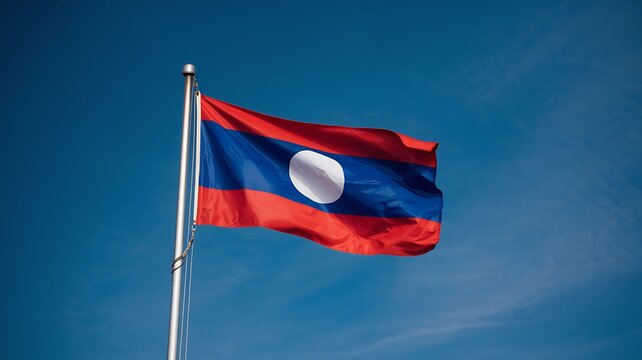
Laos has officially graduated from the United Nations’ (UN) list of Least Developed Countries (LDCs), marking a major milestone in its development following improvements in income, health, and education.
In an announcement on November 24, 2026, the UN recognized the country’s progress, making it the first nation in Southeast Asia and the ninth worldwide to achieve the milestone.
“The next priority is to turn growing investment and trade opportunities into a more diversified economy, productive jobs, and better livelihoods,” the UNCTAD said.
Ahead of its formal graduation, Vientiane hosted the annual Round Table Implementation Meeting on November 19, co-chaired by Deputy Prime Minister and Finance Minister Santiphab Phomvihane and UN Resident Coordinator in Laos Bakhodir Burkhanov.
The meeting brought together government ministers, provincial governors, lawmakers, UN agencies, development partners, and private sector representatives.
Burkhanov said Laos’ graduation should serve as a driving force in achieving its goal of becoming an upper-middle-income country by 2035.
He acknowledged that the target was challenging but achievable if stakeholders accelerated the implementation of the 10th National Socio-Economic Development Plan and the country’s Smooth Transition Strategy.
With the global official development assistance landscape shifting, participants emphasized the need to diversify funding sources and strengthen domestic capacity to sustain the country’s development gains after graduation.
Santiphab, meanwhile, called for stronger coordination, strategic resource mobilization, and continued partnerships to translate development objectives into concrete results.
LAOS STILL FACES ECONOMIC PRESSURES
While its graduation reflects significant progress, UNCTAD’s Vulnerability Profile of Lao PDR and Productive Capacities Index (PCI) highlight several structural challenges that could affect the country’s transition.
In 2024, Laos scored 37.8 on UNCTAD’s PCI, higher than the LDC median of 29.3 and equal to the Asian LDC median, but below the 47.1 median for developing economies outside the LDC group.
Laos outperformed the LDC median in six of the eight categories, particularly in energy, information and communication technology, and structural change. However, private sector development lagged behind all three peer groups, while human capital remained below the median for Asian LDCs and non-LDC developing economies.
After recording 4.8% economic growth in 2025, with average inflation easing to 7.7%, Laos is projected to post slower growth of 4.1% and higher inflation of 8.3% in 2026, according to the World Bank’s October 2026 outlook.
Rising fuel, transportation, and logistics costs, partly linked to the conflict in the Middle East, are also putting pressure on businesses and reducing household purchasing power.
Meanwhile, publicly guaranteed debt was estimated at around 87% of gross domestic product (GDP) in 2025, with interest payments accounting for 16% of public spending that year, compared with just 10% allocated to health and education combined.
To sustain the country’s development momentum, UNCTAD recommends complementing natural resource-based growth with industrial policies and structural reforms.
These include supporting local suppliers, improving access to financing, and helping businesses meet international export standards.
UNCTAD also emphasized that stronger logistics infrastructure and digital tools could help local businesses integrate into regional value chains under the Regional Comprehensive Economic Partnership (RCEP), while improving the country’s resilience to climate-related hazards.