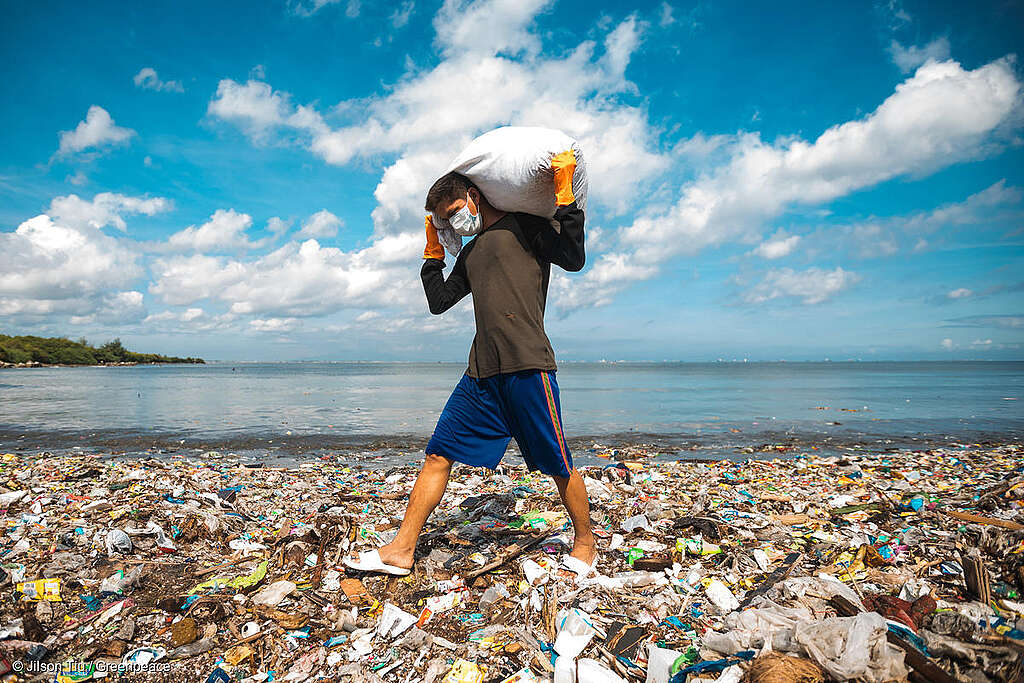
From land to sea and back to the dining table, plastic pollution has made its way into the Filipino kitchen.
A study by researchers from Ateneo de Manila University, published in the Journal of Food Science and Technology, found that microplastics—tiny plastic fragments measuring between 1 micrometer and 5 millimeters—are present in some of the country’s most common staple food products.
The research team, led by Emilyn Espiritu, along with Jiena Lynne Pauco, Renz Bareo, and Edwin Enriquez from the Chemistry and Environmental Science departments, analyzed food items purchased from local wet markets and supermarkets.
Using high-precision Raman microspectroscopy, the team isolated, counted, and identified the chemical composition of microplastics found in staple items such as sea salt, white sugar, brown sugar, rice, and fish sauce (patis).
Results showed that sea salt contained the highest concentration, with 471 microplastic particles per kilogram. This was followed by brown sugar with 67 particles, white sugar with 20, cooked rice with 5, and fish sauce with 3 particles per liter.
Researchers identified manufacturing and processing equipment—including plastic packaging—as the primary sources of contamination.
The presence of polyvinyl chloride (PVC) in sea salt suggests that contamination does not come solely from polluted seawater. Instead, researchers said PVC is likely introduced during manufacturing and refining, where PVC pipes, sheets, and processing tools are commonly used.
Meanwhile, microplastics found in sugar, rice, and fish products were primarily composed of polyethylene terephthalate (PET) and PVC, materials commonly used in food packaging.
The research team emphasized that the findings are not meant to cause alarm, but to inform policy and industry practices.
They recommended that manufacturers—particularly in salt production—limit the use of PVC materials in processing facilities. For other food products, the researchers urged companies to explore non-plastic packaging alternatives to help protect the food supply. — Photo from Greenpeace