The Philippine Institute of Volcanology and Seismology (PHIVOLCS) warned that the accumulated volcanic debris blocking the Mi-isi-Binaan Channel on Mayon Volcano could trigger “life-threatening secondary explosions” at any time due to temperatures reaching as high as 500ºC.
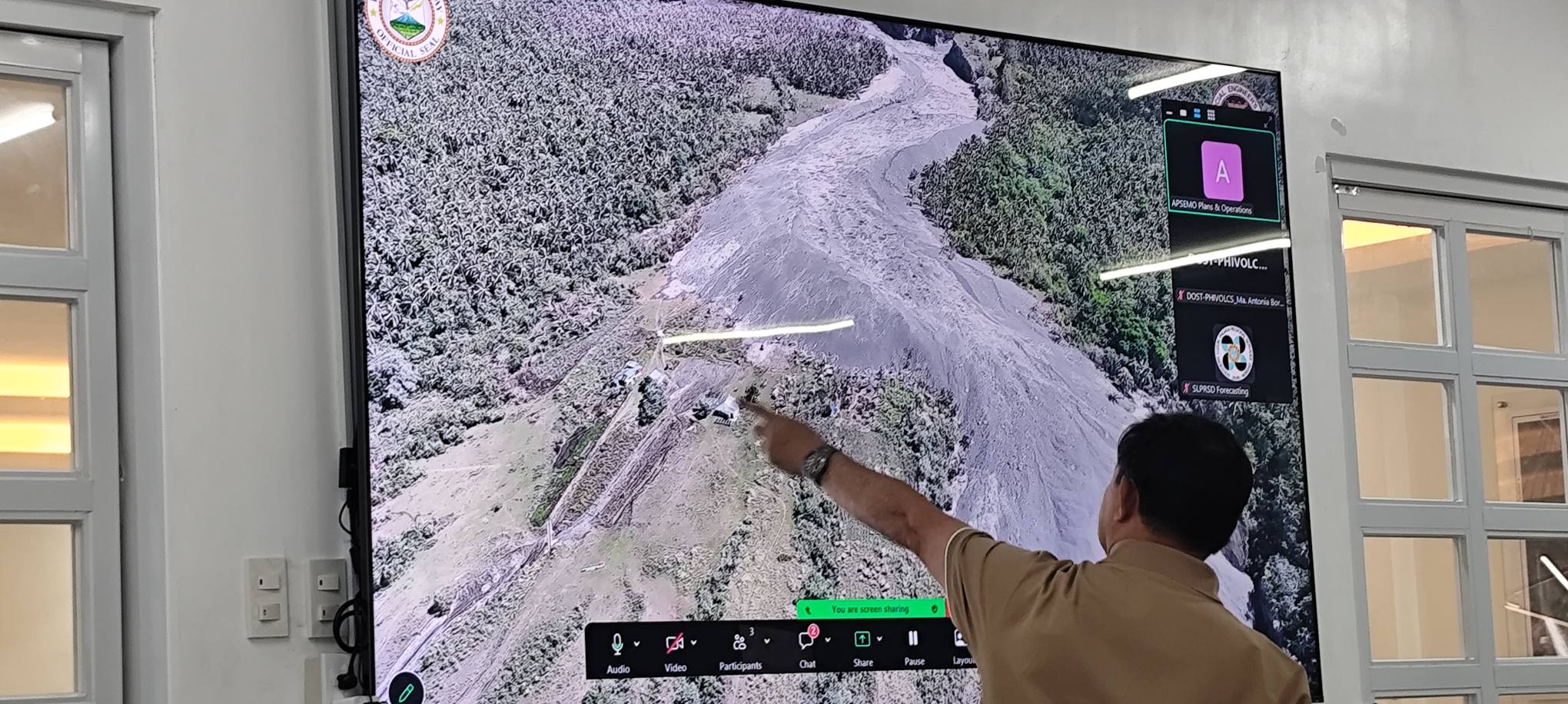
In a report from the state-run Philippine Information Agency in Albay, Doreen Abelinde, resident volcanologist at the PHIVOLCS Mayon Observatory, explained that the pyroclastic density current (PDC), or “uson,” emitted by the volcano on Saturday, May 2, traveled up to 5.4 kilometers from the crater down to the Mi-isi-Binaan River in Daraga.
“Napakainit ng newly erupted PDC deposits kaya’t ‘di pa ito maaaring galawin o alisin sa pamamagitan ng quarrying o desilting,” she said.
In the report, Abelinde further explained that the PDC deposits could divert river flow and trigger lahar during torrential rains, posing danger to residents in Daraga.
In a separate statement, PHIVOLCS said, “New PDC deposits in the Mi-isi-Binaan Channel are actively degassing, have very high-temperature interiors (may exceed 500ºC) and could undergo life-threatening secondary explosions where these are thick and volcanic gases tend to accumulate.”
“Secondary explosions have occurred in thick PDC deposits of the 2018 eruption, and more intensely, in the deposits of the 1991 Pinatubo eruption. Access to these deposits must thus be prohibited because of these reasons, on top of the fact that these are all within the PDZ,” it added.
PHIVOLCS advised barangay officials in communities near Mayon Volcano to immediately inform authorities if they observe unusual changes in water flow in their areas.
State volcanologists also warned that lahar could pass through newly formed channels after other areas became blocked by volcanic debris.
Abelinde reminded the public to avoid the six-kilometer permanent danger zone (PDZ) for their safety.
For now, PHIVOLCS said there are no indications that Mayon Volcano’s status will be raised to Alert Level 4 based on current volcanic data and monitoring parameters. — Photo from PIA Albay