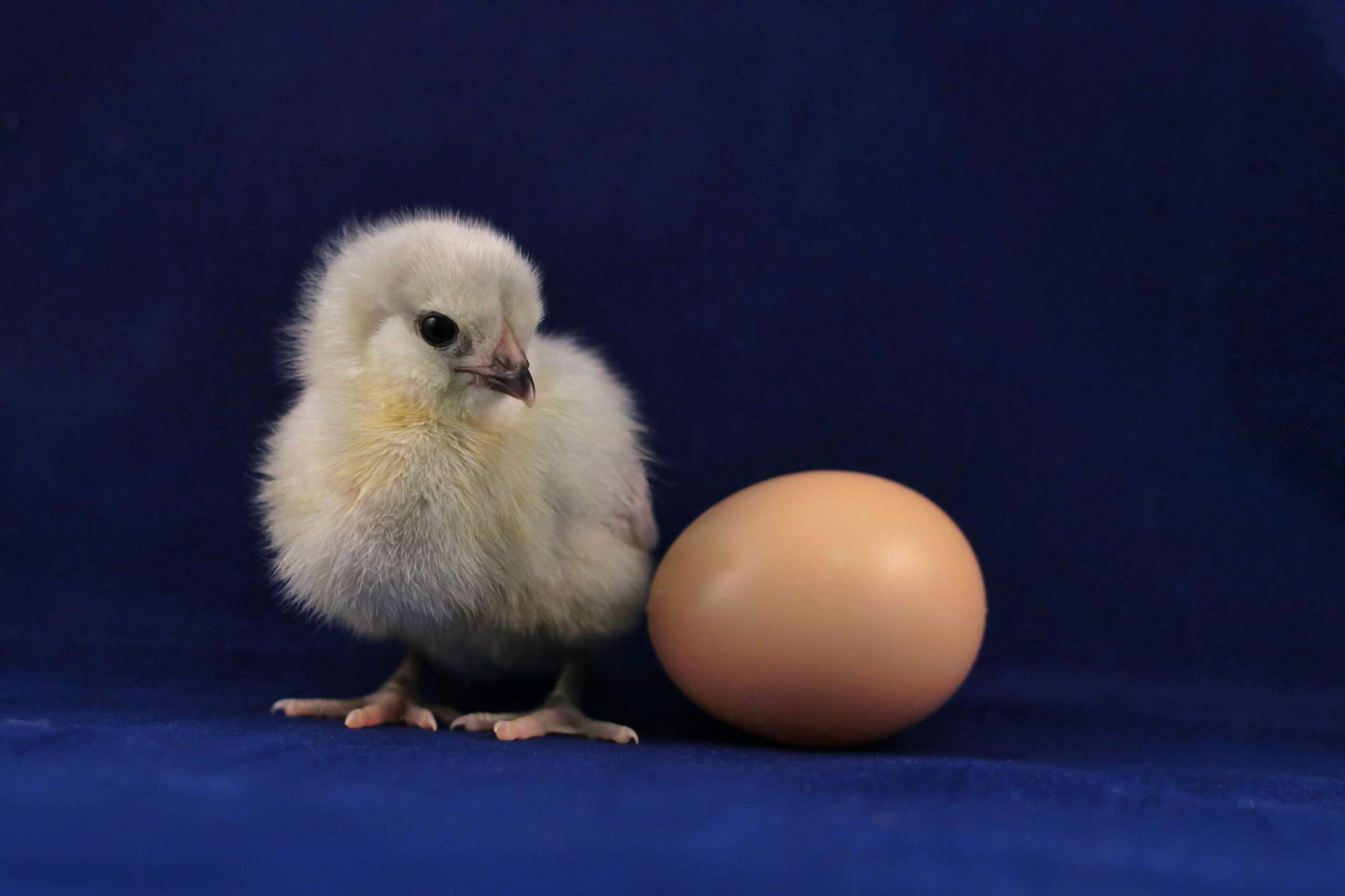
The age-old question of which came first, the chicken or the egg, has long been a subject of debate. However, a science explainer published by the Australian Academy of Science offers an evolutionary answer: the egg came first.
The experts explained that when viewed through the broader history of animal reproduction, the answer becomes clear.
Written by Emma Berthold and reviewed by experts in evolutionary biology and paleontology, the article examines the question through the lens of evolutionary science rather than circular logic.
In biological terms, an egg is a membrane-bound vessel that houses a developing embryo until it is capable of surviving on its own.
EGGS PRECEDE CHICKENS BY HUNDREDS OF MILLIONS OF YEARS
As explained in the article, eggs have existed throughout the animal kingdom long before modern birds appeared.
Early aquatic animals relied on water to prevent their eggs from drying out. This changed with the evolution of the amniotic egg, which features external membranes — the chorion, amnion, and allantois — as well as a protective outer shell. These structures created a self-contained life-support system that allowed animals to reproduce on land.
The article further explained that although soft egg membranes leave behind a limited fossil record, estimates place the emergence of the common ancestors of amniotes and tetrapods between 340 million and 370 million years ago. These ancient lineages eventually gave rise to reptiles, mammals, and birds.
By contrast, domestic chickens are believed to have descended from red junglefowl native to parts of South and Southeast Asia.
Based on modeling evidence and DNA analysis, domestic chickens may have first appeared around 58,000 years ago, while archaeological evidence points to their domestication around 10,000 years ago.
Genetic clues, including yellow leg coloration linked to the grey junglefowl, also point to interspecies hybridization during the evolution of domestic chickens.
THE CHICKEN-AND-EGG DEBATE
According to evolutionary principles, the first true chicken would have emerged from genetic mutations in a zygote formed when two “proto-chickens” mated. These mutations would then have been passed on to every cell in the developing embryo inside an egg.
Meanwhile, arguments favoring the chicken have focused on how chicken eggshells are formed, particularly the role of ovocleidin-17, a protein found in chicken ovaries.
The protein helps rapidly deposit calcium carbonate crystals, allowing a hen to produce an eggshell in roughly 24 hours.
Without this protein, the argument goes, a chicken egg could not be formed.
“At the end of the day, the question is something of a false dichotomy. Eggs certainly came before chickens, but chicken eggs did not—you can’t have one without the other. However, if we absolutely had to pick a side, based on the evolutionary evidence, we’re on Team Egg,” the article concluded.