


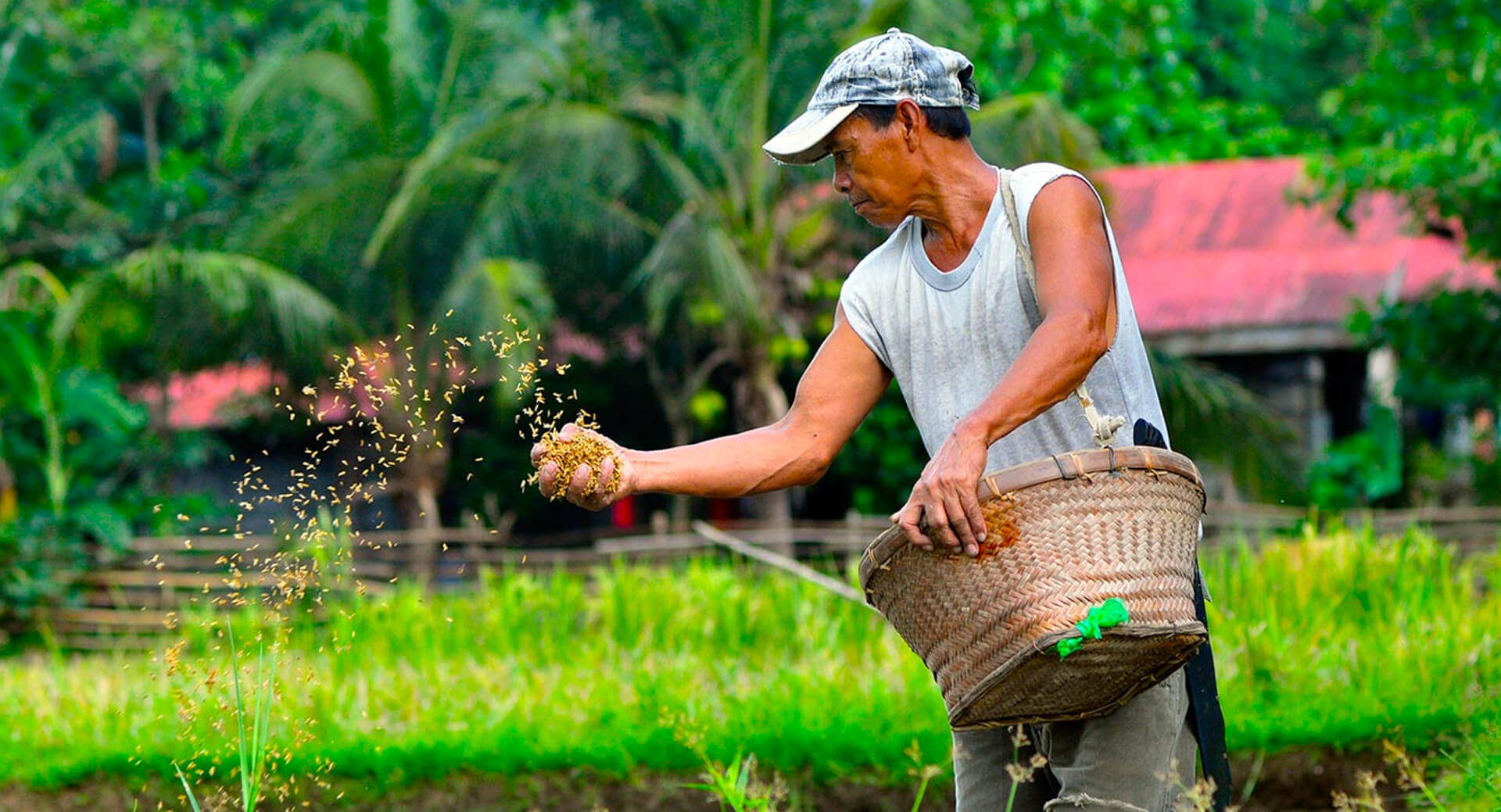
A war thousands of kilometers away is beginning to ripple through something as basic as the Filipino dining table. The conflict involving Iran has pushed oil prices higher, disrupted key shipping routes, and strained global supply chains—especially for fertilizer, a critical input for food production.
Farmers are already feeling the pressure. Fertilizer prices have surged by as much as 30% to 40%, while shipments through the Strait of Hormuz—a route that carries a significant share of global fertilizer trade—have been disrupted. The result is a familiar warning: higher costs today can mean lower food production tomorrow.
Even major agricultural economies are scrambling. In North America, financial aid is being rolled out to support farmers facing rising input costs. Analysts warn that if fertilizer becomes too expensive or scarce, farmers may cut usage, leading to lower yields and tighter food supply in the months ahead.
That same dynamic is now confronting the Philippines, even if the impact is not yet fully visible. According to Agriculture Undersecretary Asis Perez, the country is currently buffered by timing. The crisis coincided with harvest season, allowing domestic production to sustain supply for now.
“Matatag ‘yung supply dahil nga tumama naman itong crisis na ito sa panahon ng anihan, ‘no. Nag-aani tayo eh. Nag-aani tayo ng palay kaya ‘yung ibang mga lugar ay patapos na, ‘yung iba ay nag-uumpisa pa lang. Eh kami nagtapos na eh. Marami tayong supply,” Perez said on DZRH News program Special on Saturday.
He added that rice supply remains sufficient in the near term, saying, “Meron tayong sapat na supply ng palay, and therefore ‘yung bigas natin, hindi tayo mamomroblema in the next 2 to 3 weeks, ah, 2 to 3 months ‘no.”
But that stability is not guaranteed. Costs are already rising on the ground. Fertilizer prices have increased by around ₱300 per sack in some areas, while fuel costs—essential for both farming and transport—have nearly doubled, adding pressure to production.
More importantly, Perez warned that the Philippines cannot rely on imports if the crisis deepens. “Hindi din tayo pwedeng mag-rely ngayon sa ibang bansa dahil nangyari na ‘yan, halimbawa, two years ago o three years ago, ‘yung India nag-ban ng export ng rice,” he said.
He drove the point further: “Gustuhin man natin, malamang wala tayong makukuha, tama? Kasi bawat bansa, aalalahanin niya ‘yung sarili niyang bayan.”
This is where an old lesson becomes clearer. When global disruptions hit, food security shifts closer to home. When countries start prioritizing their own supply, those that rely heavily on imports are left exposed. The Philippines, like many developing economies, faces that reality.
And yet, for now, the system is holding. Not because global conditions are stable, but because local production continues. Farmers are still planting. Fisherfolk are still going out to sea. Harvests are still coming in.
The Iran war has not yet emptied our shelves. But it has exposed something more important: that food security cannot be fully outsourced.
If the Philippines is safe today, it is because its farmers are still there, still working, and still holding the line.




Is Trillanes undermining Leni, Bam to make way for Risa?