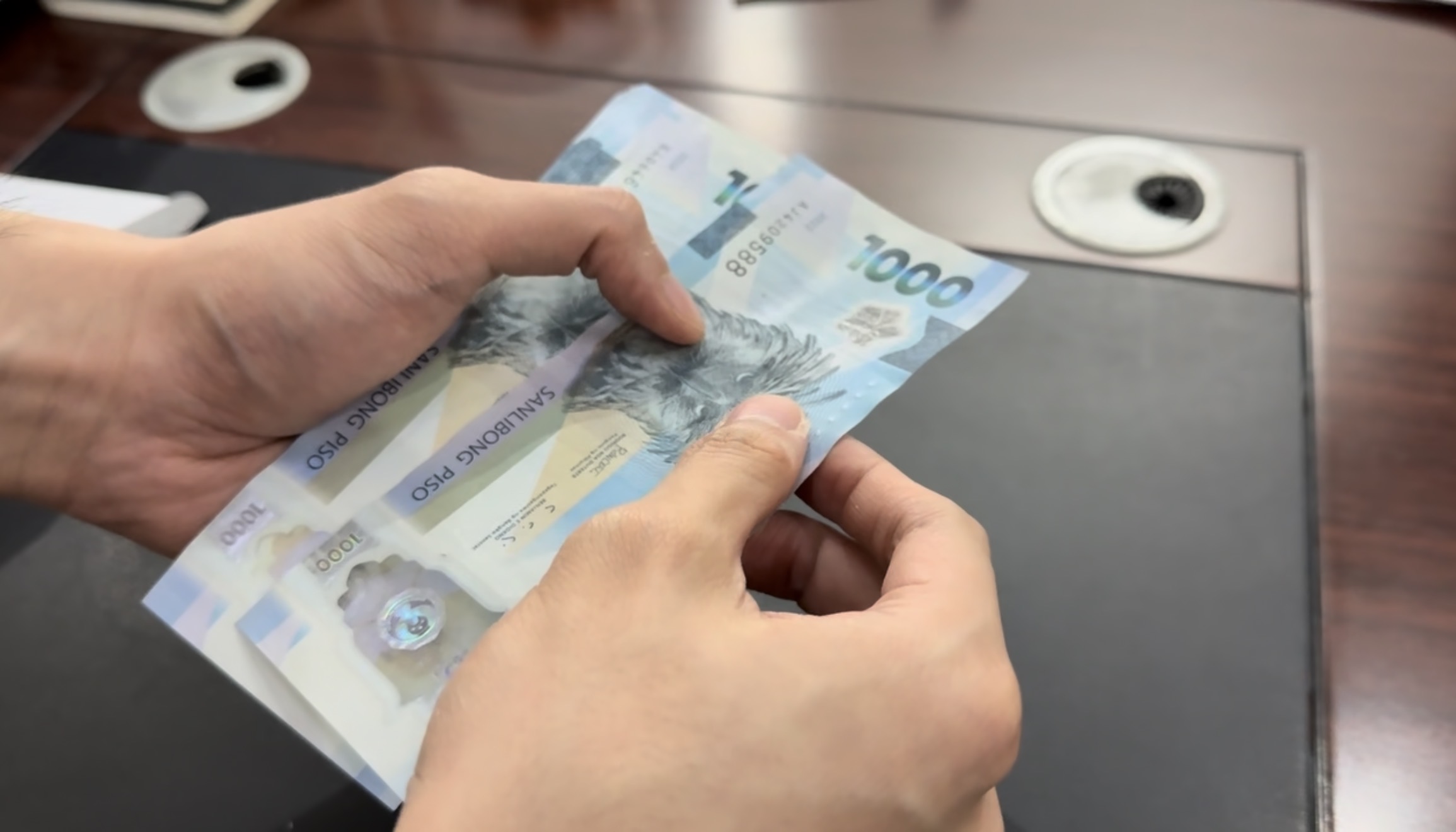
The Philippine Peso has slipped to ₱60.1 against the US dollar, its weakest level on record, raising a question many Filipinos are now asking: is this good or bad for the economy?
The short answer, according to former Finance Secretary Gary Teves, is that it depends—but for most Filipinos, the immediate impact is negative.
“Just like any event, there are winners and losers when the peso depreciates,” Teves told The Situation Report.
The losers
A weaker Peso makes imported goods more expensive, and the Philippines relies heavily on imports, particularly for fuel and key food staples like rice and corn. Because these are paid for in dollars, any depreciation directly feeds into higher domestic prices.
This comes at a sensitive time, as global oil prices are already under pressure due to the ongoing conflict in the Middle East.
Speaking to The Situation Report, Teves warned that the combination of a weak peso and elevated oil prices could amplify inflation across multiple sectors.
“Peso depreciation increases the prices that Filipino consumers have to pay because the Philippines is a net importer and most imports are paid for in US dollars,” Teves said.
The impact spreads quickly: higher fuel costs feed into food production, transport, logistics, electricity, and fertilizer, driving up the price of basic goods. Inflation could climb to around 5% in the coming months, exceeding the government’s 2% to 4% target range.
For households, this means reduced purchasing power. As prices rise, consumers are forced to cut back on spending, which in turn slows overall economic activity.
The risks extend beyond prices. The Philippines sources around 90% of its oil from abroad, much of it from the Middle East, leaving it vulnerable to supply disruptions. Current reserves are estimated to cover less than 60 days of consumption, providing only a limited buffer.
“The continued closure of the Strait of Hormuz, a vital route where 20% of global oil production passes, would restrict supply of oil and push petroleum prices higher,” the former finance chief warned.
There is also a potential impact on overseas Filipino workers, with more than two million based in the Middle East. A prolonged conflict could lead to job losses or slower economic activity in host countries, reducing remittances that many Filipino families depend on.
The winners(?)
Still, a weaker peso is not entirely bad news. Some sectors stand to benefit, particularly exporters, business process outsourcing firms, and tourism, all of which earn in dollars and convert their revenues into more pesos.
“Peso depreciation also increases the demand for Philippine goods since these become relatively cheaper for the international market,” Teves said.
Remittance-receiving households may also see a short-term boost, as each dollar sent home translates to more pesos, potentially supporting consumption.
For policymakers, the challenge is managing the trade-offs. Teves said there is no ideal exchange rate to target, but stressed the importance of avoiding sharp and volatile swings that can disrupt planning for businesses and households alike.
The outlook remains uncertain. The peso’s drop reflects global tensions driving investors to the dollar, but the real impact will hinge on how long the crisis drags on, and how effectively the government contains the resulting surge in fuel and food prices.