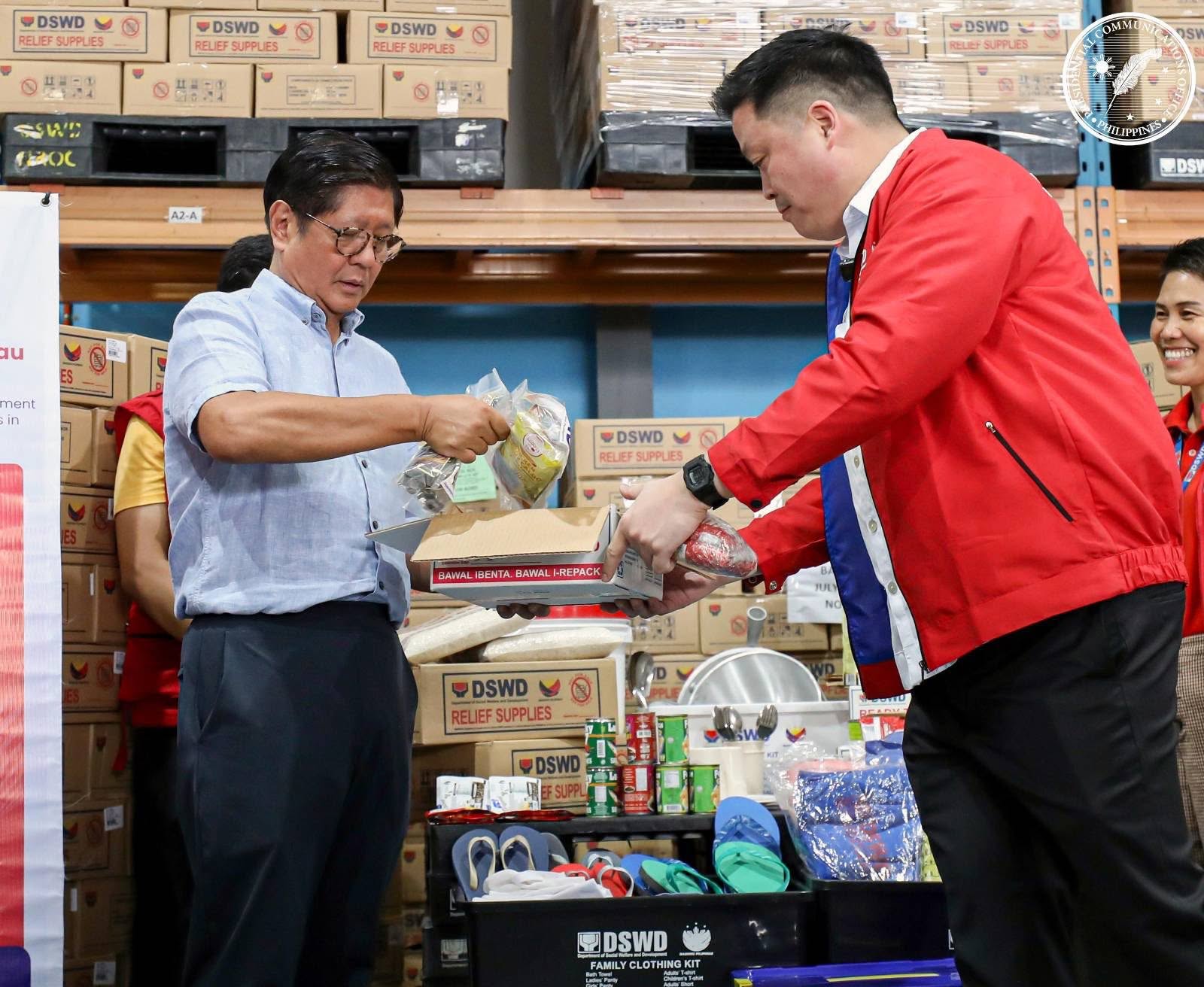
The Marcos administration has built the largest disaster food pack stockpile in Philippine history, with 4.9 million family food packs now pre-positioned in 1,010 warehouses nationwide, up from only about 200,000 when the administration began, Social Welfare Secretary Rex Gatchalian said Saturday.
Gatchalian made the disclosure in an interview on DZRH News program Special on Saturday on July 25, as part of the DZRH SONA 2026 Series, describing the transformation as a complete overhaul of how the country prepares for disasters.
“Nung nagsimula ang Marcos administration, ang national stockpile o ‘yung inimbak na pagkain na food packs, hindi lumalagpas ng kalahating milyon, nasa mga 200,000 lang. Ngayon, 4.9 million na family food packs ang nakakalat sa buong bansa sa isang libo na warehouse,” Gatchalian said.
He said the shift was driven by a direct order from the President: prepare 365 days a year, not only when a disaster is already happening.
“Ang instruction ng Pangulo: Siguraduhin mo 365 days prepared tayo, hindi ‘yung dati-rating pag-iisip na nandiyan na ang bagyo, tsaka lang magrerepack,” Gatchalian said.
The stockpile is sustained by two fully automated supply chains, one in Manila and one in Cebu, that together produce 22,000 family food packs per day—a sharp contrast to the manual repacking system the administration inherited.
Undersecretary Diana Rose Cajipe said the Department of Social Welfare and Development (DSWD) has also grown its warehouse network from more than 900 to 1,010 facilities, strategically positioned across the country including in island communities and hard-to-reach areas.
A third automated repacking center is being built in Butuan with an approved budget, which will further expand the production and distribution capacity of the DSWD’s disaster supply chain.
Gatchalian said the real-world impact of this transformation was seen after the June 8 magnitude 7.8 Mindanao earthquake, when the DSWD distributed close to 1 million food packs to General Santos City, Sarangani, and Davao Occidental in just six weeks.
“Mula nagsimula ang lindol six weeks ago, hanggang ngayon kulang-kulang isang milyon na food packs na ang napamahagi natin sa General Santos City alone, sa Sarangani, at tsaka sa Davao Occidental. 1 million in six weeks in three areas,” Gatchalian said.
He said the speed of response was only possible because the food packs were already pre-positioned before the earthquake struck, and did not require emergency repacking after the fact.
Gatchalian also highlighted the response to the two municipalities in Davao Occidental closest to the epicenter, including Balut Island and Jose Abad Santos, where the DSWD had around 7,000 family food packs pre-positioned before roads were cut and boat travel was suspended due to tsunami alerts.
“Nung naputol ‘yung mga kalsada dahil sa lindol, nung walang bumabyaheng bangka dahil sa tsunami alert, ang tinawag na lang namin sa mga mayor: Gamitin niyo ‘yung supply diyan, use as you want,” Gatchalian said.
He said the Buong Bansa Handa program, which drives the pre-positioning effort, taps both government and private sector supply chains to ensure continuous replenishment of stockpiles.
“Makakatulog ang bawat pamilyang Pilipino na kung ano man ang sakunang darating, una kami dahil nandun na ‘yung goods natin,” Gatchalian said.