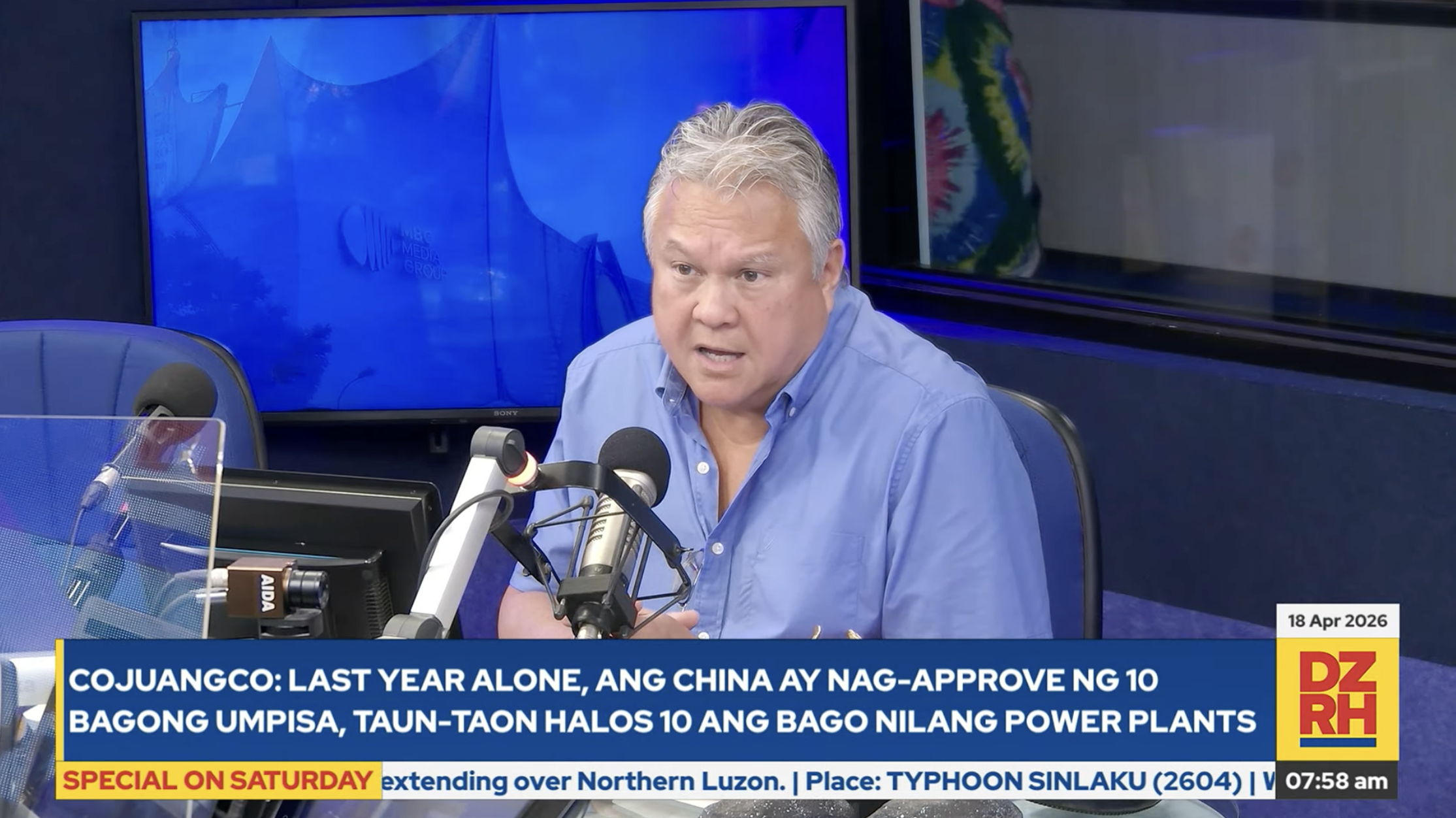
The law creating the Philippine Atomic Energy Regulatory Authority has been signed, but the government has yet to appoint the officials tasked with implementing it — and the deadline for issuing its implementing rules has already lapsed, Pangasinan 2nd District Rep. Mark Cojuangco said Saturday, April 18.
Cojuangco, chairman of the House Special Committee on Nuclear Energy and principal author of the law, said the position of PhilATOM Director General and four Deputy Directors General remain vacant.
Under the law, these officials are specifically mandated to draft the implementing rules and regulations — a responsibility that cannot be delegated to the Philippine Nuclear Research Institute (PNRI). “Hindi pwedeng ipasa yung responsibilidad sa PNRI,” he warned on DZRH News program “Special on Saturday.”
The IRR itself is already overdue. “Within 180 days after the enactment of the law, dapat nandiyan na po yung IRR. In fact, labag na po tayo sa batas,” Cojuangco said.
The law, Republic Act 12305 or the Philippine Nuclear Energy Safety Act, was signed by President Ferdinand Marcos Jr. and establishes PhilATOM as an independent regulatory body separate from the government’s nuclear research and promotion functions.
That separation was a central purpose of the legislation. Under the previous structure, the PNRI served as both promoter and regulator of nuclear technology in the country — a conflict of interest that Cojuangco said drew criticism from international agencies.
“Dapat yung enforcer ng compliance, hiwalay. Tapos ang ahensyang yan, under sa department, dapat yan independent. Fiscally independent, politically independent, para hindi ma-pressure,” he said.
The law prescribes specific qualifications for PhilATOM’s leadership, requiring most of its top officials to hold backgrounds in engineering, physics, or chemistry. Only one of the deputy positions may be filled by a lawyer. Cojuangco said the vetting process must be taken seriously given the technical nature of the agency’s mandate.
Once constituted, PhilATOM will serve as the independent regulator for all nuclear facilities in the Philippines — a role that the International Atomic Energy Agency requires of any country pursuing commercial nuclear power.
The agency will adopt the regulatory standards of the vendor country supplying the nuclear technology, with the US Nuclear Regulatory Commission serving as the baseline for any plants derived from American design. “Kung ano ang sinasabi ng regulator doon sa bansang yun, yun po ang ating ia-adopt,” Cojuangco said.
The delays compound what Cojuangco described as a broader pattern of bureaucratic obstruction slowing the country’s nuclear ambitions. A feasibility study agreement with Korea Hydro & Nuclear Power on the Bataan Nuclear Power Plant, formalized during a Korean presidential state visit, has similarly stalled.
“Mahigit isang taon na naman ang lumipas, hindi pa rin na-implement dahil ang daming technicalities na wala namang koneksyon doon sa project,” he said.
Two additional bills remain pending in Congress that Cojuangco said are necessary to complete the nuclear legislative framework: the Nuclear Liability Bill, which has passed committee in the House, and the Nuclear Integration Bill, which has only been read on first reading and has no Senate counterpart.
Until the appointments are made, the IRR issued, and the remaining legislation passed, he warned, the country’s nuclear program exists on paper only.