The Government Service Insurance System (GSIS) is offering solar panel loans of up to ₱500,000 at a 5% annual interest rate, payable over five years, as rising electricity costs driven by the ongoing US-Iran conflict push more Filipinos to consider renewable energy alternatives.
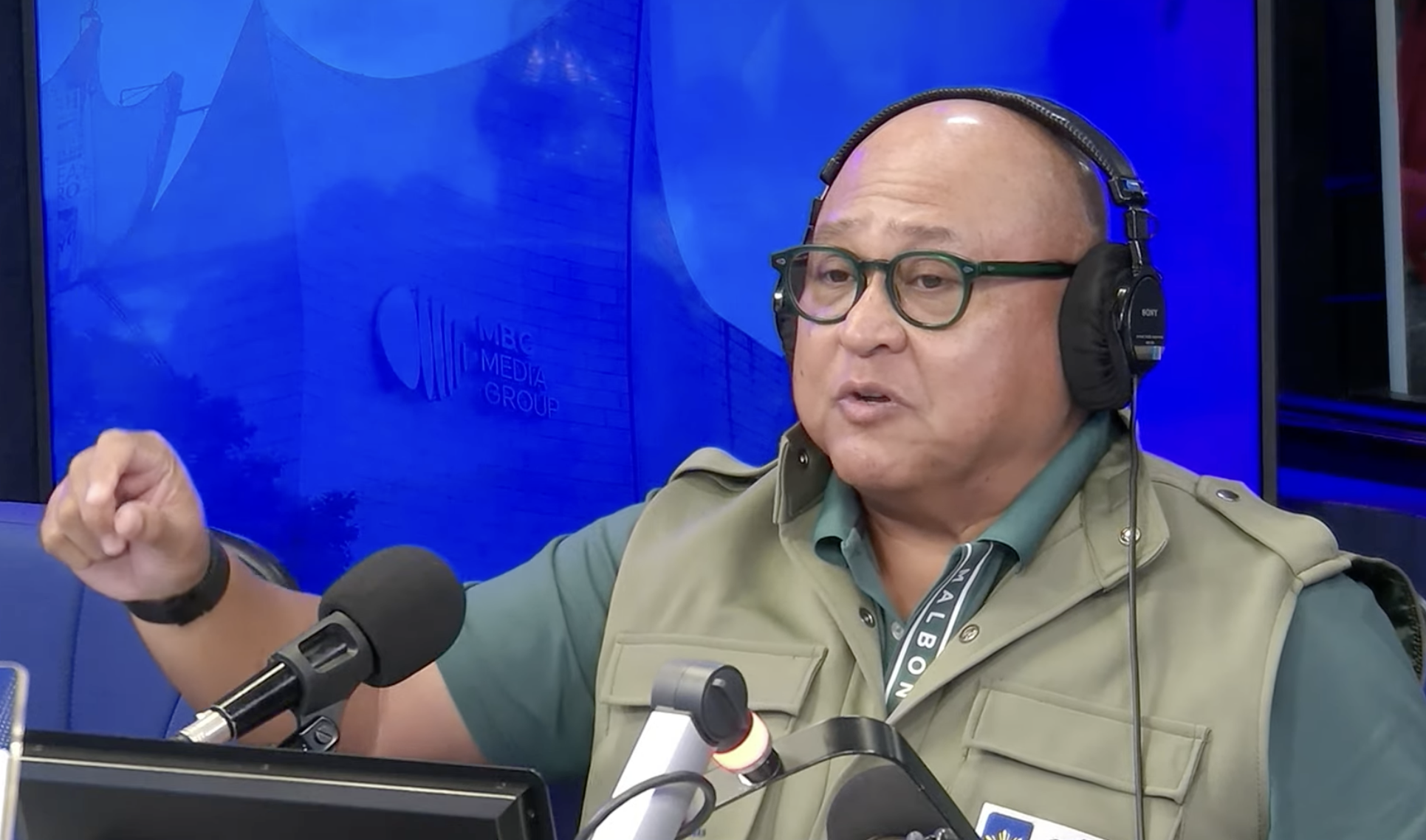
GSIS President and CEO Jose Arnulfo “Wick” Veloso announced the program on DZRH’s Special on Saturday, saying the escalating impact of Middle East tensions on global oil prices made the launch urgent.
“As we see that the price of power is directly impacted with the war in the Middle East, agaran pong gumawa ng programa ang GSIS na magkaroon ng solar loan para po sa ating mga miyembro,” Veloso said on April 25.
The loan is open to a combined 2.7 million beneficiaries — 2.1 million active GSIS members and 675,000 pensioners — across Luzon, Visayas, and Mindanao, making it one of the broadest government-backed solar financing programs in the country.
Veloso emphasized that retirees are explicitly included under the same terms as active government employees, a detail he said is important given the number of pensioner households still running on grid power.
At the maximum loan amount of ₱500,000, a borrower’s monthly amortization comes to ₱10,400 over five years. Veloso noted, however, that members do not need to borrow the full amount.
“Pwede ka namang magsabi, ‘Pwede ba kahit itong 200,000?'” he said, adding that the loan amount can be calibrated to the borrower’s actual needs and financial capacity.
To put the loan ceiling in practical terms, Veloso said ₱500,000 worth of solar installation translates to approximately 6 kilowatts of generating capacity — enough to run a three-bedroom, 175-square-meter home with one air conditioning unit, three electric fans, a refrigerator, and a television set.
A smaller 3-kilowatt system, costing roughly half that amount, is sufficient to power the basic appliances of a typical household.
Veloso said the program was partly inspired by the agency’s experience installing solar panels in remote Last Mile Schools, where the technology proved transformative for communities with no access to the power grid. Seeing the impact firsthand, he said, pushed GSIS to scale the concept into a formal loan product for its members.
Applying for the solar loan requires only one document: a quotation from a supplier and installer. Members who have already had solar panels installed may also apply, provided they can submit a receipt from 2025 or 2026 for evaluation. GSIS said it has not accredited specific suppliers, giving borrowers the freedom to choose their own installer.
Once the quotation is submitted, Veloso said GSIS processes the application within three days entirely through mobile phone, with the solar loan following the same fully paperless workflow as its other financial products. “100% mobile phone,” Veloso said. “You don’t have to fall in line.”
The program is accessible through GSIS offices, satellite offices, and the agency’s mobile application, with Veloso confirming a presence in all regions including island communities such as Catanduanes, Polillo, and Basilan.
The GSIS President said the initiative is consistent with the Marcos administration’s thrust to expand renewable energy adoption and to bring government services directly to members rather than requiring them to travel to central offices.
Veloso framed the solar loan as both a financial relief measure and a long-term investment for government workers and retirees facing mounting electricity bills during the summer months, with temperatures in parts of Luzon reaching as high as 46 degrees Celsius.
He cited the case of a member in Negros Occidental whose household, including a special child, has benefited significantly from having a fully air-conditioned, solar-powered home. “It changes the attitude of the child,” Veloso said. “And it helps a lot.”