Coral records suggest what scientists have long feared: climate change may be driving the El Niño–Southern Oscillation (ENSO) to levels of intensity not seen in the past millennium.
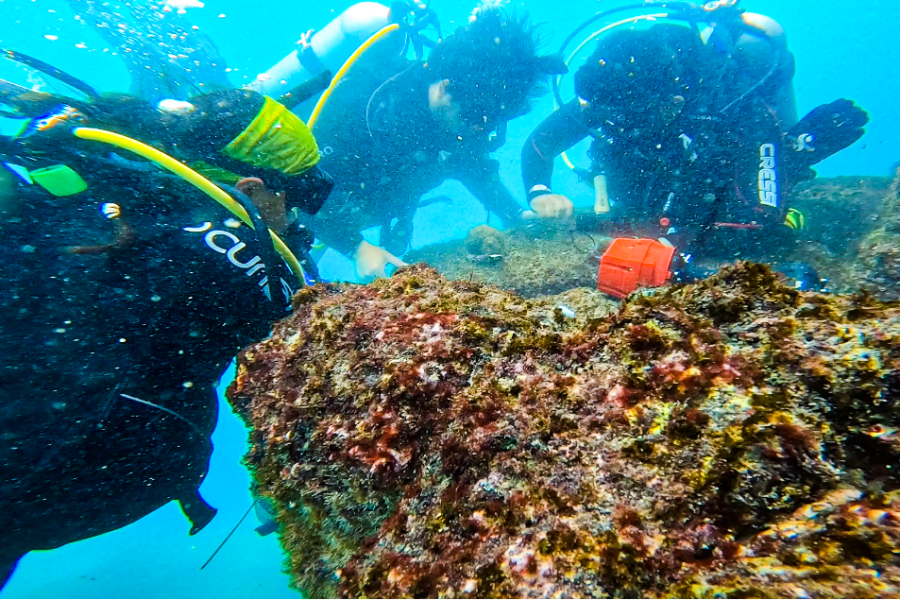
A team of researchers from the University of Michigan traveled to the Galápagos Islands to study fossilized corals—natural archives that preserve long-term climate data.
The study aims to address gaps in predicting how a warming planet affects El Niño. Researchers noted that modern ocean temperature records span only about 75 years, which is insufficient to establish long-term trends.
Located in the eastern equatorial Pacific—the epicenter of El Niño activity—the Galápagos Islands host a rich collection of both living and ancient corals.
Scientists explained that corals grow about one to two centimeters per year, with their skeletons capturing chemical signatures of surrounding seawater in distinct, chronological layers.
By extracting core samples from 29 fossil corals at millimeter-scale intervals, researchers reconstructed a highly detailed 1,000-year record of sea surface temperatures.
They analyzed key geochemical indicators, including strontium levels—which vary with ocean temperature—and oxygen isotopes, which provide independent measurements of past seawater conditions.
The findings, published in the journal Science, point to significant climate shifts.
The study showed that ENSO-related temperature swings remained relatively stable and smaller from the year 1000 through the pre-industrial period, around 1850.
However, coral records indicate that El Niño variability is now 36% greater than pre-industrial levels, with a further 16% increase over just the past 40 years—suggesting a rapid acceleration in intensity.
“There’s something about this important source of climate extremes that has already changed in recent decades,” said Kim Cobb of Brown University, who was not involved in the study, in an interview with Science.
While the study does not directly prove that climate change is the cause, researchers argue that human-driven global warming is the most likely explanation for the observed changes.
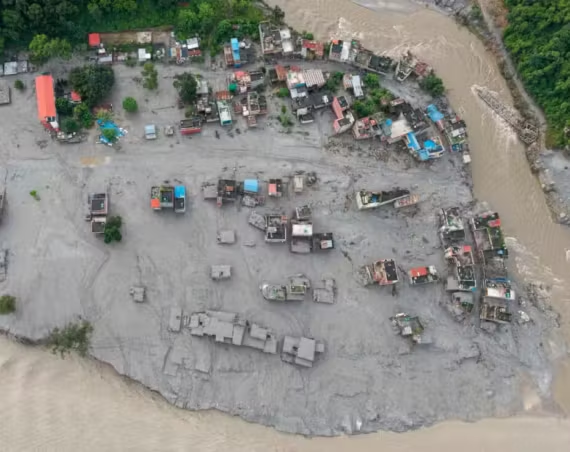
The findings also serve as a warning. More intense El Niño events could trigger severe impacts on land, including catastrophic floods and intensified wildfires, while also threatening marine ecosystems.
Scientists warn that stronger El Niño events act as “angry outbursts” in the ocean.
“The impact of more frequent and extreme El Niño events, superimposed on background ocean warming, has been particularly devastating to coral reef ecosystems in recent decades, and will continue to wreak changes upon marine ecosystems more broadly,” the researchers said.
They added, “By demonstrating a clear increase in eastern Pacific ENSO variability under recent unprecedented anthropogenic forcing, our results provide a point of comparison for identifying climate model simulations that successfully capture this change, which may improve our ability to anticipate and prepare for future risks.” — Photo from Galapagos Conservancy