Rising global temperatures are not only fueling extreme weather events worldwide and disrupting livelihoods—they are also quietly eroding the foundation of modern urban transportation.
A comprehensive scientific review by Chinese researchers on climate warming and urban infrastructure found that high-intensity or torrential rains significantly reduce the lifespan of urban asphalt roads while increasing safety risks for drivers.
The review, published in the Journal of Infrastructure Preservation and Resilience, emphasized that the combination of climate-driven rainfall, urban waterlogging, and heavy traffic loads accelerates pavement failure more severely than static water exposure.
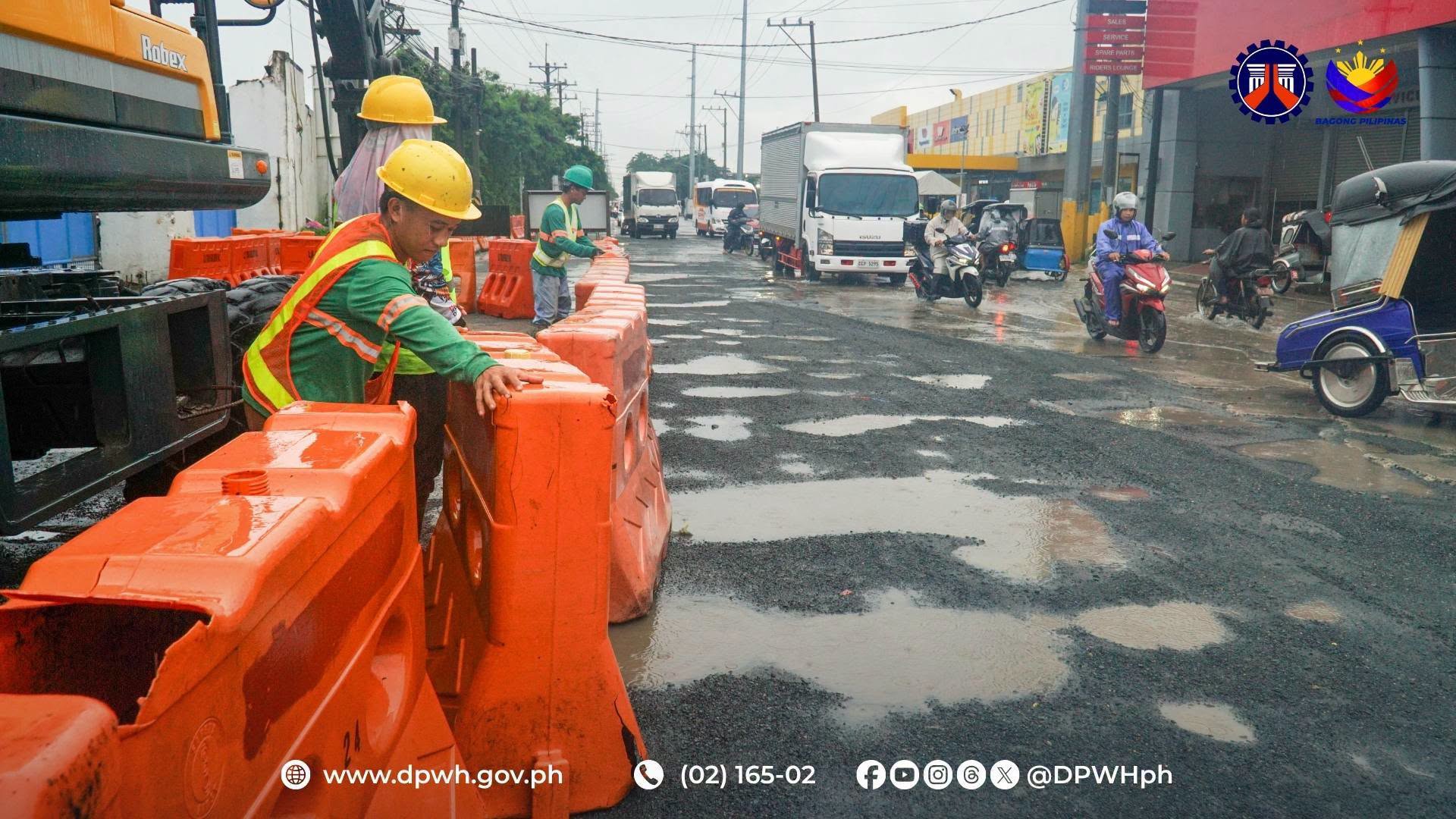
Researchers explained that during torrential rains, water forms a thick layer of surface runoff on roads.
“In intense rainfall weather, the residual convergent run-off on the surface of asphalt pavement adversely affects driving safety and intensifies with water film thickness,” the researchers said.
Runoff refers to excess rainwater, melted snow, or irrigation water that flows over land when the ground cannot absorb it quickly.
Under normal conditions, roads are able to absorb or shed moisture gradually. However, when heavy traffic passes over waterlogged asphalt, it triggers a destructive process known as dynamic pore water pressure.
“The increased water film thickness induced by the intensified rainfall results in larger dynamic pore water pressure generated inside asphalt pavement under vehicle loads. The dynamic water flow, which is formed by the repeated alternative processes of squeezing and pumping action driven by tires, continuously scours [the] surface layer of asphalt pavement,” the researchers explained.
Field evaluations of severe pavement damage showed that moisture-related deterioration linked to dynamic pore water pressure accounted for nearly 88% of surface layer defects in heavily traveled areas exposed to hot and rainy climates.
DRIVING RISKS LINKED TO CLIMATE WARMING
The study also highlighted that climate warming increases driving hazards, as deeper surface runoff during heavy rains reduces tire friction and raises the risk of multi-vehicle accidents.
Researchers noted that intense rainfall not only leads to costly vehicle damage for motorists but also accelerates infrastructure deterioration, resulting in more frequent road failures.
To protect urban transport systems from climate-related damage, the study recommended that city planners and civil engineers rethink traditional pavement design.
It suggested the use of open-graded asphalt mixes that allow water to drain quickly instead of accumulating on the surface. The study also underscored the need for more accurate weather forecasting systems to provide early warnings for urban waterlogging.
“Road drainage facilities should be well designed and constructed for urban pavement or highway to digest atmospheric precipitation as fast as possible and avoid forming stagnant layer on pavement surface,” the study said.
Researchers added that cities should adopt smarter drainage systems to prevent localized flooding from overwhelming road networks.
The study further explained how intense rainfall affects friction between vehicle tires and road surfaces.
“General intense rainfall weather increases water film thickness on asphalt pavement surface layer and reduces frictional resistance between vehicle tires and pavement surface layer,” it said.
“The prediction models of water film thickness which take more factors of asphalt roads’ features into account often have relatively good accuracies. The resulting aquaplaning phenomenon not only has adverse impacts on driving, but also decreases operation efficiency of urban transportation and causes safety risks,” the researchers added. — Photo from DPWH