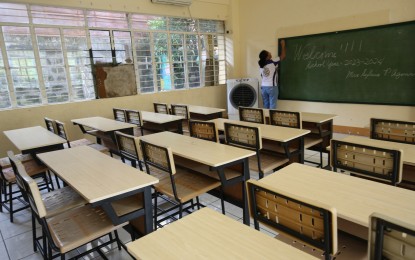
Overcrowding and a “troubling culture” of bullying are driving student absenteeism in schools, a study by the Second Congressional Commission on Education found.
Through a focus group discussion conducted on May 28 with junior high school students at President Corazon C. Aquino High School in Port Area, Manila, EDCOM II sought to assess student learning under its Academic Recovery and Accessible Learning (ARAL) Summer Program.
The study revealed that bullying, alongside overcrowding, significantly affects students’ ability to learn and focus on their studies.
“The learners, composed of students from Grades 8 to 10, detailed a troubling culture of bullying and disruption during the regular school year when classrooms are overcrowded, contributing to a lack of sense of safety on school grounds,” EDCOM II said.
One student described their classes as: “Una, magulo. Makukulit. Maingay. Minsan may mga nambubully o nanununtok, nang-aagaw ng bag, nananago ng ballpen.” Students also reported being teased about their gender or subjected to severe mockery when making mistakes while reading aloud.
Some students said bullying can escalate into physical violence, prompting them to skip classes out of fear.
“Naranasan na po ang mapagtulungan sa loob ng classroom. Pinagsasapak po ako,” one student said, adding that he missed school for days due to fear. “Hindi ako nakapasok ng tatlong araw… yung dahilan na yung aabangan ako,” another student shared.
Another student said, “Wala po [safety] talaga dito sa school, at mas malala pa ’pag lumabas na [ng school].”
EDCOM II noted that students are often reluctant to report incidents, as intervention by teachers or school officials can sometimes lead to retaliation.
“Kahit pinapagalitan ni teacher hindi tumatalab… mas lalong nagagalit yung classmate. Tsaka pong mas lalo lumalaki [ang gulo],” one student explained.
Beyond classroom dynamics, students also raised concerns about overcrowded facilities, poor ventilation, and uncomfortable learning environments that make it difficult to concentrate.
Students cited extreme heat during afternoon classes, leading to discomfort, fatigue, and reduced focus.
“The extreme heat during peak afternoon hours contributes heavily to discomfort, fatigue, and reduced focus, prompting many learners to place electric fans or air conditioning at the top of their wish list for school improvements,” EDCOM II said.
“Compounding these environmental challenges, some classes are forced to start as early as 5:30 a.m. due to congestion, further highlighting the strain on both resources and schedules,” it added.
In light of these findings, EDCOM II Executive Director Karol Mark Yee said the ARAL Program must be refined to better address students’ needs.
“This tells us that as we continue refining the ARAL Program, we must bear in mind not only instilling academic rigor, but also supporting our students so they feel safe—psychologically and physically—in school,” Yee said. — Photo from PNA