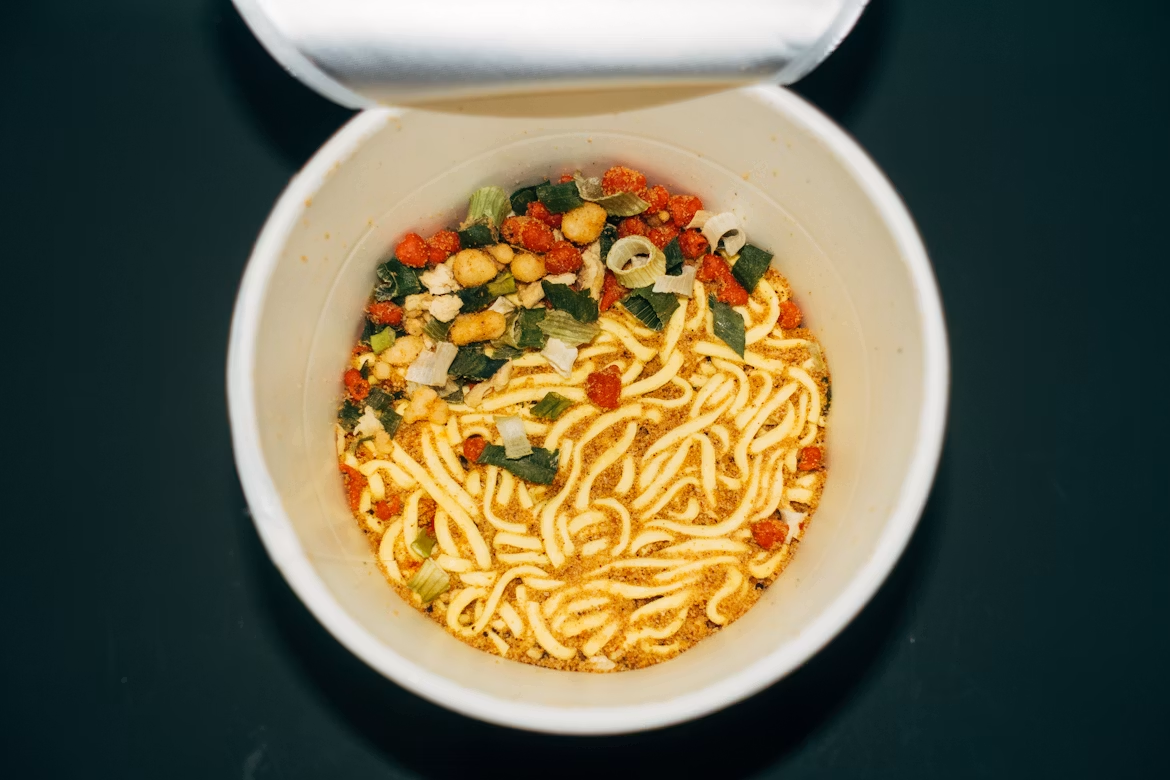
Frequent consumption of instant noodles has long carried negative health perceptions, yet global demand for the convenience food continues to surge.
Originating in Japan in the 1950s as a post-war staple, instant noodles have evolved into a multi-billion-dollar global industry, widely consumed in homes, offices, and schools.
Driven by inflation and the fast-paced lifestyles of working professionals and students, instant noodles—requiring little preparation and no cooking skills—have seen rising demand as an affordable and convenient food option.
According to Fortune Business Insights, the global instant noodles market is valued at $68.53 billion in 2026 and is projected to grow to $98.46 billion by 2032.
The firm noted that consumption of instant noodles and other packaged foods surged during the COVID-19 pandemic due to their accessibility and long shelf life.
“Between 2020 to 2021, rising prices of fresh food led consumers to seek cost-effective alternatives, thereby boosting the consumption of instant noodles. The convenience and low cost of snacking played a crucial role in this global rise in demand,” it said.
However, the industry’s rapid growth has raised serious health concerns.
A landmark study published in The Journal of Nutrition by researchers at the Harvard School of Public Health linked frequent consumption of instant noodles to significant cardiometabolic risks.
The study found that women who consumed instant noodles two or more times per week were 68% more likely to develop metabolic syndrome—a cluster of conditions that includes high blood pressure, elevated blood sugar, abdominal obesity, and abnormal cholesterol levels, increasing the risk of heart disease, stroke, and type 2 diabetes.
Researchers analyzed long-term dietary data from 10,711 adults aged 19 to 64 in South Korea and observed a pronounced gender gap, with no similarly significant association found among men.
Scientists suggested that biological differences, including hormonal factors and fat distribution, may influence how the body processes the high glycemic load and saturated fats commonly found in instant noodles.
Instant noodles are typically deep-fried during production to allow rapid rehydration, resulting in high levels of saturated fat. They are also made from refined white flour, which can cause rapid spikes in blood sugar and insulin levels.
In addition, a single serving often contains between 1,200 mg and 1,800 mg of sodium—approaching or exceeding the World Health Organization’s recommended daily limit. Some products also contain preservatives such as tertiary-butylhydroquinone (TBHQ) to extend shelf life.
Despite these concerns, demand remains strong. Fortune Business Insights reported that the Asia-Pacific region accounted for $52.40 billion of the global market in 2024, driven by high consumption in China, Japan, India, and South Korea.
Western markets have also seen growth, with North America emerging as a significant market as consumers seek more affordable food options amid inflation.
Public health experts emphasize moderation, though they caution that frequent consumption may pose risks.
“Once or twice a month is not a problem. But a few times a week really is,” said Dr. Frank Hu, professor of nutrition and epidemiology at Harvard and senior author of the study.