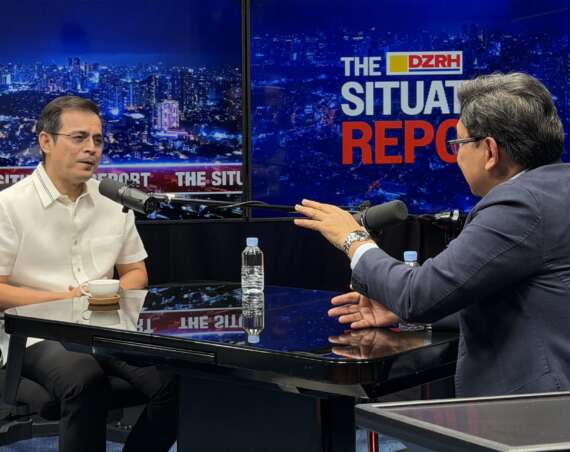
The Department of Health (DOH) and the National Nutrition Council (NNC) are pushing for higher excise taxes on sugar-sweetened beverages and for food manufacturers to reformulate their products to reduce sugar content, while making clear they are not targeting sugar farmers or seeking to eliminate sweetness from Filipino food.
Health Undersecretary Dr. Albert Domingo made the assurance in an interview on DZRH News program The Situation Report on September 16, responding to a comparison of the sugar tax argument to tobacco taxation, where higher prices are used to reduce consumption rather than ban the product outright.
The health official, who supervises the NNC, said the logic is the same: make unhealthy consumption more expensive, not impossible, while giving manufacturers an incentive to reduce the amount of sugar in their products to stay within healthier thresholds.
But Domingo was careful to distinguish between taxing sugary drinks and penalizing the sugar industry, saying he had already spoken with sugar millers and that their interests are not what the NNC is targeting.
“Ang sabi po namin, ang hinihiling ng NNC ‘tsaka Department of Health, ‘yung tinatawag na reformulation. Pwede pa rin maglagay ng asukal sa ating mga pagkain na napakalungkot naman kung walang asukal, pero meron kasing mga label na hanggang doon healthy pa, ‘pag lumampas ka na, sobra na,” he said.
Domingo said Filipino food does not need to become unpleasant to become healthier, the goal is to stay within the healthy threshold, not to drive sweetness out of the diet entirely.
The health official said the Philippines already has a Philippine Nutrient Profile Model developed by the NNC that classifies foods by their fat, salt, and sugar content, a technical tool that can be translated into consumer-facing labels if Congress passes the proposed front-of-pack labeling bill now under deliberation.