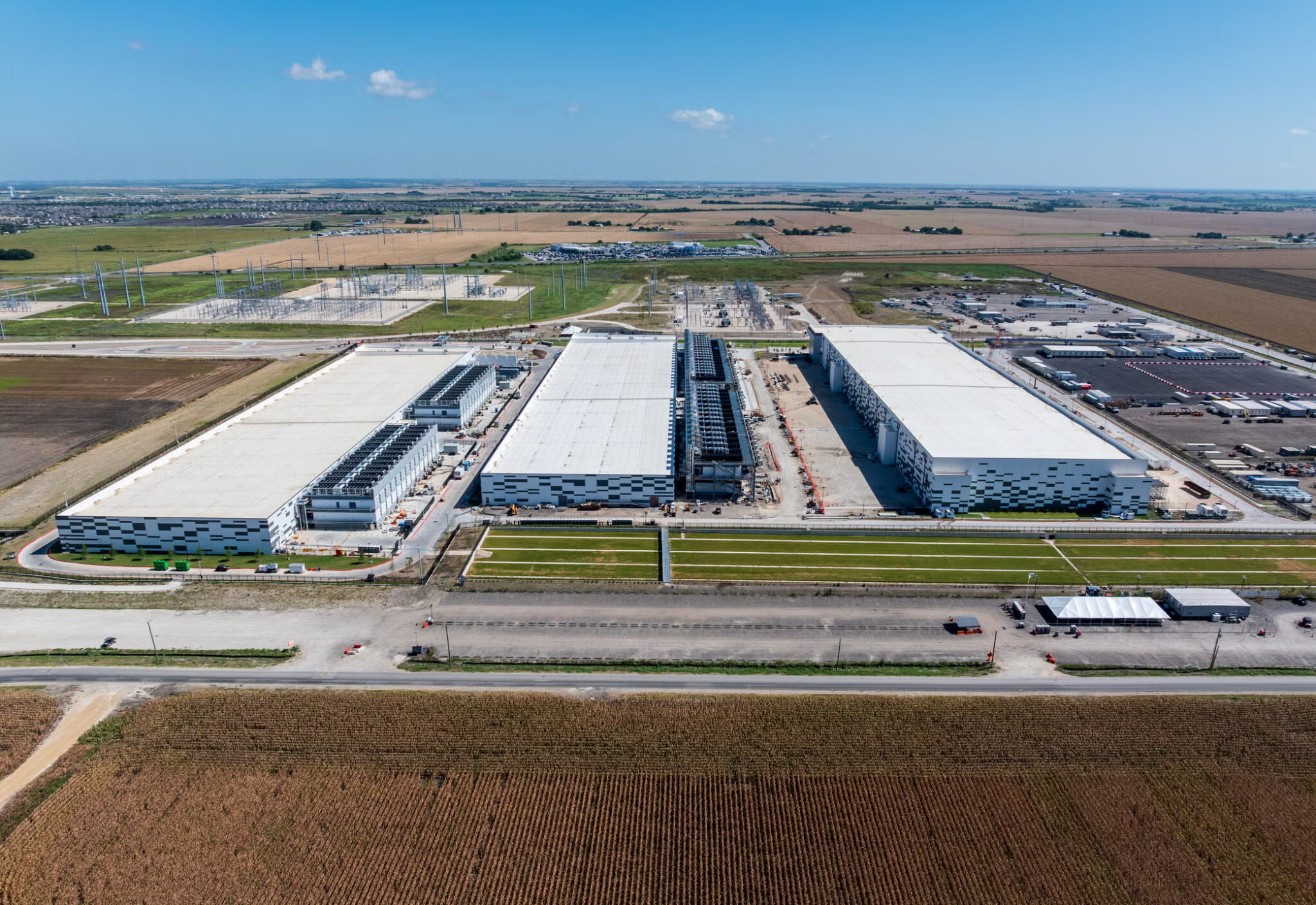
A Harvard study has found that massive hyperscale data centers powering cloud services and artificial intelligence (AI) consume as much electricity as entire U.S. states, with more than half of their power coming from fossil fuels.
The study, led by researchers from the Harvard T.H. Chan School of Public Health and the Harvard Data Science Initiative, provides one of the first facility-level estimates of electricity consumption and carbon dioxide emissions from hyperscale data centers amid the rapid growth of AI computing.
Using satellite imagery, researchers mapped more than 400 hyperscale data centers across the United States and analyzed their annual electricity consumption from May 2024 to April 2025 under multiple operating scenarios.
They then matched these estimates with data from the Environmental Protection Agency (EPA) on regional power grids to calculate the carbon footprint associated with each facility.
KEY FINDINGS
Researchers found that the 403 hyperscale data centers included in the study consumed between 68 and 99 terawatt-hours of electricity during the study period, depending on their utilization levels.
The highest estimates of electricity consumption were concentrated in states such as Indiana, Michigan, and Tennessee.
Overall, the data centers accounted for approximately 1.8% of total U.S. electricity consumption.
Just four states—Virginia, Oregon, Ohio, and Iowa—accounted for more than half of the electricity consumption analyzed in the study.
The electricity used by these facilities was also associated with approximately 25.7 million metric tons of carbon dioxide emissions, roughly two to three times higher than an earlier estimate from 2018.
About 54% of the electricity powering the data centers came from fossil fuels, led by natural gas at 38% and coal at 15%. Roughly a quarter of their electricity came from regional power grids that were more carbon-intensive than the national average.
“What we’re seeing is already striking, but it’s only a snapshot of a rapidly expanding industry,” said lead author Gianluca Guidi, a postdoctoral fellow in the Department of Biostatistics.
“The data center boom hasn’t slowed down since our study period ended in April 2025. New facilities have been built, existing campuses have expanded, and demand for AI computing continues to grow. That means the electricity use and carbon footprint we’re reporting could already be substantially larger now in 2026.”
Guidi added that facility-level transparency is urgently needed as the industry continues to expand, noting that the study aims to help bridge this information gap.
He also warned that electricity demand and emissions in 2026 are likely higher than those recorded during the study period due to new facility construction, campus expansions, and growing AI workloads.
Meanwhile, corresponding author Francesca Dominici, Clarence James Gamble Professor of Biostatistics, Population, and Data Science and director of the Harvard Data Science Initiative, emphasized that decisions on where data centers are built and how they are powered have significant environmental and public health implications.
“Our goal is to give the public, policymakers, investors, and developers a much more concrete, up-to-date picture than was available before,” she said. “Decisions about where data centers go and how they’re powered are critical environmental and public health decisions, and they should be made with good data.”
The researchers stressed the need for more facility-level studies to determine how much electricity individual hyperscale data centers consume and which energy sources supply their power.
Dominici also highlighted the potential health consequences associated with the facilities’ electricity demand.
“First, carbon dioxide drives climate change, which affects health through heat waves, wildfire smoke, flooding, and other pathways. Second, the fossil fuel power plants in the regional electricity systems associated with this demand also release other pollutants, such as fine particulate matter, nitrogen oxides, and sulfur dioxide, that are directly linked to heart and lung disease and premature death. So when data centers draw heavily on fossil fuel power, the people living near and downwind of those power plants may bear health costs, even if they’re far from the data center itself,” Dominici said.
© iStock via Harvard T. H. Chan