Former Senator Richard “Dick” Gordon on Saturday said the Philippine Senate burned itself by placing Senator Ronald “Bato” dela Rosa under protective custody and shielding him from the International Criminal Court (ICC) arrest warrant, saying while he is not ready to declare the entire Senate has lost its moral authority, individual senators clearly have.
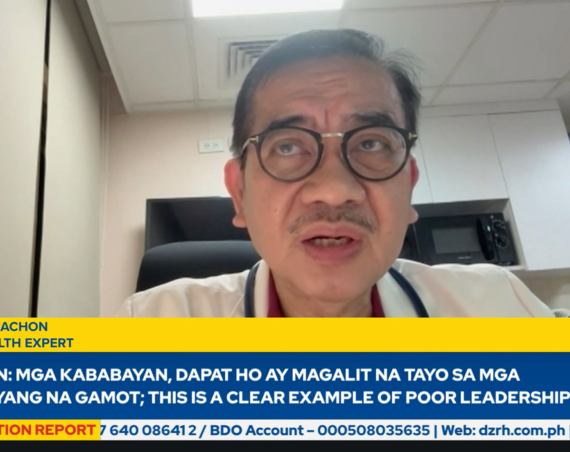
“Sinunog ng Senado ang sarili nila sa pagtatago kay Dela Rosa,” Gordon said in an interview on DZRH News program Special on Saturday.
Gordon said the Senate’s credibility crisis did not arise from the May 13 shooting incident alone but from the decision to use the institution as a refuge for a senator facing an international arrest warrant for alleged crimes against humanity—a decision he said had predictable and damaging consequences for the Senate’s standing before the public.
He said the conduct of Senate Sergeant-at-Arms Mao Aplasca—who fired the first warning shot at NBI agents—and dela Rosa’s subsequent escape from the Senate premises in the early hours of May 14 must both be accounted for, and that those responsible must face consequences.
Gordon noted that the public anger directed at the Senate in the aftermath of the incident is organic and genuine, saying the outrage reflects a long-building frustration with senators who have prioritized political interests over institutional accountability.
“I think some senators have lost their moral authority. I’m not ready na sabihin na sira na ang Senado, although bumagsak ang kanilang trust rating,” he said, pointing to the contrast between the Senate’s declining credibility and the House of Representatives, whose trust rating has risen following its handling of the impeachment complaint against Vice President Sara Duterte.
The former senator said the Senate’s decline is rooted in a broader culture of project-oriented politics, where senators focus on securing funding for their constituencies and reelection campaigns rather than fulfilling their oversight mandate.
“Nagkaroon ng kultura na ang hinahabol tila ay project-oriented at nagre-release ng funding for elections. ‘Yan ang mga ginagawa usually ng mga gustong ma-reelect sa Lower House; nagiging masyadong focused sila sa local reelection kaya nakakagawa sila ng hindi tama. Mukhang nadala sa Senado ‘yan,” he said.
Gordon also criticized the Senate Blue Ribbon Committee’s track record, saying strong investigations are undermined when senators refuse to sign recommendations—and that the public must know who these senators are and why they refuse to sign.
“Dapat ilabas lahat sino ‘yung hindi pumipirma at tanungin sila, usigin sila, ba’t ayaw niyong pumirma?” he said, adding that senators can sign with reservations but must justify their position publicly rather than quietly burying the committee’s findings.
He closed by issuing a warning about the consequences of continued impunity—saying that if the Senate mishandles the impeachment trial and is seen as protecting political allies rather than serving accountability, the public may take matters into their own hands, citing the 2001 Estrada impeachment’s envelope incident and the 1986 snap election walkout as historical precedents.
“Pagpasok ng impeachment, bago mo bantayan ‘yan, dahil diyan niyo makikita kung sino ang kumakiling at may tinutulungan. Nangyari na ‘yan doon kay Estrada nung ayaw buksan ang envelope, anong nangyari? Nag-aklas ang tao,” Gordon said.