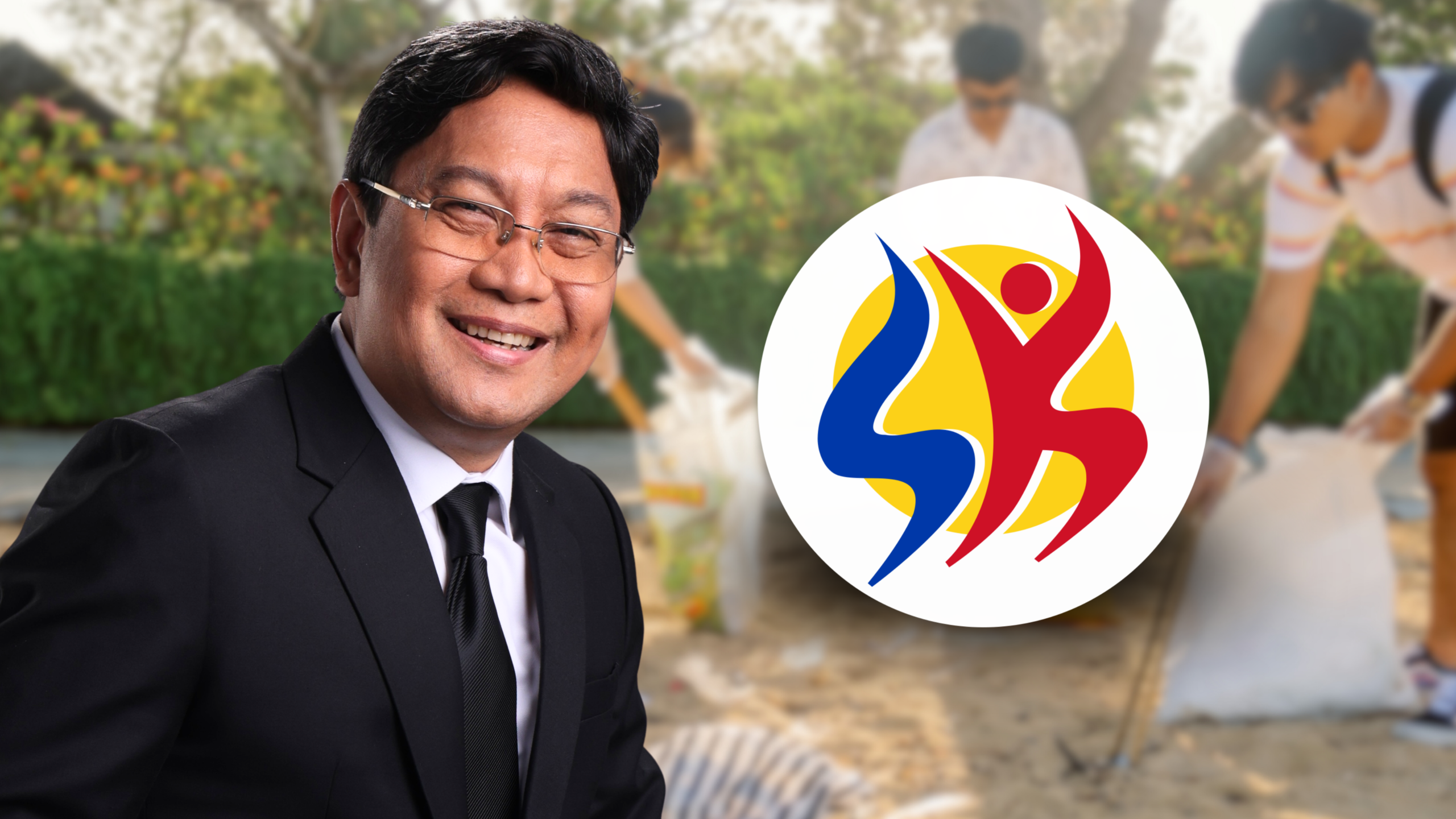
Former National Youth Commission (NYC) chairman Cesar Chavez is proposing a sweeping institutional reform that would transform the Sangguniang Kabataan (SK) into a nationwide Youth Environmental Corps (YEC), offering it as an alternative to calls to abolish the youth body.
Chavez said that “ecological security is the highest form of security,” arguing that converting the SK would shift youth governance toward protecting the very foundation of national survival.
Chavez, who holds a Master in National Security Administration and a PhD in Peace and Security Administration, first proposed the idea through House Bill 12763 in 1994 to transform the SK into a Youth Environmental Corps in every barangay. He was Youth Sector Representative during the 9th Congress (1992-1995). As NYC chair, he also initiated the issuance of Executive Order No. 52 in 1998, mandating environmental committees in all SK councils and allocating 10% of SK funds for environmental programs.
Chavez said the proposed Youth Environmental Corps (YEC) would mobilize youth participation in environmental protection and community resilience, build green skills in food systems, strengthen climate resilience at the community level, and promote public health and active lifestyles among the young.
In partnership with the Department of Environment and Natural Resources, the Department of the Interior and Local Government, as well as the private sector and civil society, Chavez said the YEC can translate environmental education into community-based programs that strengthen environmental literacy and civic responsibility at the local level.
He added that instead of abolishing the Sangguniang Kabataan, the reform repurposes its existing governance infrastructure and funding mechanisms toward environmental action and long-term sustainability.
The former NYC chairman said the proposed Youth Environmental Corps would operate under eight pillars, including protecting youth participation in governance, preparing young Filipinos for the green and blue economy, and strengthening community climate resilience through initiatives such as mangrove restoration, urban greening, and disaster preparedness.
Chavez added that the SK transformation into Youth Environmental Corps would also bridge education and action, promote health and active lifestyles, and support sustainable local economies while building a pipeline of future leaders in sustainability.
He emphasized that the reform ensures long-term public value and accountability by redirecting funds to lasting community assets and clearly defining the Corps’ mandate, improving transparency, monitoring, and institutional credibility.
“By redirecting youth governance toward environmental action, the Philippines can preserve youth participation in governance while generating long-term benefits for the economy, sustainable development, and peace and security of the nation,” Chavez said in a statement.
Chavez’s proposal would redirect the SK’s estimated ₱23.1 billion budget for 2026 toward environmental programs such as community gardens, recycling systems, tree nurseries, disaster preparedness, and climate resilience projects.
“For this reason, it should be transformed into a Youth Environmental Corps, redirecting its mandate toward concrete, measurable actions that secure the Philippines’ long-term survival and sustainability for future generations,” he added.
The proposal comes as Interior Secretary Jonvic Remulla recently raised the possibility of abolishing the SK, citing low attendance rates among officials, with participation dropping from around 60% in the first year to as low as 30% in succeeding years.
Chavez lamented that many projects are not aligned with national priorities like climate resilience and sustainable development.
He added that public perception remains a concern, with some communities viewing SK funds as underutilized, poorly managed, or vulnerable to corruption.
The former NYC chairman flagged structural issues in the current system, saying many SK activities are “often short-term or event-based, such as sports leagues, beauty pageants or celebrations, with limited long-term developmental impact.”
Chavez stressed the reform keeps the SK intact but repurposes its structure and funds, while improving accountability.
Chavez said the SK “must prioritize safeguarding the country’s ecological balance” through concrete, measurable programs.
“Transforming SK into YEC operationalizes that idea by turning young people into active defenders of ecological security, not just future leaders but present-day guardians of the environment,” he said.
“By clearly defining the Youth Environmental Corps’ mandate around environmental programs, communities, barangays, local governments, and oversight bodies such as the Commission on Audit will have clear expectations of its functions—thereby improving transparency, monitoring, and overall accountability,” he said.