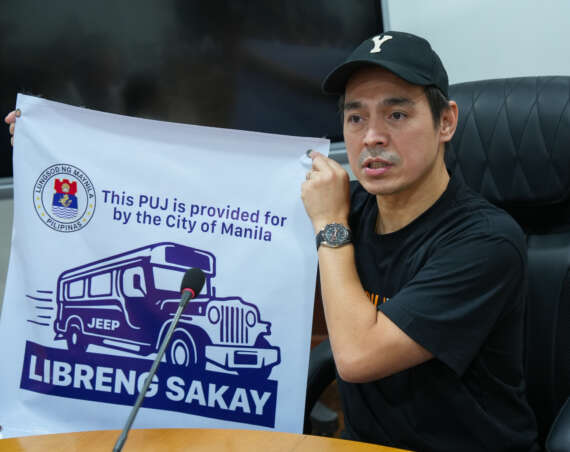
Manila City Mayor Francisco “Isko” Moreno Domagoso said the city government is working with the Bureau of Plant Industry to explore the adoption of Singapore’s urban farming technologies as part of efforts to strengthen food sufficiency in the Philippine capital.
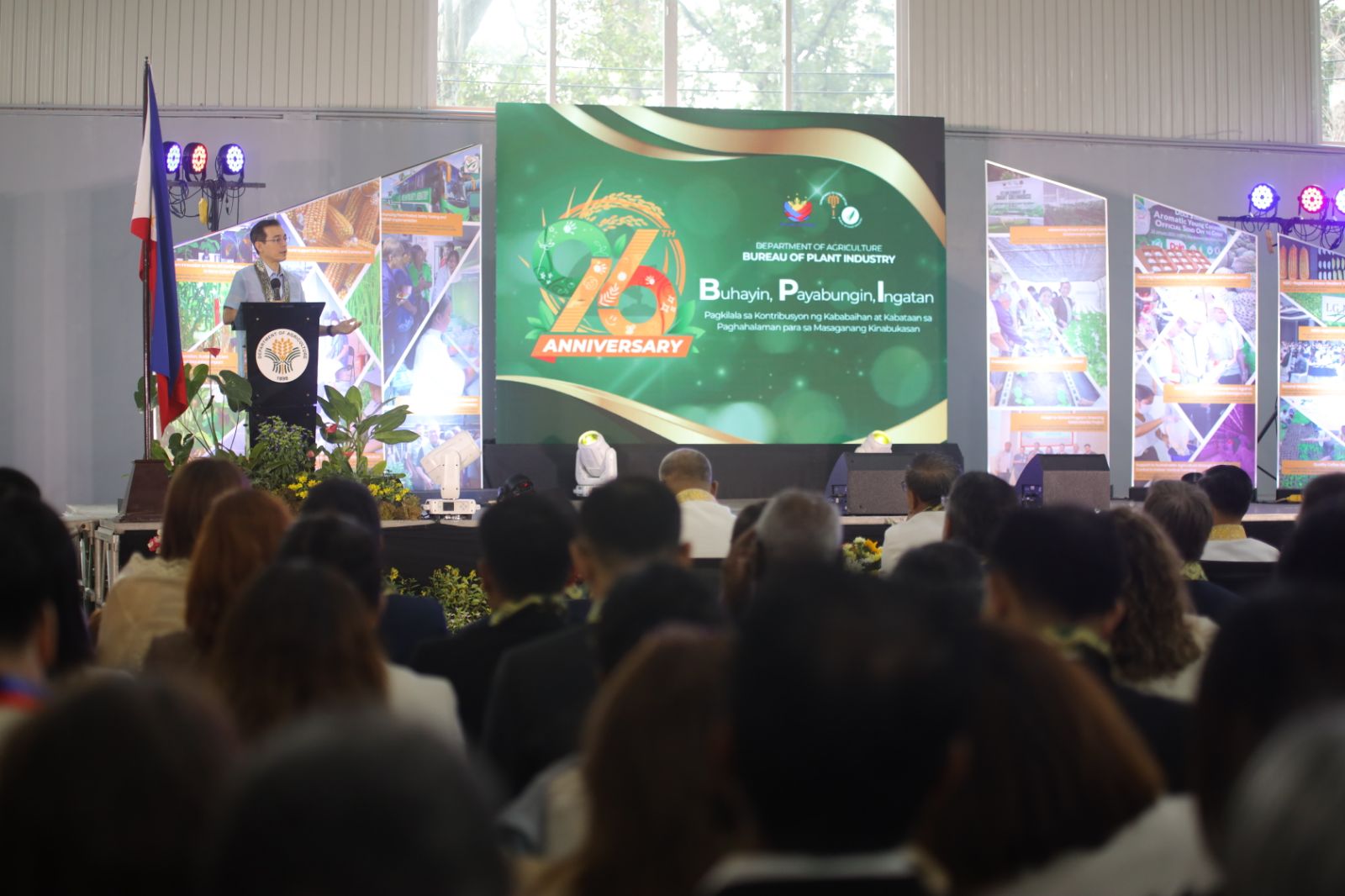
Speaking during the 96th anniversary celebration of the Bureau of Plant Industry (BPI) on February 11, Domagoso said the partnership aims to localize food production in a highly urbanized setting, drawing lessons from Singapore’s experience as a dense city-state that has invested heavily in technology-driven agriculture.
“I opted to choose Singapore because geographically, physically, maliit ang Singapore, pero highly urbanized, fully developed, and if they can produce their own, and we also can produce our own,” the Mayor said.
Domagoso said technical visits conducted earlier this year were part of Manila’s assessment of how smart agriculture systems could be adapted locally, particularly for food production within limited urban space.
The Mayor cited engagements with Singaporean institutions involved in agriculture, technology, and skills training as reference points for Manila’s planning.
To recall, Domagoso, together with BPI officials, visited facilities including the Horticulture Technology Hub of the Institute of Technical Education (ITE) College East, Republic Polytechnic, and the National University of Singapore (NUS) to study indoor farming, automation, data analytics, and resource-efficient growing systems.
“Through Director Glenn and his team from BPI and your city government’s team, we went to ITE, went to Republic Polytechnic, went to NUS, went to the private sector studying what you call food production in a highly urbanized setting,” the Mayor said.
The Mayor said the city government is now moving toward integrating national agencies, local government units, and the private sector to pilot urban food production initiatives.
“Your city government is now trying to put together national government bureaus and local government and private sector to build something for food production,” Domagoso said, adding that the effort is intended to create a framework that future city leaders can build on.
The Mayor also noted that food security is a strategic concern for the nation, warning that population growth and shrinking agricultural land make urban food production increasingly important for cities like Manila.
“Food insecurity is a threat to national security,” Domagoso said. “Population continues to grow, space continues to shrink, and the land that future generations can use to produce food is getting smaller.”
Domagoso said the Bureau of Plant Industry’s role, together with scientists and specialists under the Department of Agriculture, would be critical in developing practical and science-based solutions for urban agriculture, particularly in maximizing limited space for food production.
“For the future, through BPI and the scientists and specialists behind it, you may save the future by being practical in utilizing space,” he said.
He added that the initiative complements Manila’s broader role as a distribution hub for agricultural products, recalling how the city kept food moving during the height of the COVID-19 pandemic by allowing farmers and traders from Luzon to sell produce in Manila despite lockdowns elsewhere.
As the city government moves forward with its food security agenda, Domagoso said Manila intends to work closely with BPI and other national agencies to ensure continuity beyond his term, with the goal of providing long-term guidance on securing food supply within the city.
“This is just the beginning of the long journey of your city government and BPI together,” he said. “So that those who come after us will already have a guide on how to ensure food security within the City of Manila.”