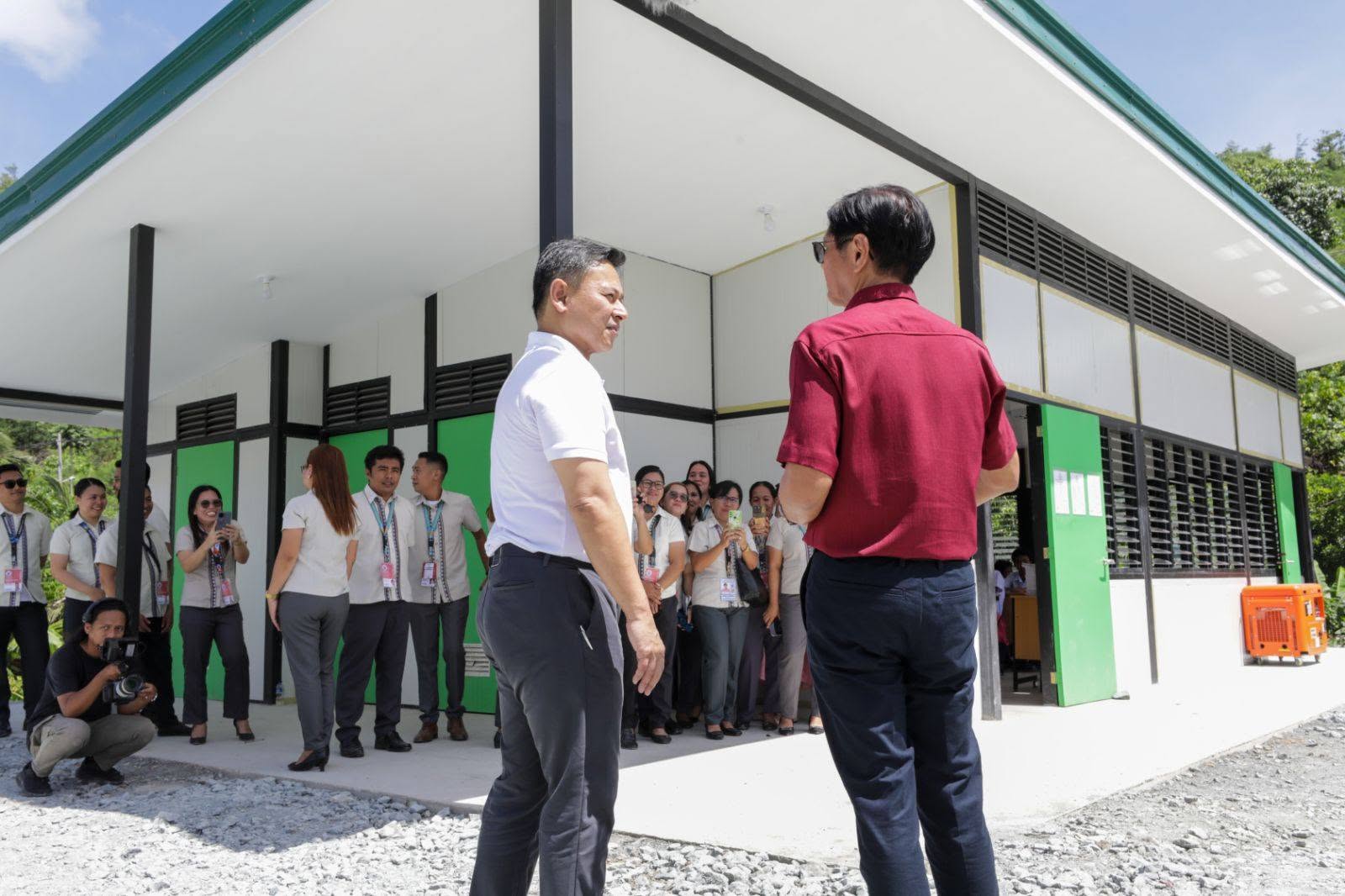
The Department of Education (DepEd) is giving classroom construction funds directly to local government units, civil society organizations, and the private sector to implement for the first time in its history, ending the longstanding practice of routing all construction through the Department of Public Works and Highways (DepEd) or DepEd’s central office, Education Secretary Sonny Angara said Saturday.
Angara made the statement in an interview on DZRH News program Special on Saturday on August 1, as part of the DZRH SONA 2026 Series, with Education Undersecretary Fatima Panontongan and Assistant Secretary Roger Masapol also confirming the historic nature of the shift.
“For the first time in history, the DepEd is giving the money for classrooms sa mga probinsya, sa mga lungsod, sa mga municipalities to implement. And kasama na rin natin ‘yung civil society,” Angara said.
Undersecretary Panontongan said the new flexibility provision allows multiple actors to implement classroom construction simultaneously, including LGUs, civil society organizations, and DPWH, making the program a genuine whole-of-nation effort.
“Multiple actors, opo. Para po dun sa mga complex po na project. Merong local government units, opo. May civil society, opo. At whole of nation, opo. Whole of nation po ito,” Panontongan said.
A new innovation also allows DepEd to lease buildings from private owners for use as classrooms, providing a faster and cost-effective solution in areas where land for new construction is scarce.
Angara said the program is expected to produce approximately 20,000 new classrooms in 2026, with 40,000 to 50,000 new classrooms targeted by 2028, addressing a deficit of 144,000 classrooms that the Marcos administration inherited in 2022.
He said the decentralization has a multiplier effect: LGUs can contribute from their Special Education Funds, and local contractors and labor are hired, meaning the construction budget also stimulates local economies nationwide.
The education chiewf said the combination of national budget, PPP, LGU funds, civil society contributions, and leasing arrangements represents the most comprehensive classroom building effort in Philippine history.