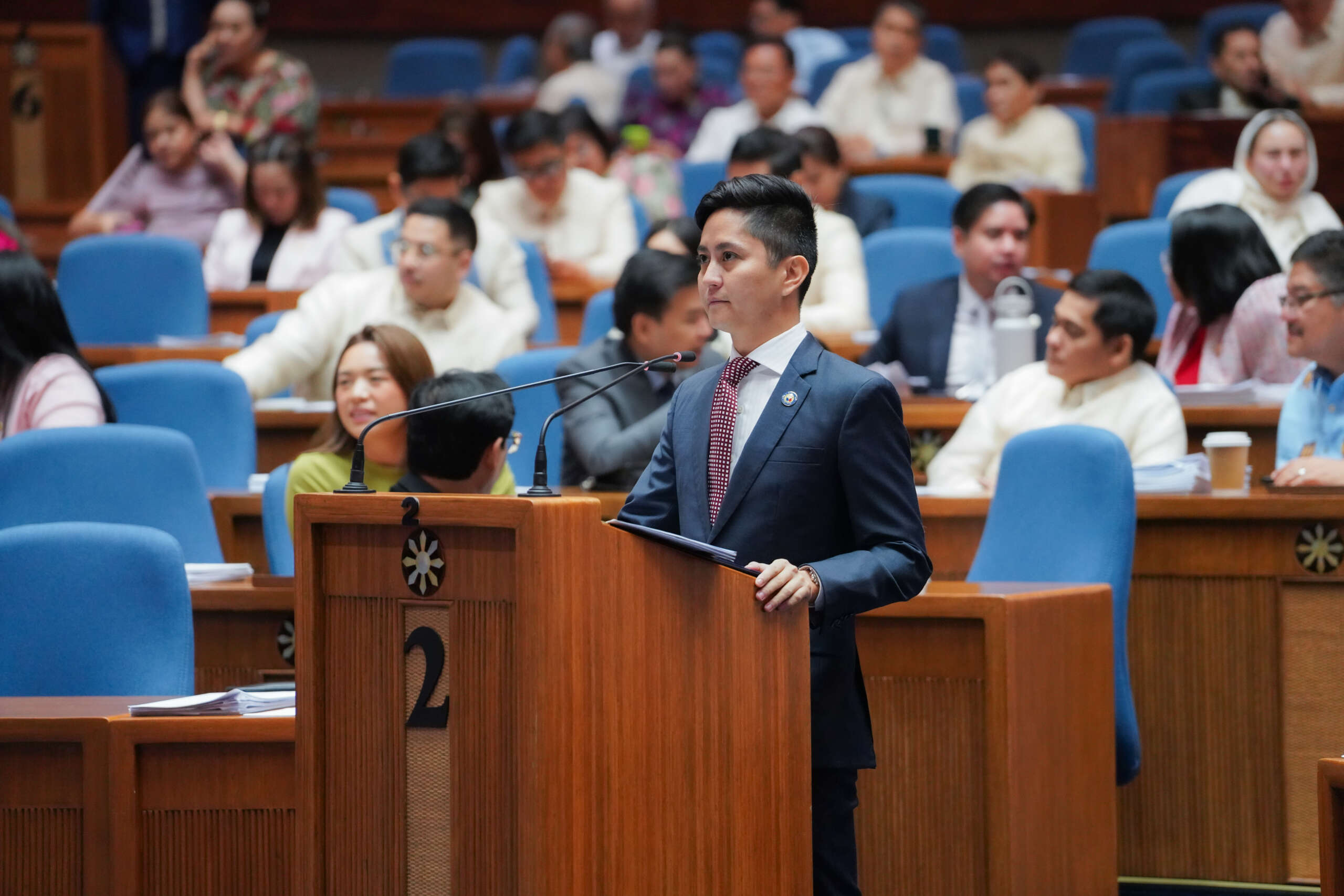
House Majority Leader Sandro Marcos filed House Bill No. 7443 that seeks to abolish the travel tax, citing its negative impact on economic recovery, mobility, and regional competitiveness.
The said House Bill proposes the repeal of the travel tax imposed under the Presidential Decree No. 1183 and related provisions of the Tourism Act of 2009.
The measures seeks to remove the fixed changers currently collected from outbound travelers, amounting to as much as P2,700 for first class passengers and P1,620 for economy class travelers.
The young Marcos noted that for families, the cost of the travel tax accumulates quickly and diverts funds that could otherwise be used for basic needs or spent within the local economy.
“When travel becomes more expensive, fewer people move, fewer people spend and fewer opportunities circulate through the economy. Lowering the cost of travel allows Filipino families to allocate their money where it matters most,” Marcos said.
Under HB No. 7443, funding for agencies currently supported by travel tax collections—including the Tourism Infrastructure and Enterprise Zone Authority (TIEZA), the Commission on Higher Education (CHED), and the National Commission for Culture and the Arts (NCAA)—would instead be sourced from the General Appropriations Act.
Marcos said the proposed funding shift would ensure continued support for tourism, education, and cultural programs through the national budget, while removing what he described as an unnecessary burden on travelers.
He added that lowering travel costs could help stimulate tourism-related industries such as hotels, transportation services, and small businesses dependent on visitor spending, while also encouraging more Filipinos to travel within the country.
Marcos also pointed out that the Philippines has become an outlier in the region, as many member states of the Association of Southeast Asian Nations (ASEAN) have already abolished similar travel-related levies to promote tourism, trade, and people-to-people exchanges. He said retaining the travel tax runs counter to regional efforts to ease movement within Southeast Asia.
“Travel is not a luxury for many Filipinos,” Marcos said. “It is part of how families stay connected and how workers sustain their livelihoods.”