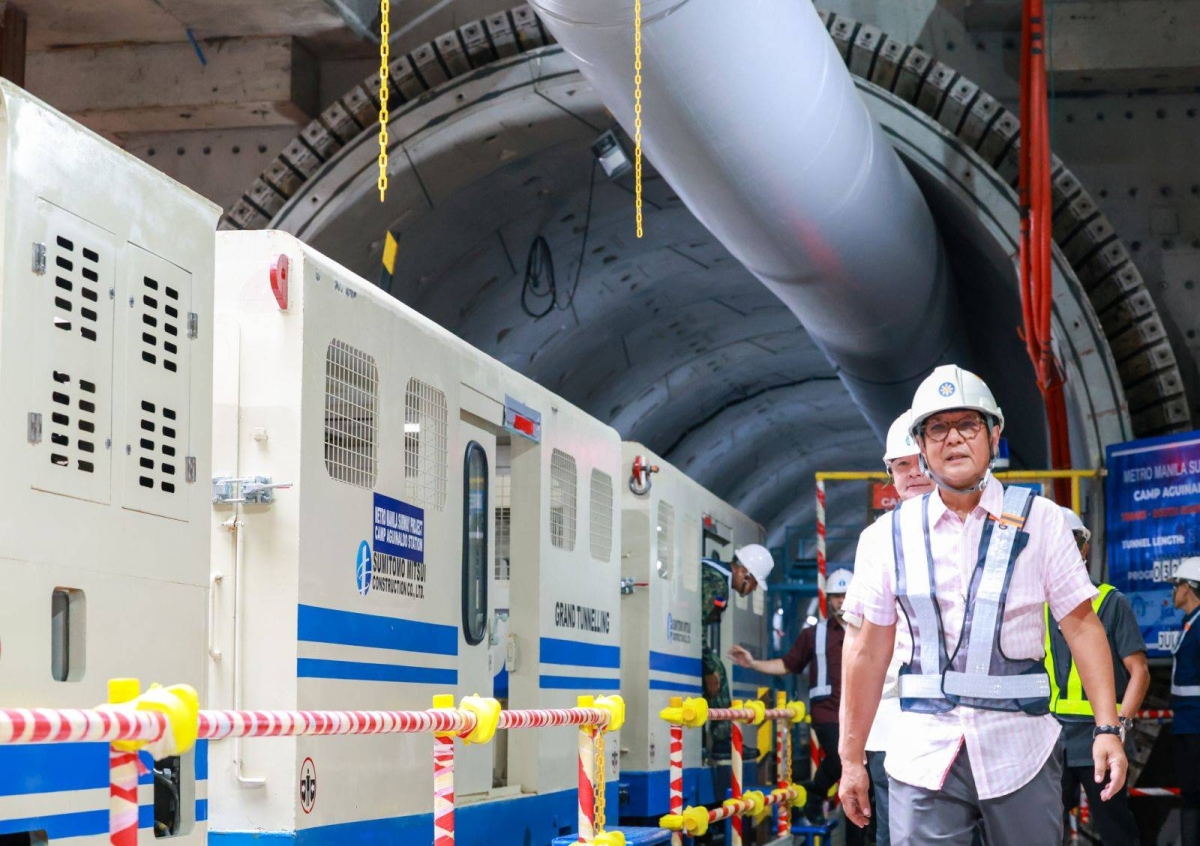
The Marcos administration’s Department of Transportation (DOTr) is working toward a single overarching goal: ensuring that every rail station in the country is connected to road, aviation, and maritime transportation, so that a Filipino can move seamlessly from a bus, a ferry, or a plane onto a train without losing time or changing terminals, Transportation Secretary Giovanni “Banoy” Lopez said Saturday.
Lopez made the statement in an interview on DZRH News program Special on Saturday on August 29, as part of the DZRH SONA 2026 Series featuring the Department of Transportation (DOTr).
He said connectivity and mobility are the two principles that guide every transportation decision under the Marcos administration, from the layout of intermodal terminals to the placement of rail stations and the design of last-mile transport systems.
“Ang resulta nito kaginhawaan ng ating mga kababayan. And this month po, yung connectivity and mobility kasi ang resulta nito kaginhawaan. Kailangan talaga may connectivity. Kailangan pagbaba ng ating pasahero sa ating mga riles for example, meron silang masasakyan papunta sa mga iba’t ibang lugar na gusto nila,” Lopez said.
He said the same template being applied in Metro Manila—where the PITX and the upcoming Taguig CITX connect interprovincial buses to rail, and the NAIA subway station and Airport Express link airports to the rail network—will be replicated in Visayas and Mindanao.
Transportation Senior Undersecretary Steven Pastor confirmed that road infrastructure planning is now actively coordinating with the rail sector, with the DOTr’s planning office already identifying where buses, jeepneys, and other road-based transport will pick up and drop off passengers at each of the 34 NSCR stations.
Lopez said the vision also includes transit-oriented development — using the large one-hectare stations of the NSCR as anchors for commercial, residential, and economic activity in partnership with LGUs, turning transportation infrastructure into engines of local economic growth.
“Iba yung land value capture po ‘yan. Magtataasan lahat ang ating mga lote, iba yung economic activity diyan. So makakatulong tayo sa LGU, makakatulong tayo sa kababayan, then the national government,” Lopez said.
He said the DOTr’s vision, if fully realized, will mean that a passenger from Davao can arrive at PITX by bus, transfer to LRT Line 1, ride to the Common Station, connect to MRT-7, and reach their destination in Bulacan, all on one integrated network without a single private vehicle.