For the first time since the Department of Transportation (DOTr) was established, a dedicated Assistant Secretary for Right-of-Way has been designated by the agency, with Assistant Secretary Irish “IC” Calaguas now heading a team focused exclusively on land acquisition and site development.
This has ended what Transportation Secretary Giovanni “Banoy” Lopez said had been the single biggest cause of transportation project delays for decades.
Lopez made the statement in an interview on DZRH News program Special on Saturday on August 29, as part of the DZRH SONA 2026 Series featuring the DOTr.
He said right-of-way had been a perennial problem that delayed virtually every major transportation project in the Philippines, with infrastructure loans accumulating interest and projects ballooning in cost every time land acquisition stalled civil works.
“Kapag nagkaproblema na tayo sa right-of-way, itong mga ODA loans natin, kahit bigyan pa tayo ng mahaba-habang grace period, kinakain na po ‘yan. Kapag naantala po ang isang proyekto because of right-of-way, wala pa pong civil works ‘yan, tumatakbo na po metro ng interest, suspension of works, prolongation cost, financing cost, lahat na po ng cost,” Lopez said.
He said the appointment of Calaguas, first made during the time of then-Transportation Secretary Vince Dizon, established not just a single point of responsibility but a single point of accountability, with a dedicated team working daily on right-of-way issues in close coordination with the Office of the Solicitor General (OSG).
“Hindi lang po single point of responsibility. Ang importante po dito yung single point of accountability also. Yung pananagutan,” Lopez said.
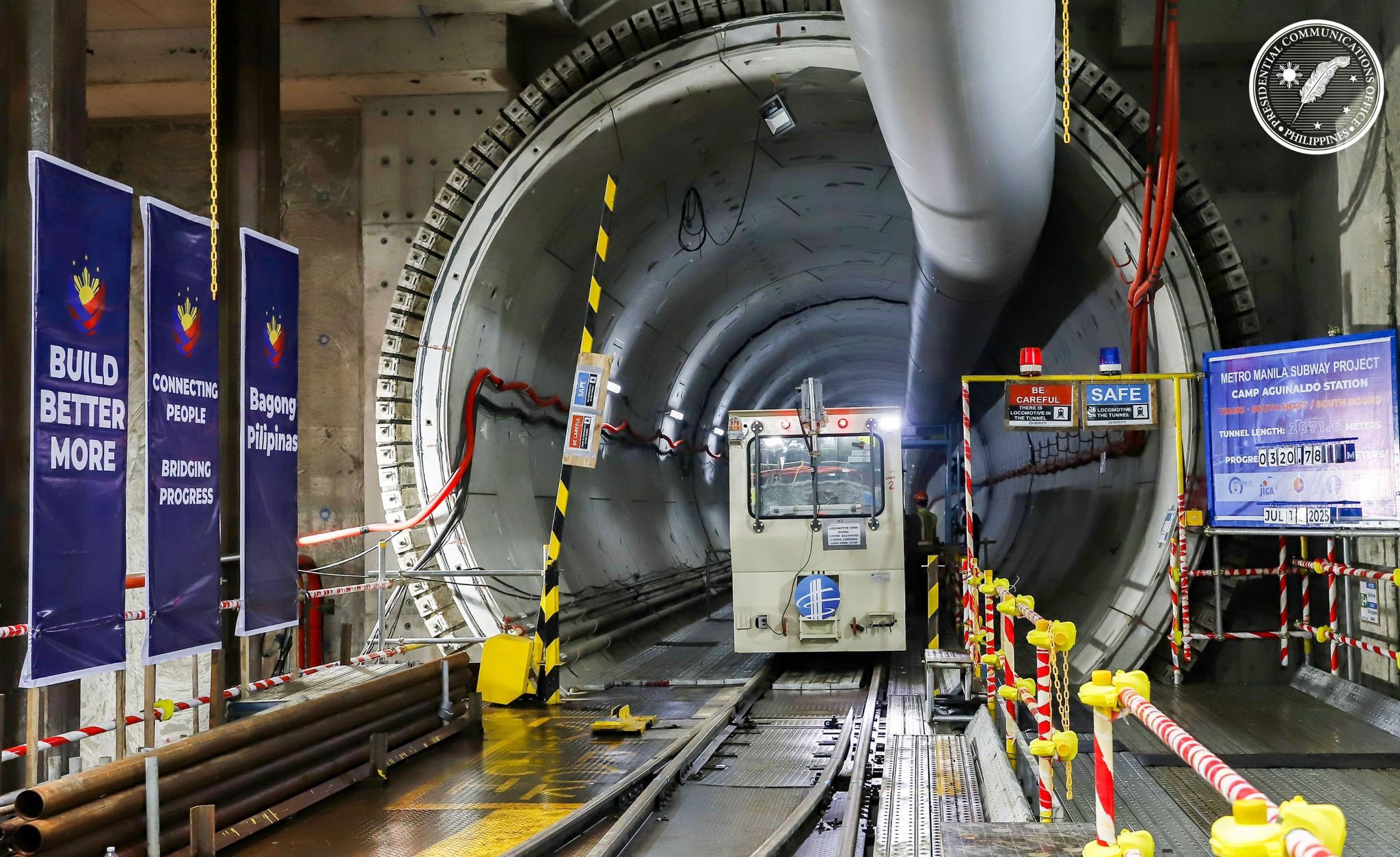
President Marcos’ Transport chief said the Accelerated and Reformed Right-of-Way Act—known as the ARROW Act, or Republic Act 12289, signed by President Marcos on September 12, 2025—was equally critical, resolving the long-standing ROW issue in Corinthians, Quezon City that had been blocking the Metro Manila Subway by making it more practical for landowners to negotiate with the government rather than resist acquisition.
“Nung lumabas po ‘yang batas na ‘yan ay talaga pong, kumbaga, naisip nilang ipagnegosyo na lang po sa gobyerno kesa po hindi makuha yung kanilang mga properties,” Lopez said.
The ARROW Act also permits underground entry for subterranean projects like the Metro Manila Subway at depths exceeding 40 meters, a provision that directly addresses one of the most complex right-of-way challenges specific to subway construction.
The combined effect of dedicated leadership and the ARROW Act has pushed the Metro Manila Subway’s right-of-way completion rate to 90%, Lopez said, with other major rail projects also reporting significant progress after years of stagnation.