Earthquake drills and the duck-cover-hold protocol are not enough to save lives if the buildings people are inside are not structurally sound, the director of the Philippine Institute of Volcanology and Seismology (PHIVOLCS) warned Saturday, saying strict compliance of the National Building Code remains the single most effective measure against earthquake casualties.
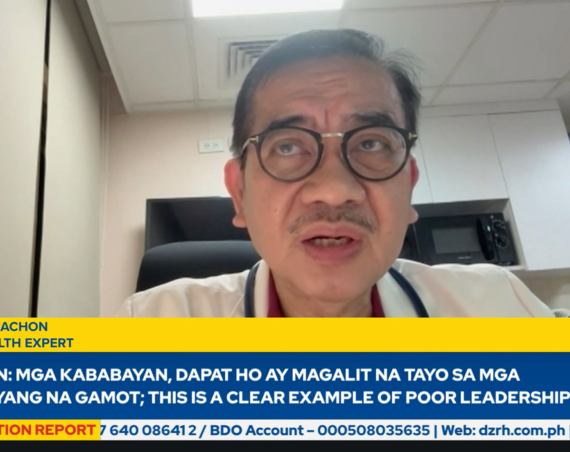
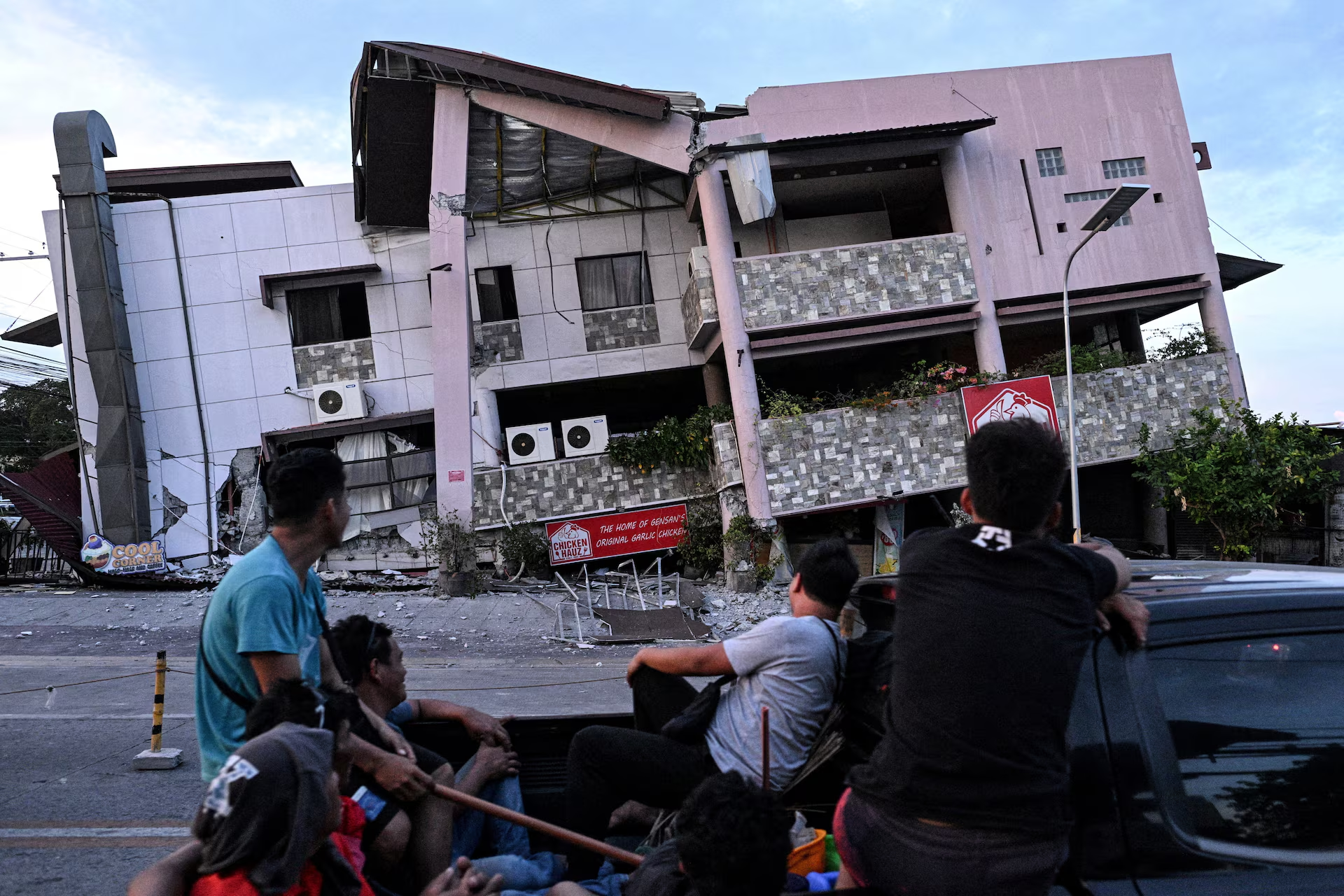
PHIVOLCS Director Teresito Bacolcol made the statement in an interview on DZRH News program Special on Saturday on June 13, days after the June 8 magnitude 7.8 Mindanao earthquake collapsed several buildings in General Santos City, including the elementary school building of Notre Dame of Dadiangas University and a fast food outlet.
“The best course of action is always preparedness. And when you say preparedness, first and foremost, we really have to follow the building code and huwag na tayong mag-cut corners pa. Kasi tayo din naman ‘yung magkakaroon ng problema, lalo na kapag may sakuna katulad ng lindol,” Bacolcol said.
PHIVOLCS data shows that in a magnitude 7.2 earthquake along the West Valley Fault, around 13% of residential buildings would sustain heavy damage, 8 to 10% of public buildings, 11% of 10 to 30-story buildings, and around 2% of 30 to 60-story high-rise structures.
Bacolcol said buildings constructed after 2000 are generally more earthquake-resilient because the National Structural Code of the Philippines published in 2001 incorporated PHIVOLCS fault maps into engineering design standards, requiring builders to account for proximity to fault lines when designing structures.
He said older buildings—those constructed before 2000—are the ones most in need of rehabilitation and structural review, as they were built without the benefit of updated seismic engineering standards now required under the code.
Former Senator Orly Mercado, who joined the interview as a studio guest, raised concern about informal settlers in depressed areas building multi-story structures — some now reaching four floors—without proper clearances, noting that even where permits exist, the culture of “padulas” undermines enforcement.
Bacolcol agreed, saying that while the building code requires permits for any extension or addition to an existing structure, compliance remains the central challenge—a point he illustrated by sharing that even he faced the complexity of the permit process when he tried to extend his own small home.
“Kapag titingnan natin ‘yung trend everyday, kumokonti at pababa naman ‘yung numbers natin,” Bacolcol said of the aftershock situation, adding that the public should remain alert but that the declining trend is consistent with what seismologists expect after a major seismic event.
He called on local government units to strengthen the engineering competency of their staff so they can confidently and strictly enforce the building code, saying LGU-level enforcement—not just national policy—is where earthquake resilience is ultimately built or broken.
(Photo by Noel Celis/Reuters)