As the U.S.–Iran conflict escalates, the Department of Economy, Planning, and Development (DepDev) said the agency developed two scenarios to simulate the war’s potential impact on the Philippine economy.
DepDev Planning Undersecretary Rosemarie Edillon presented Scenario 1 and Scenario 2 in the committee hearing of the House of Ways and Means.
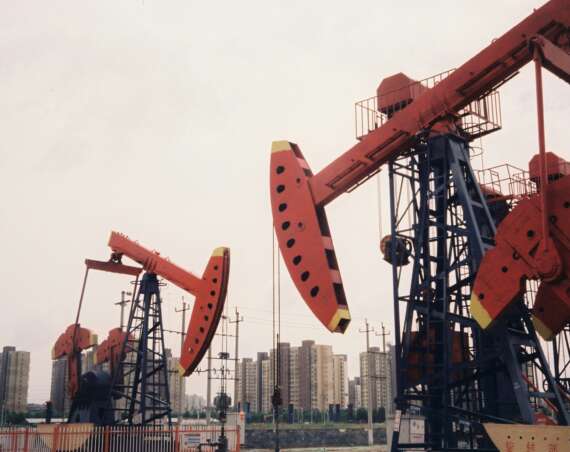
Under Scenario 1, Edillon said oil prices could rise to $99.8 per barrel, based on Dubai Crude Oil futures, assuming the conflict ends soon.
Under Scenario 2, she said the simulation assumes Iran sustains the closure of the Strait of Hormuz, which could push oil prices to $140 per barrel.
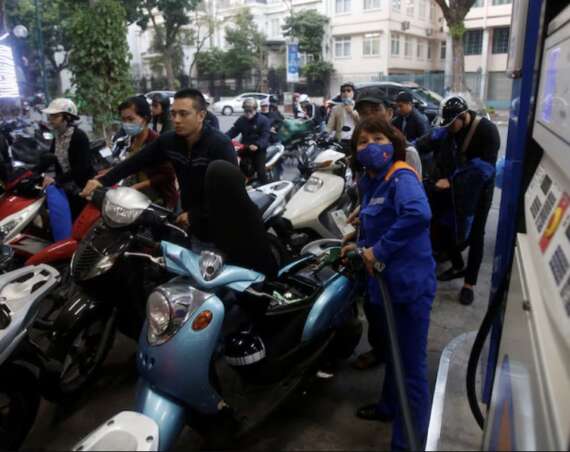
Edillon said Scenario 2 represents a worst-case scenario, where diesel prices could reach P96 per liter before any possible suspension of the fuel excise tax.
Gasoline prices, meanwhile, could rise to as much as P70.20 per liter, but may drop to around P59 per liter if the excise tax is suspended, she added.
In terms of inflation, Edillon said the country would likely see higher inflation regardless of the scenario, although the increase would be significantly higher under Scenario 2.
If Scenario 1 materializes, inflation could range between 4.5% and 5.1% in March. Under Scenario 2, inflation could reach between 6.3% and 7.5% in the same month.
“What we’re seeing under Scenario 1 is that for March, our inflation rate could reach between 4.5% and 5.1%, from a base of 3.4%, which is the expected inflation rate released by the Bangko Sentral ng Pilipinas,” Edillon said.
“Under Scenario 2, inflation could reach 6.3% and as high as 7.5%. By April, Scenario 1 could see inflation between 3.5% and 4.8%, while Scenario 2 could range from 6.4% to 7.5%,” she added.
Edillon said suspending the fuel excise tax could help ease inflation under both scenarios.
Without the suspension, full-year inflation under Scenario 1 could reach 4.0% to 4.2%. With the suspension of the excise tax from March to May, inflation could ease to 3.9% to 4.1%, assuming the conflict stabilizes by May.
Under Scenario 2, where the excise tax suspension would run from March to September, full-year 2026 inflation could range between 4.0% and 4.3%, down from a simulated 4.5% to 4.8%.
For now, there are no proposals seeking to suspend the fuel excise tax to shield consumers from oil price shocks.
Earlier, Ferdinand Marcos Jr. said he may ask Congress to grant him emergency powers that would allow him to reduce excise taxes on petroleum products as oil prices rise rapidly amid tensions in the Middle East.