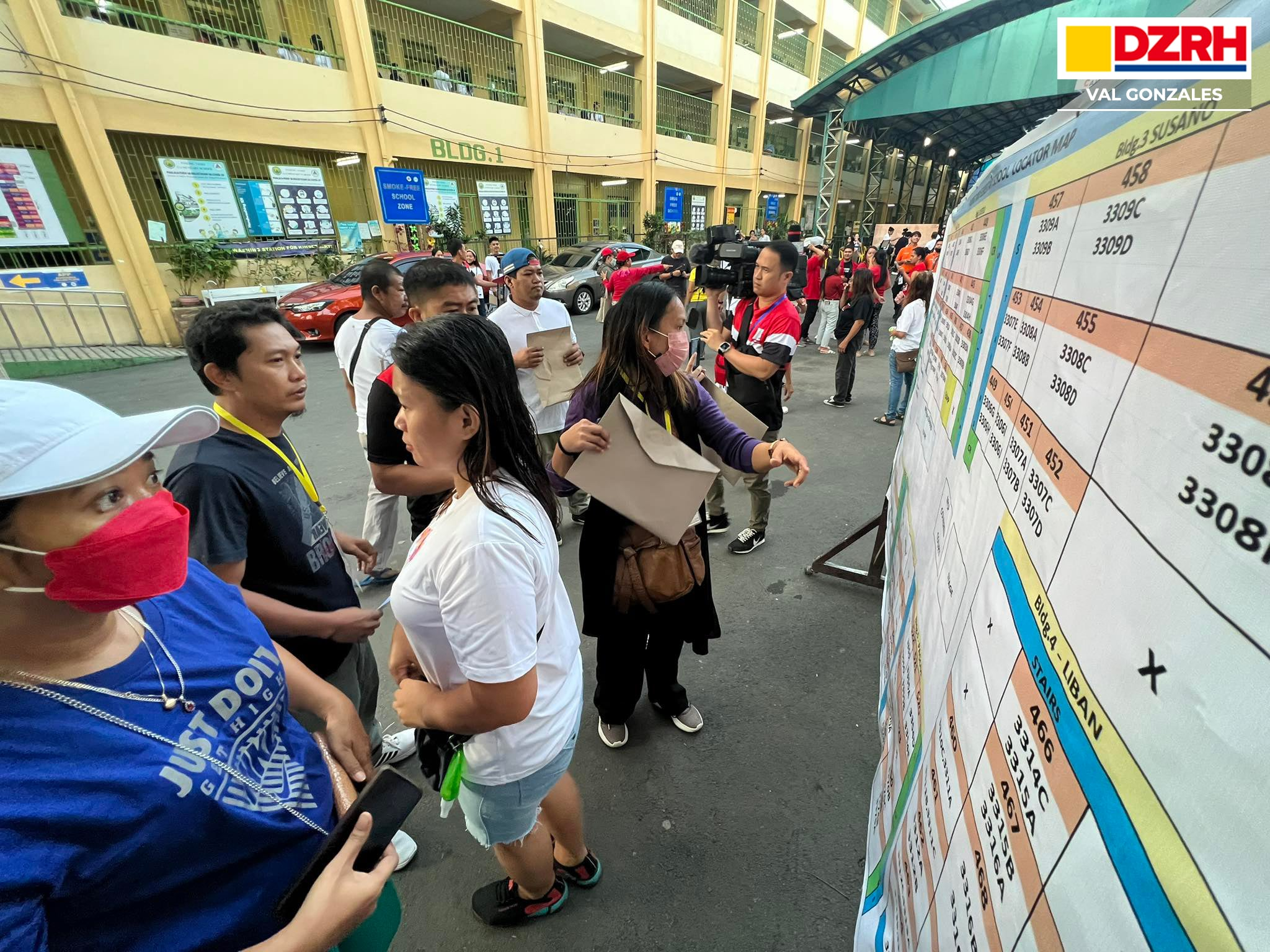
Since 2022, the barangay elections have been postponed twice. Filipinos voted in 2023, a year behind schedule. The next cycle was pushed from December 2025 to November 2026. Now a third delay is on the table—and critics say the justification being offered is the same one the Supreme Court already struck down.
The pattern of postponements stretches back to 2019, when Republic Act 11462—signed under then-President Rodrigo Duterte—moved the May 2020 BSKE to December 5, 2022, and set all subsequent elections on a first-Monday-of-December cycle every three years.
That schedule was upended when Congress passed RA 11935, moving the 2022 elections to October 2023. The Supreme Court later declared that law unconstitutional, but still ordered the 2023 elections to proceed under the operative fact doctrine—recognizing that the law had existed and produced effects that could not simply be undone.
The Court was pointed about why RA 11935 failed: the real purpose behind the postponement was to redirect Comelec’s budget to the Executive, which the Constitution explicitly prohibits. The SC ruling then revived RA 11462, restoring the December 2025 BSKE schedule as the legally operative one, and laid down binding guidelines for any future postponement.
Elections, the Court said, are the rule; postponement is the exception. Any deferral must be justified by reasons that are “sufficiently important, substantial, or compelling,” such as a genuine public emergency and cannot be used for superficial justifications. Budget reallocation alone, the Court made clear, does not meet that bar.
Congress moved past those guidelines in 2025. By August, President Marcos signed RA 12232 into law, postponing the December 2025 elections to November 2026, extending incumbents’ terms, and setting official term lengths at four years.
Marcos justified the signing by saying that holding both the BARMM parliamentary elections in October and the barangay elections in December could overstretch the Comelec and divert attention and resources from ensuring the success of the first-ever Bangsamoro parliament polls.
The President said ensuring the success of the Bangsamoro elections was critical to sustaining the peace process in Mindanao. “If that fails, it would be a major failure in the peace process,” the President said.
This time, the Supreme Court upheld it. In a November 2025 decision, the Court drew a distinction from its 2023 ruling, classifying RA 12232 not as a postponement law but as a term-setting law, and ruling that it “neither abolishes nor indefinitely suspends” the BSKE. “It simply changes the interval from three to four years. Elections remain regular, periodic, and certain,” the SC said.
Because it was framed as term-setting rather than postponement, the Court ruled that the guidelines it set in 2023 — which require sufficiently important, substantial, or compelling reasons to defer elections — did not apply to RA 12232.
The Court also held that the Constitution grants Congress the sole authority to define the term of office of barangay officials, noting that “these officials are not bound by the general three-year term limit that applies to other elective local officials.”
That brought the total to two postponements under Marcos — and now a third is being actively discussed.
Deputy Speaker and Bacolod City Rep. Albee Benitez proposed moving the elections and redirecting the P19-billion budget to mitigate the impact of soaring fuel prices and rising costs of basic goods amid the Middle East crisis.
The Palace stopped short of a formal endorsement but made the administration’s leanings clear. Presidential Communications Undersecretary Claire Castro said the move could save the government around P16 billion, and that President Marcos would be willing to support a postponement bill as long as it would benefit the country. “So, kung magkakaroon po sila ng anumang bill or panukala po dito at aaralin po ‘to ng Pangulo – basta po ito’y makakabuti sa ating bansa, open po ang Pangulo para diyan,” she said.
Senator Imee Marcos, the President’s sister, also backed the measure. “At a time when the country is confronted with serious economic challenges brought about by the oil crisis, prudence demands that we prioritize the allocation of limited public resources,” she said, adding that the funds “can be more urgently directed toward addressing the immediate needs of our people, including rising fuel costs, food security and essential public services.”
The Commission on Elections (Comelec) said it would not stand in the way, but set a firm condition. Comelec Chairman George Erwin Garcia said the poll body will not oppose another postponement so long as the new date does not go beyond May 2027, as preparations for the 2028 presidential elections begin in June 2027.
“The new date must not extend beyond May 2027, as preparations for the automated elections will already be in full swing by June,” Garcia said. He also flagged a financial complication that cuts against the savings argument: a reset would require up to P3 billion in additional funds due to new registered voters, more teachers serving as electoral board members, and additional election paraphernalia.
Opposition within the Senate invoked the Supreme Court’s own precedent. Senator Sherwin Gatchalian called a third postponement unconstitutional, citing the SC’s ruling that elections cannot be arbitrarily suspended. “Unang-una, unconstitutional na ‘yan. At pangalawa, dahil pangalawang suspension na ‘yan, ‘tas pangatlo, maraming tao umaasa na pumili ng kanilang local leader,” he said.
Gatchalian also challenged the fiscal logic, noting that the government already has P230 billion available for its aid programs, making the election budget a comparatively marginal sum.
Civil society was blunter. The National Citizens’ Movement for Free Elections (NAMFREL) called the push for another postponement a grave threat to Philippine democracy, and called on Congress to reject any postponement bill and on the Executive to cease any effort to divert Comelec’s electoral funds.
NAMFREL also named what it saw as the real dynamic behind each successive delay. “What is dressed up as fiscal prudence is, in practice, a recurring ruse for political entrenchment,” the group said, warning that the accumulated effect of repeated postponements has been to deny millions of Filipinos — particularly the youth — their rightful voice in selecting local leaders.
Whether the November 2 date holds will depend on whether Congress moves — and whether President Marcos, who has already signed two BSKE postponement laws, chooses to sign a third.