Beyond modern healthcare infrastructure and quality medical services, taxpayers of the nation’s capital are also funding life-saving medical procedures.
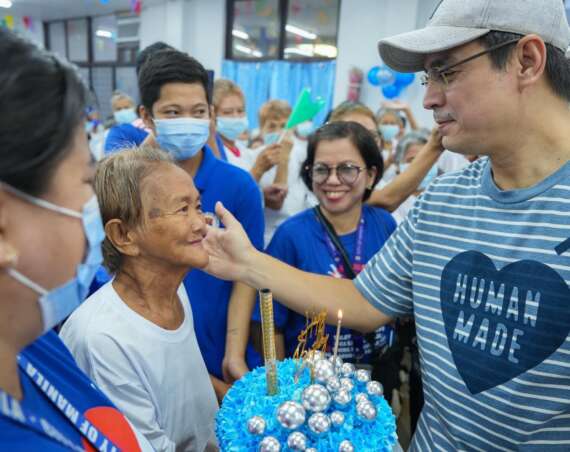
“Gusto ko lang ipaalam sa inyo na ang panalangin ninyo ay tinutugunan ng City Government at ng taxpayers ng Maynila,” Manila City Mayor Francisco “Isko” Moreno Domagoso would often tell families during his regular “Talk to the Patients.”
Because as part of his push to prioritize life-saving care, the City Government has, as of Friday, February 20, released ₱64,226,374.85 for 71 critical medical cases under the KAAGAPAY program.
Of the ₱64.2 million released so far, ₱38,419,378.25 went to 24 children diagnosed with biliary atresia who are scheduled to undergo liver transplants at APOLLO/MAX Hospital in India.
Domagoso said the payments were sent through wire transfers to ensure the funds were directly remitted to the treating hospital.
Another ₱13,205,861.76 covered heart surgeries for 22 patients with congenital heart disease at the Philippine Heart Center, while ₱2,273,270.54 was allocated for a patient with bilateral profound hearing loss who underwent cochlear implant and therapy at Chinese General Hospital.
An additional ₱10,327,864.30 was disbursed for 24 various medical assistance cases handled by institutions including the Philippine General Hospital, De Los Santos Medical Center, Lung Center of the Philippines, Manila Doctors Hospital, Philippine Children’s Medical Center, University of Santo Tomas Hospital, Makati Medical Center, Mary Johnston Hospital, Medical Center Manila, St. Luke’s Medical Center, and UERM Memorial Medical Center.
On February 20, Domagoso personally spoke with 13 child patients preparing for eight liver transplants in India, four heart operations at the Philippine Heart Center, and one kidney procedure at Chinese General Hospital.
For this batch, the city allocated ₱13,321,629.80 for liver transplants, ₱3,323,311.50 for heart surgeries, and ₱173,616.19 for the kidney case, totaling ₱16,818,557.49.
During his dialogue with beneficiaries, Domagoso pointed to the role of public trust in sustaining the assistance.
“We will do our best. Maraming salamat sa taxpayer. Sa tiwala nila, nakakaluwag-luwag tayo dun sa mga nangangailangan,” he said.
He has also reminded families that while money can be earned again, life cannot be replaced.
“Yung pera mawawala, kikitain ulit. Pero yung buhay pag nawala… huwag naman sana,” the Mayor said.
Beyond sending patients abroad for treatment, Domagoso has strengthened the city government’s efforts aimed at expanding the country’s own transplant capability.
In November, the Mayor visited the UP Philippine General Hospital (PGH) following the country’s first successful pediatric liver transplant performed in a government facility — an operation supported by more than ₱30 million in funds he helped raise for life-saving pediatric surgeries.
At the time, Domagoso said his aim was to lessen the need to send patients abroad by building up local expertise and upgrading public hospital facilities so that complex procedures can eventually be done in the Philippines.
“Kapag nagpatuloy ang tagumpay ng mga unang operasyon dito sa Maynila, hindi na natin kailangang pumunta sa India. Dito na natin magagawa ang liver transplant,” Domagoso said.
For the Mayor, direct financial assistance and institutional upgrades are part of the same approach: addressing immediate, high-risk cases while investing in the capacity of public hospitals to handle complex procedures closer to home.
In that framework, taxpayer money is not treated as a one-time subsidy, but as a means to both save lives today and gradually build a system that can save more tomorrow.