For years, the Philippine corrections system was synonymous with overcrowding, poor food, paper records that went missing, and persons deprived of liberty who waited far too long for releases they were legally entitled to, a system that punished people not just with imprisonment but with institutional neglect.
Under the Marcos Jr. administration, the Department of Justice (DOJ) says it has begun to change that picture, one reform at a time.
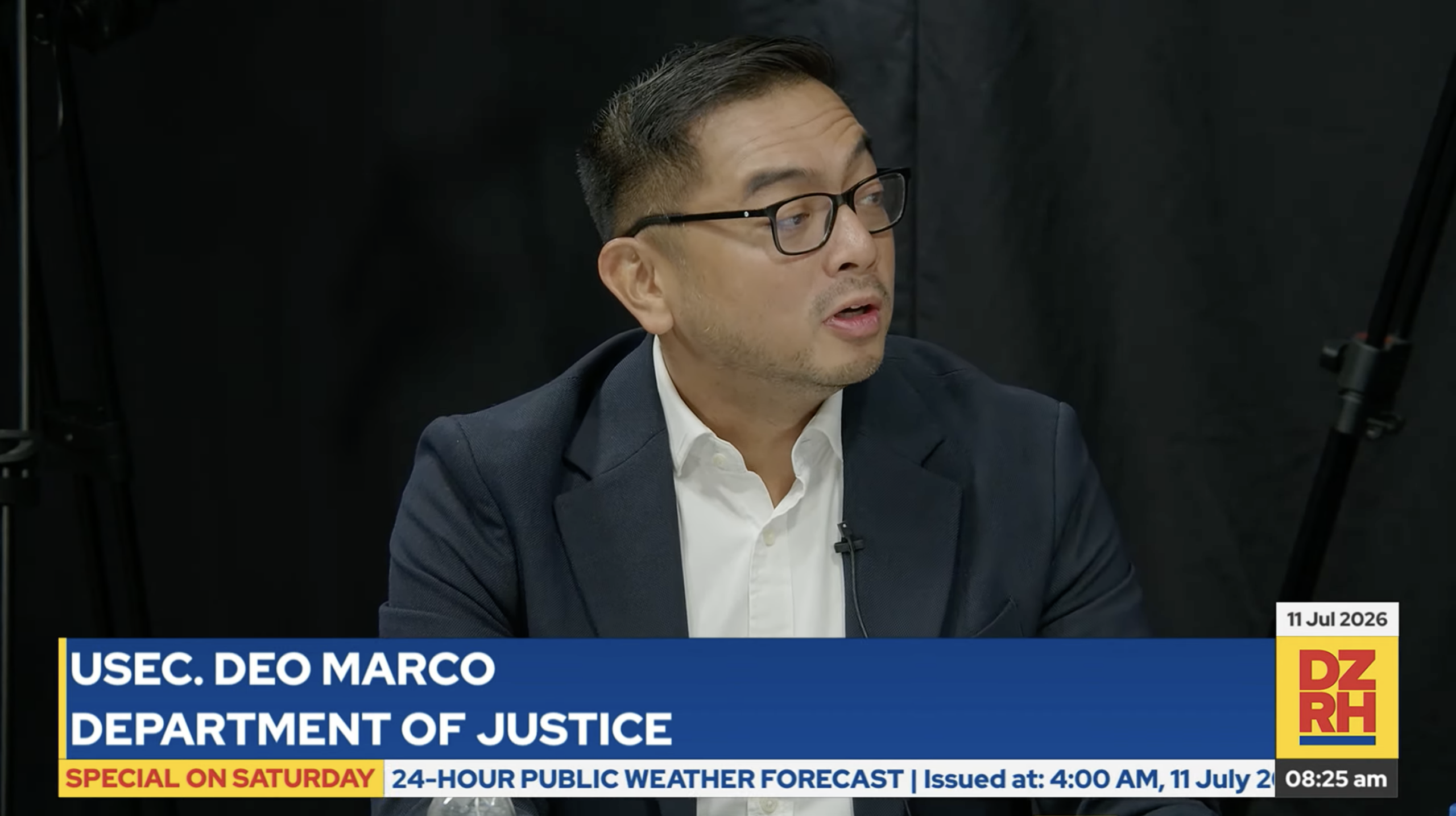
DOJ Undersecretary Deo Marco outlined the corrections cluster’s accomplishments in an interview on DZRH News program Special on Saturday on July 11, as part of “The DZRH SONA 2026 Series,” presenting a set of reforms that touch everything from what inmates eat to how their records are stored to how quickly they can be released when the law says they should be.
The most striking headline figure is the pace of releases: in just 3 years and 10 months, the Marcos administration has already released 32,932 persons deprived of liberty, surpassing the 30,673 released under the entire six years of the previous administration, with nearly two years still remaining in the current term.
“May two years ka pa, pwede pang maging doble ‘to. Kaya pa. Basta naaayon sa batas,” Undersecretary Marco said.
The National Bilibid Prison congestion rate has also dropped significantly, from 356% in 2022 to 193% as of May 2026, a reduction of 163 percentage points that Marco said reflects not just more releases but a more systematic approach to processing cases and managing the prison population.
On the ground inside the prisons, inmates are also eating better: the Bureau of Corrections increased the daily subsistence allowance for persons deprived of liberty by 30%, the first significant increase in years, as part of a broader effort to restore basic dignity to those undergoing reformation.
Reformation itself is also showing results, with 99.29% of inmates participating in mandatory reformation programs and 98.10% in intensive reformation programs, among the highest participation rates in BuCor history, reflecting a shift from pure detention toward genuine rehabilitation.
The DOJ and BuCor have also completed the full digitization of all inmate records that were previously kept on paper, now stored in the Inmate Management Information System under the One BuCor Portal, ending the era of paper records that slowed releases and created opportunities for irregularities.
Outside the prisons, the Parole and Probation Administration is supervising 194,239 offenders in their communities rather than in cells, generating an estimated ₱4.86 billion in government savings, with client compliance rates of 98.96% in 2025 and 99.78% in the first quarter of 2026.
“Hindi lang pera ang natitipid natin dito. Ang mga taong ‘to, nasa komunidad na nila, kasama ang kanilang pamilya, nagtatrabaho, nagbabayad ng buwis, nag-aambag sa lipunan,” Undersecretary Marco said.
The DOJ’s Board of Claims has also quietly been paying out compensation to victims of unjust imprisonment and violent crimes, granting a total of ₱30,795,000 in just eight months under the Victims Compensation Program, a program Undersecretary Margarita Gutierrez said most Filipinos do not even know exists.