Flood, garbage, and fragmented power have pushed the capital region to the breaking point, says lawmaker
Metro Manila is a megacity of 13 million people at night and 15 to 16 million during the day, and for decades, not one person has been fully in charge of it.
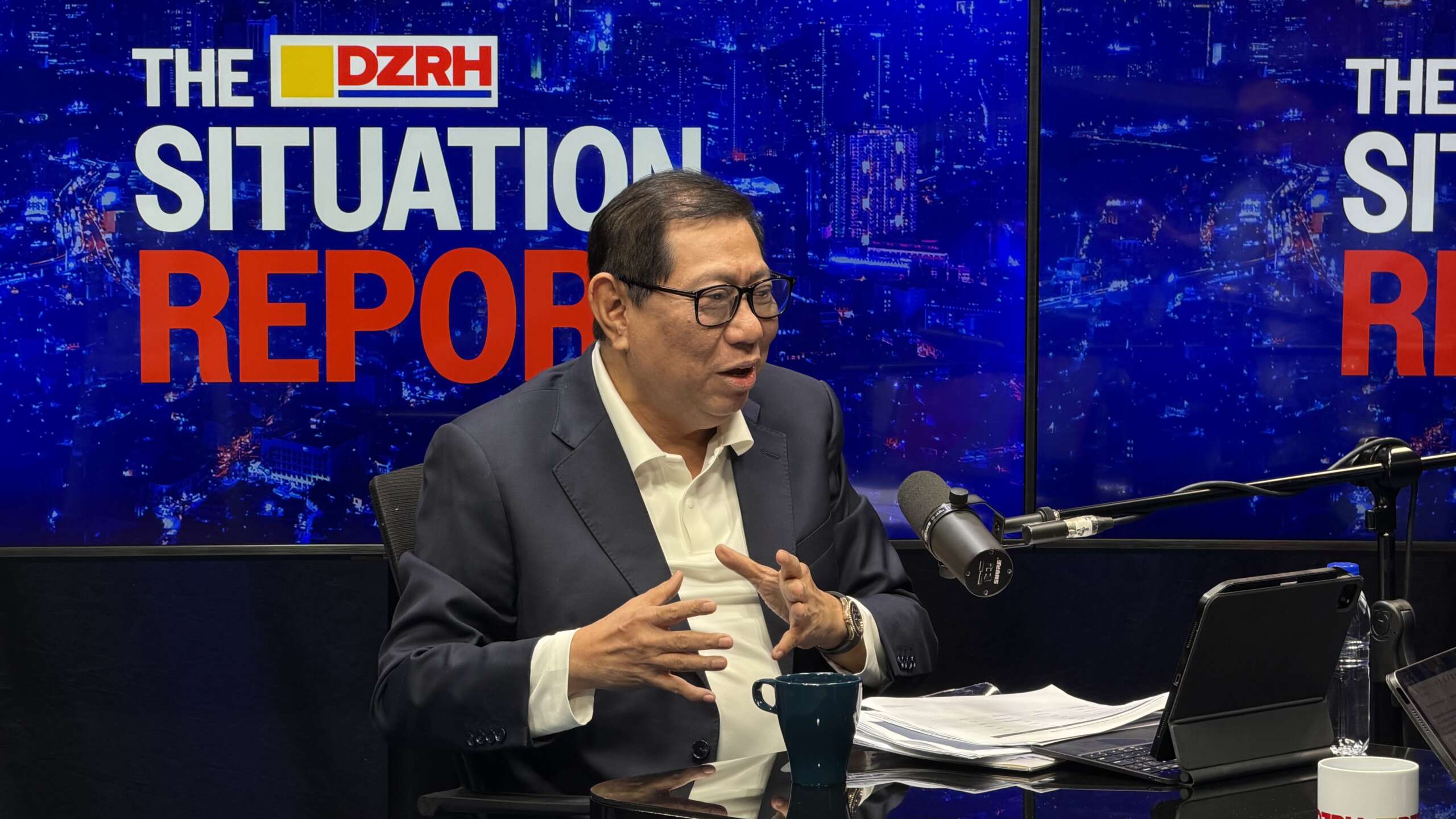
That is the central argument Caloocan City 2nd District Representative Edgar “Egay” Erice made Tuesday, September 8, on DZRH News program The Situation Report, where he called for the creation of an elected Metropolitan Government for Metro Manila with a governor, a vice governor, and a regional assembly.
Erice said his proposal is not radical, but is in fact already authorized by the 1987 Constitution.
“Wala talagang responsableng isang tao o isang ahensya na siyang dapat namamahala ng integrated services na ito,” Erice said, describing the fundamental dysfunction of the current arrangement where 17 politically autonomous local government units each operate independently on problems that are by nature shared.
Metro Manila has had a unified executive before, but only once, and only under an appointed, not elected, leader. The laate President Ferdinand Marcos Sr. established the Metro Manila Commission in 1975 to act as the central government of the local government units of the National Capital Region, with a governor as its executive head.
Marcos Sr. appointed his wife, then-First Lady Imelda Romualdez Marcos, as the first and longest-serving governor of Metro Manila, a position she held from February 27, 1975 to February 25, 1986.
During the former First Lady’s tenure as Governor, the Metro Manila Commission was able to implement initiatives with a metropolitan perspective rather than a parochial one for each unit, including a Metro Manila Land Use Plan and a Capital Investment Folio that managed the lands and resources of the entire region.
The MMC was abolished in 1990 and eventually replaced by the Metropolitan Manila Development Authority (MMDA) under Republic Act 7924 in 1995, but the transition stripped away the executive powers the MMC once held.
Erice said the MMDA, the body nominally tasked with coordinating the capital region’s services, has no real authority—it can coordinate but not compel, suggest but not enforce, plan but not fund.
“Yung MMDA kasi walang kapangyarihan at walang pondo. Nakikiusap lang,” Erice said, contrasting the MMDA’s powerlessness with the Tokyo Metropolitan Government, whose elected governor commands a budget, enforces unified legislation, and is accountable to the voters of the entire megacity.
The consequences of this governance vacuum are visible every time it rains—flood waters that originate in Valenzuela, travel through Caloocan, and drain through Manila cannot be managed by any single city government, yet no overarching authority exists to coordinate the response across political boundaries.
“Yung waterways, for example, yung Tullahan River, it will traverse from Valenzuela, Caloocan to Manila. So iisa lang ang daan niyan. Maligaya Creek at marami pang iba, mga rivers within several cities magta-traverse. So ‘pag naglinis yung isa, gumawa ng proyektong rito, balewala rin,” Erice said.
The garbage crisis is no different: Metro Manila generates 12,000 tons of solid waste every day, all of it going to a single landfill in Rodriguez, Rizal, while Singapore manages 5,500 tons daily across four modern disposal facilities including waste-to-energy plants, sanitary landfills, and incinerators.
Erice said the 1987 Constitution already anticipated this problem, providing in Article 10, Section 11 the authority for Congress to create a Special Metropolitan Regional Government for Metro Manila, subject to a plebiscite — meaning no charter change is needed, only the political will to pass the enabling law.
ARTICLE X, SECTION 11. The Congress may, by law, create special metropolitan political subdivisions, subject to a plebiscite as set forth in Section 10 hereof. The component cities and municipalities shall retain their basic autonomy and shall be entitled to their own local executives and legislative assemblies. The jurisdiction of the metropolitan authority that will hereby be created shall be limited to basic services requiring coordination.
Under his proposal, the Metropolitan Manila Government would have an elected governor and vice governor, an elected regional assembly empowered to pass unified ordinances, and authority over the services that currently fall through the cracks between city governments—flood control, solid waste disposal, mass transportation, housing, environmental protection, and road network management.
“Yung mga integrated services, yung regional planning para doon sa mga major infrastructure, yung mga road networks o EDSA. Waterworks, yung sewage system natin. Yung transport, eventually dapat may namamahala niyan sa buong Metro Manila. Yung environmental protection, dapat may namamahala diyan. Yung ating solid waste disposal, yung ating housing,” Erice said.
He said a transition committee composed of the Department of Budget and Management, the Senate, and the House of Representatives would be formed upon passage of the law to prepare the staffing pattern, financial requirements, and implementing rules before the government is put to a plebiscite—which he is targeting to coincide with the 2028 national elections, with the first gubernatorial election in 2029 and an initial five-year term to align the new government with the national electoral calendar by 2034.
Erice said he has already spoken with fellow Metro Manila congressmen, many of whom expressed support, and is seeking the endorsement of House Speaker and Presidential certification of the bill as urgent—a move he said is justified by the severity of Metro Manila’s current crisis.
The alternative, he said, is not the status quo but a gradual collapse: waterways clogged beyond repair, depressed communities sinking deeper into poverty, housing informality spreading further into flood-prone areas, and the capital region’s contribution to national GDP declining as its livability deteriorates.
“Malulunod ang Metro Manila sa baha. Malulunod sa basura. Babagsak ang ekonomiya, bababa yung contribution niya sa GDP, bababa yung GDP ng ating bansa sa aking tingin. At lalong maghihirap yung mga mamamayan ng Metro Manila,” Erice said.