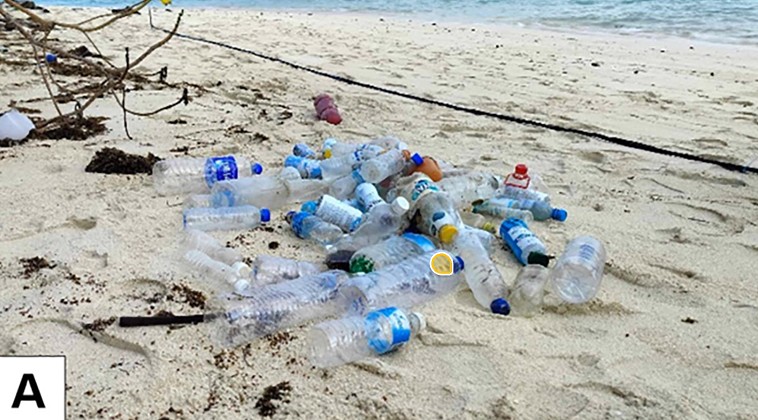
A study conducted by researchers from Mindanao has found that a significant number of polyethylene terephthalate (PET) bottles washing ashore in the Philippines originate from other countries.
The study, published in the Philippine Journal of Science in February 2026, showed that 77% of these PET bottles—posing a continuing environmental threat—were found along the coastlines of Capayas Island in the West Philippine Sea, off Palawan.
Researchers assessed plastic litter in the island’s protected landscape and seascape, revealing alarming concentrations of single-use PET drinking containers.
Data showed that 34% of the bottles originated from Malaysia, followed by 20% from Vietnam, 9% from China, 7% from Indonesia, 4% from Thailand, and 2% each from Brunei and Singapore.
“This finding indicates a significant role of cross-border plastic drift in marine pollution affecting Philippine coastal environments. The temporal data showed continuous PET influx, with daily variations influenced by environmental factors such as monsoonal winds, rainfall, and high tides,” the study’s abstract read.
The findings also showed that most of the recovered items were water and soft drink bottles, highlighting the persistent impact of single-use plastics on marine ecosystems.
The study further noted that many of the PET bottles exhibited physical degradation due to prolonged exposure to ultraviolet (UV) radiation and wave action, increasing the risk of breaking down into hazardous microplastics within the marine protected area.
PALAWAN, THE PH’S ‘LAST ECOLOGICAL FRONTIER’
Palawan’s biodiversity plays a critical role in the Philippines, serving as a key fishing ground and habitat for diverse marine species.
The study noted that Palawan is home to 105 of the country’s 475 threatened species, with 67 found only in the Philippines and 42 endemic to the province.
“This rich biodiversity encompasses coastal and marine ecosystems that boast a diverse array of habitats. These include coral reefs housing 379 coral species, seagrass meadows supporting dozens of species, and vast mangrove forests spanning 44,500 hectares—the largest remaining mangrove cover in the Philippines—comprising 31 distinct species,” it said.
However, researchers warned that marine plastic pollution from neighboring countries poses a growing threat to these ecosystems.
Accumulated plastic debris alters shoreline habitats, affecting nesting sites and smothering coastal vegetation. Marine wildlife are also at risk of ingesting degraded plastic fragments or becoming entangled in debris.
The study added that weathered plastics can release chemical additives and absorb persistent organic pollutants from seawater, introducing toxins into the marine food web.
To protect isolated islands like Capayas from becoming marine debris hotspots, the study recommended a combination of local conservation efforts and stronger policy enforcement.
These include regular cleanup drives, improved solid waste management in nearby municipalities, and stricter implementation of extended producer responsibility (EPR) policies to hold beverage manufacturers accountable for the lifecycle and recovery of PET packaging.
“The finding shifts the narrative from viewing plastic pollution solely as a local waste issue to recognizing it as a regional environmental challenge rooted in trade, marine connectivity, and shared ecological responsibility. As such, the study underscores the urgent need for strengthened regional cooperation, enhanced environmental accountability, and evidence-informed policy instruments across both national and international scales,” the researchers said.