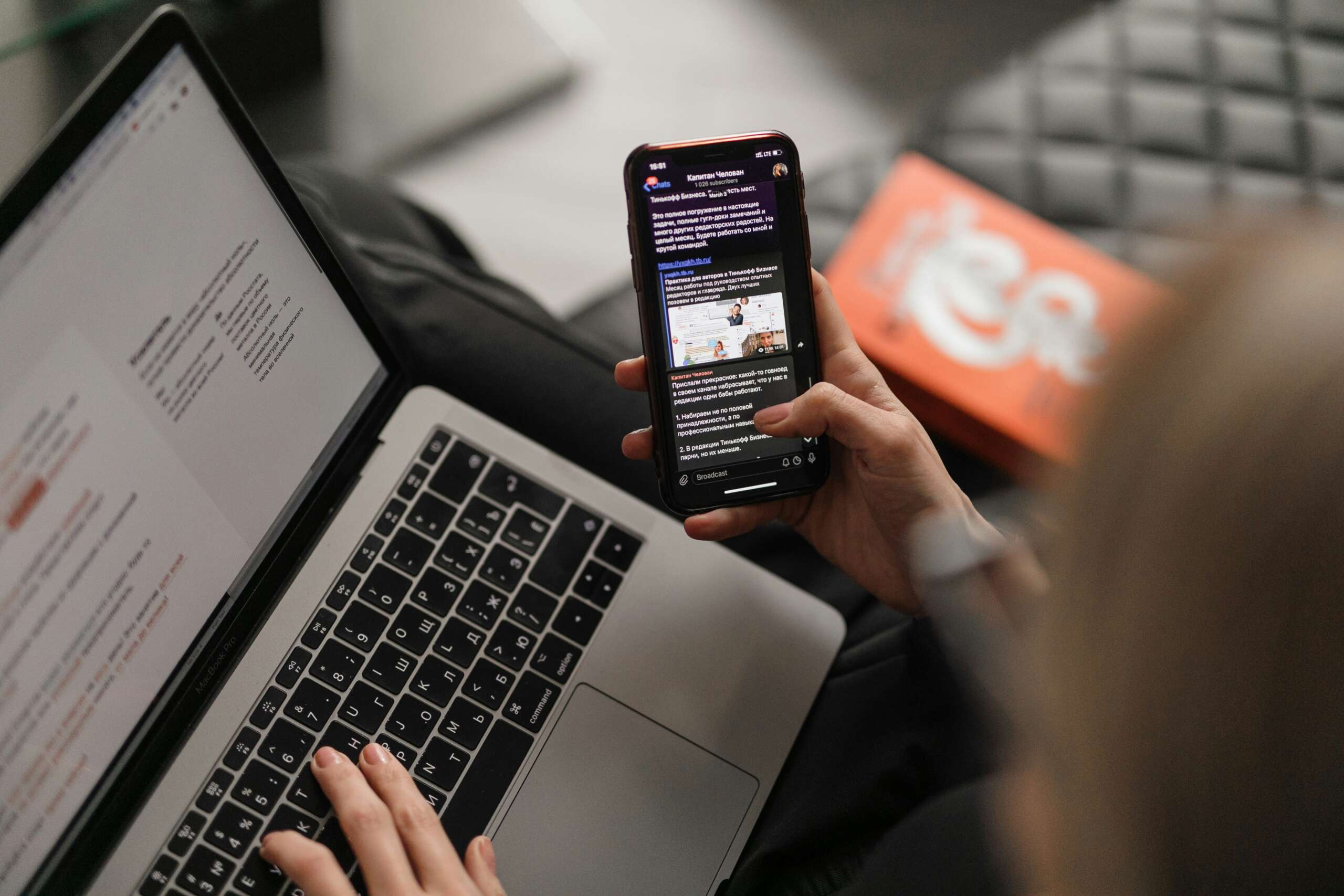
In an era dominated by endless notifications, short-form videos, and constant digital multitasking, maintaining focus has become increasingly difficult.
According to American psychologist Gloria Mark, a chancellor’s professor of informatics at University of California, Irvine, the average human attention span on screens has declined sharply over the past two decades.
Mark said this drop in attention span has significant implications for productivity, stress, and overall mental well-being.
Her research tracks how long a person stays focused on a single screen before switching to another window or device.
Data from her studies show that in 2004, the average attention span on a screen was about 2.5 minutes. By 2012, it had dropped to 75 seconds. In recent years, it has further declined to an average of just 47 seconds.
“The median is 40 seconds. And what this means is that half of all the measurements that we found were 40 seconds or less of people’s attention spans,” Mark explained.
She added, “Now obviously because we’re talking about averages and medians, sometimes people do spend longer, but quite a good bit of the time, their attention spans are much shorter, with an average coming to 47 seconds.”
Mark said this shorter attention span is “not a good thing,” noting that her research shows a clear link between frequent attention switching and increased stress levels.
“The faster the attention switching occurs, stress is measured by people wearing heart rate monitors. We show that stress goes up. We know from decades of research in the laboratory that when people multitask, they experience stress, blood pressure rises,” she explained.
‘SWITCH COSTS’
She noted that switching tasks every 47 seconds creates a psychological effect known as “switch costs.”
“Every time you switch your attention, you have to reorient to that new activity, that new thing you’re paying attention to, and it takes a little bit of time,” she said.
With these frequent interruptions, the brain is forced to constantly reorient, which increases mental fatigue, raises blood pressure, and heightens stress levels.
Frequent context switching also disrupts deep cognitive processing, leading to more mistakes and lower-quality work.
It can also create an illusion of productivity. While multitasking may feel efficient, research shows that completing tasks while frequently switching focus actually takes longer than doing them sequentially.
Despite the challenges posed by digital devices, Mark emphasized that people can retrain their ability to focus through deliberate habits.
These include developing self-awareness of one’s focus patterns—such as recognizing the urge to check social media or email—and consciously resisting those impulses.
She also recommended setting aside uninterrupted periods for deep work, followed by regular breaks away from screens.
Mark further advised turning off non-essential notifications and decluttering both physical and digital workspaces to reduce distractions.