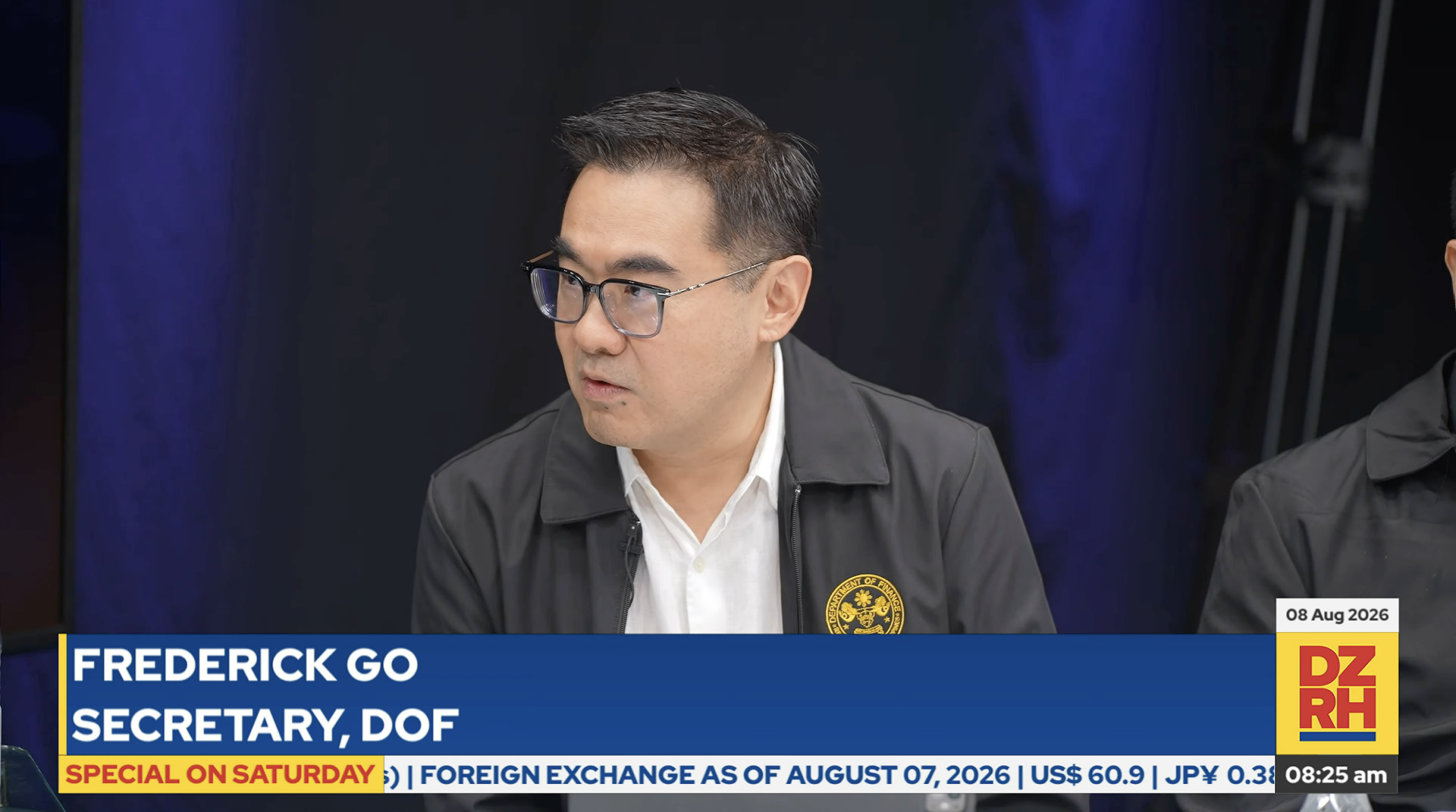
The Philippines’ general government debt-to-GDP ratio stands at 57 to 58%, well below the World Bank’s recommended maximum threshold of 70%, giving the government ample room to borrow for public investment without compromising fiscal stability, Finance Secretary Frederick Go said Saturday.
Go made the statement in an interview on DZRH News program Special on Saturday on August 8, as part of the DZRH SONA 2026 Series featuring the Department of Finance (DOF).
“Is now roughly around 57, 58%,” Go said when asked about the current debt-to-GDP ratio, adding that the World Bank sets 70% as the threshold beyond which a country’s debt level becomes a cause for concern.
He said Filipinos can rest easy knowing the country’s debt remains within safe and manageable levels, even as the government continues to borrow to fund its infrastructure, education, and social programs.
“We can sleep soundly tonight,” Go said, stressing that the Philippines still has significant fiscal space to pursue its development agenda without the risk of a debt crisis.
He acknowledged that borrowing is unavoidable for any government that wants to build classrooms, hospitals, roads, and other essential public infrastructure, but said responsible borrowing within safe debt levels is the approach the Marcos administration has maintained.
Go said the combination of a manageable debt-to-GDP ratio, a declining fiscal deficit, and investment-grade credit ratings from all five major global agencies gives the Philippines a strong and credible fiscal foundation heading into the final years of the Marcos administration.