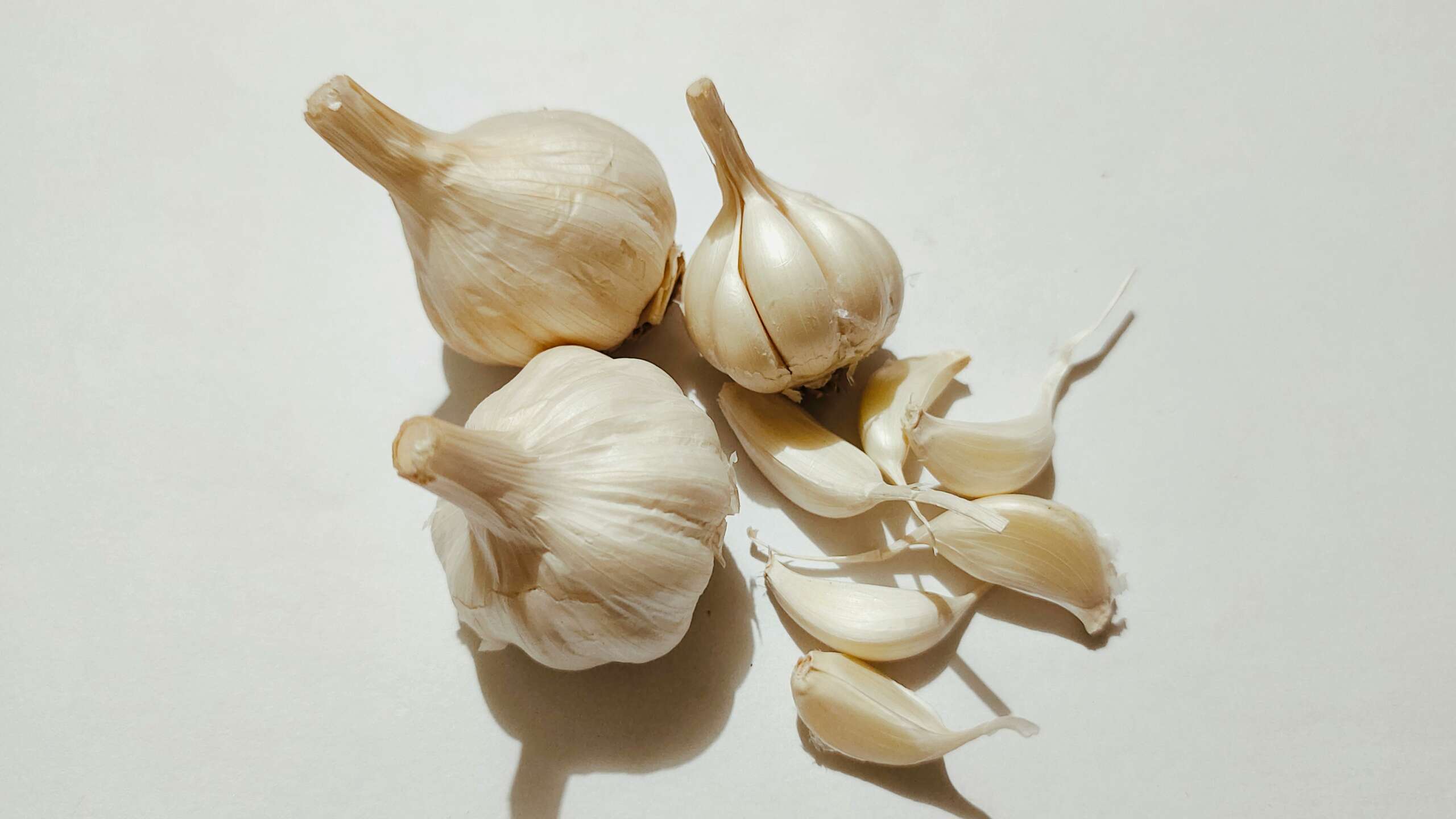
A new study has found that garlic, a common kitchen staple, may prevent mosquitoes from mating and laying eggs.
The research, conducted by scientists from Yale University, found that garlic contains a naturally occurring compound that acts like a “birth control” for winged insects.
The study, led by researcher Shimaa Ebrahim and Professor John Carlson, identified a specific biological mechanism behind the effect.
Researchers found that insects are not repelled by garlic’s strong odor but by its taste. When fruit flies were exposed to garlic, their mating behavior stopped entirely, resulting in a 100% reduction in breeding.
The team identified the compound responsible as diallyl disulfide, an organic sulfur compound commonly used in food flavorings and nutritional supplements.
According to the researchers, when insects taste diallyl disulfide, a specialized sensory receptor known as TrpA1 is activated, triggering an immediate avoidance response. The compound stimulates bitter-sensing neurons and alters gene expression—including those linked to satiety—effectively suppressing the insects’ drive to mate and lay eggs.
“We study flies, including harmless ones like the fruit fly, to try to discover new ways of controlling species that pose danger to humans either by spreading disease or damaging crops,” Carlson said.
Garlic also affects disease-carrying mosquitoes
The researchers extended their tests beyond fruit flies to other high-risk pest species. They found that garlic compounds were also effective against tsetse flies and mosquito species known to transmit diseases such as dengue, yellow fever, and Zika.
However, the compound had no effect on some insects, such as wasps. Scientists later found that wasps lack the TrpA1 receptor, highlighting the specificity of the biological pathway.
Using a “phytoscreen” method—testing insect responses to various plant extracts—the Yale team said it aims to identify more natural compounds that can target similar sensory receptors in disease-carrying pests.