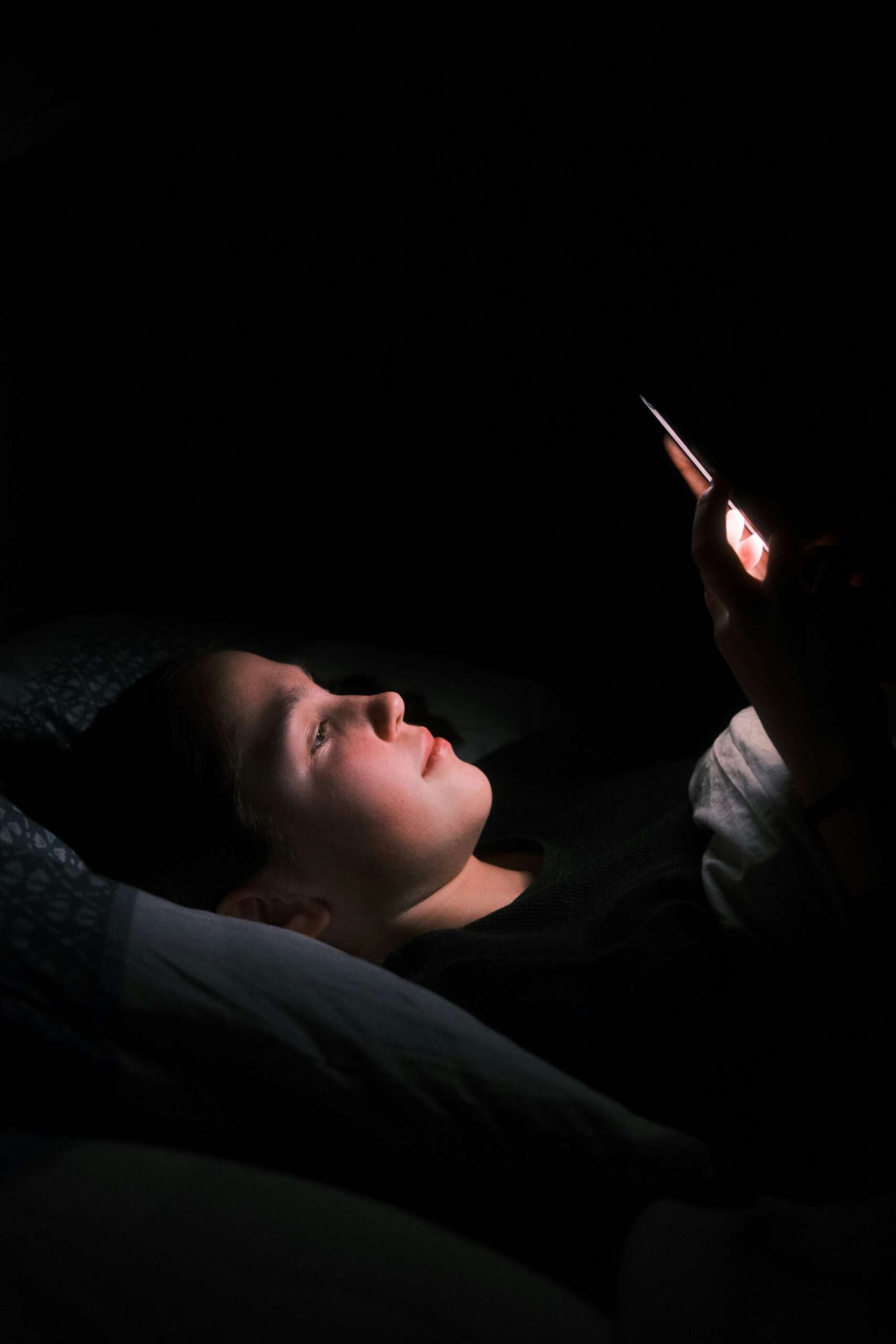
For millions of adults worldwide, the day begins with reaching for a smartphone—and often ends the same way before falling asleep.
This growing phenomenon, in which people start and end their day with a phone in hand, is eroding focus, attention, and overall well-being, social psychologist Jonathan Haidt warned.
Speaking on the World Economic Forum’s Meet the Leader podcast, Haidt—a professor at New York University Stern School of Business and author of The Anxious Generation—said screen culture has taken over two critical daily transitions: waking up and going to sleep.
“THAT IS NOT A LIFE”
Haidt said he has observed among students and adults alike that checking smartphones has become an automatic habit upon waking.
“The very first thing they do when they wake up in the morning is check their phone for notifications,” he said. “They don’t get out of bed, they don’t go to the bathroom, they don’t make coffee—it’s the phone. And what’s the last thing they do before they close their eyes at night? Same thing: it’s the phone. And what do they do in between? For a lot of them, mostly it’s the phone. That is not a life.”
He added that such habits diminish meaningful relationships and prevent people from being fully present in real-life interactions.
HOW MORNING SCREEN TIME SHAPES THE DAY
Checking a phone immediately after waking up, Haidt explained, effectively surrenders control of one’s attention to algorithms designed to maximize engagement.
To break the habit, he said he “strongly encourages” his students to reflect on their routines.
“Make a list of the last five things you do before you close your eyes and look at it: is that really what you want? And what everyone finds is when they do that, when they give themselves space to wake up and to set the day and to choose what they want to happen that day, set your intentions, you have a much better day,” he said.
“If you don’t do that, you open your eyes, you look at your phone, and your phone will now control your thinking, your cognition, your thoughts, your priorities, and your actions for the rest of the day. You’ll constantly be interrupted, you’ll never have deep work, and you won’t really amount to anything,” he added.
Haidt also warned that increasing reliance on smartphones—alongside advances in artificial intelligence—may be affecting mental well-being and cognitive abilities.
“We can’t focus. So in the age of AI, as our machines are getting smarter than us very, very quickly, we’re helping it along by making ourselves stupider. This does not bode well for the human future,” he said.
He likened smartphone apps to gambling machines, noting that they are engineered using addictive, variable-reward systems.
Haidt argued that willpower alone is not enough to break the habit, urging people instead to change their environments.
“Willpower is overmatched. Willpower is not enough. You can’t just say, ‘I’m going to look at my phone less.’ You can’t just say, ‘I’m going to be present in my social…’ No, you cannot. That’s not enough. The phones, the apps are designed by people who studied behaviorism, they studied gambling and gaming addiction, they used techniques from Las Vegas in designing these apps, and they are too strong for our willpower,” he said.
Citing Angela Duckworth, author of Grit, Haidt said changing one’s environment is key to reshaping thinking patterns and long-term habits.