In December 1989, a young radio reporter walked alone down the entire length of Connecticut Street in Quezon City, reporting live under the crosshairs of rebel snipers during the bloodiest coup attempt against President Corazon Aquino.
His name was Cesar Chavez, and the station that sent him there was DZRH—which turns 87 today.
Established on July 15, 1939, under the Manila Broadcasting Company (MBC), DZRH has outlasted governments, survived wars, and broadcast through coups, disasters, and revolutions.
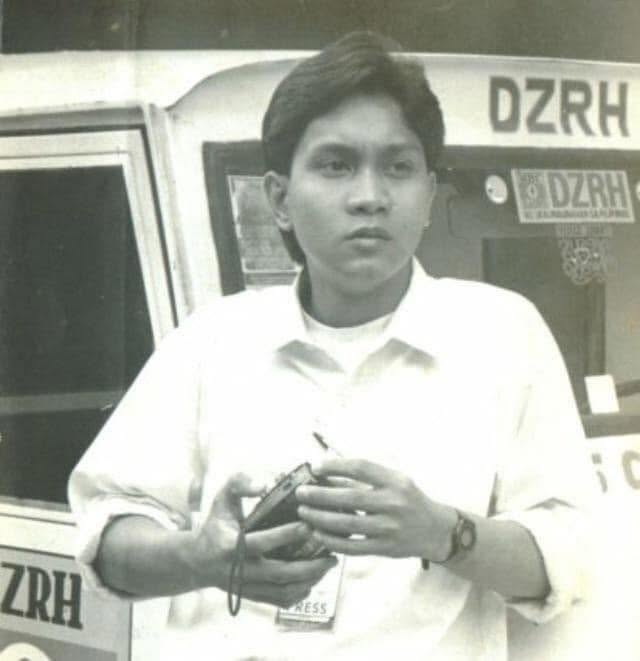
As the youngest member of the DZRH news team during the December 1989 coup attempt, Chavez covered the unfolding crisis from the ground, reporting from some of the most dangerous areas in Metro Manila despite the constant threat of bombs, rockets, bullets, and sniper fire.
It was Chavez who first broke the news of the surrender of Brigadier General Marcelo Blando’s 500-strong rebel command, widely considered the turning point of the battle in EDSA. One newspaper account captured the moment simply: “Cesar Chavez beats everyone to the draw for DZRH.”
The Rotary Club of Manila honored him for his “exceptional service to the nation at large through outstanding, gallant, zealous, heroic, courageous, hardy, and dedicated efforts, braving the bombs, the rockets, the bullets at great personal sacrifice and risk of life in the truthful, objective, sustained on-the-spot coverage of the recent military coup attempt.”
The Philippine Jaycees presented him with the Man of the Moment Award, recognizing “whose dedication to service to humanity during the crisis in December 1989 will serve as a lasting reminder and inspiration to all men.”
For Chavez, DZRH became far more than an employer.
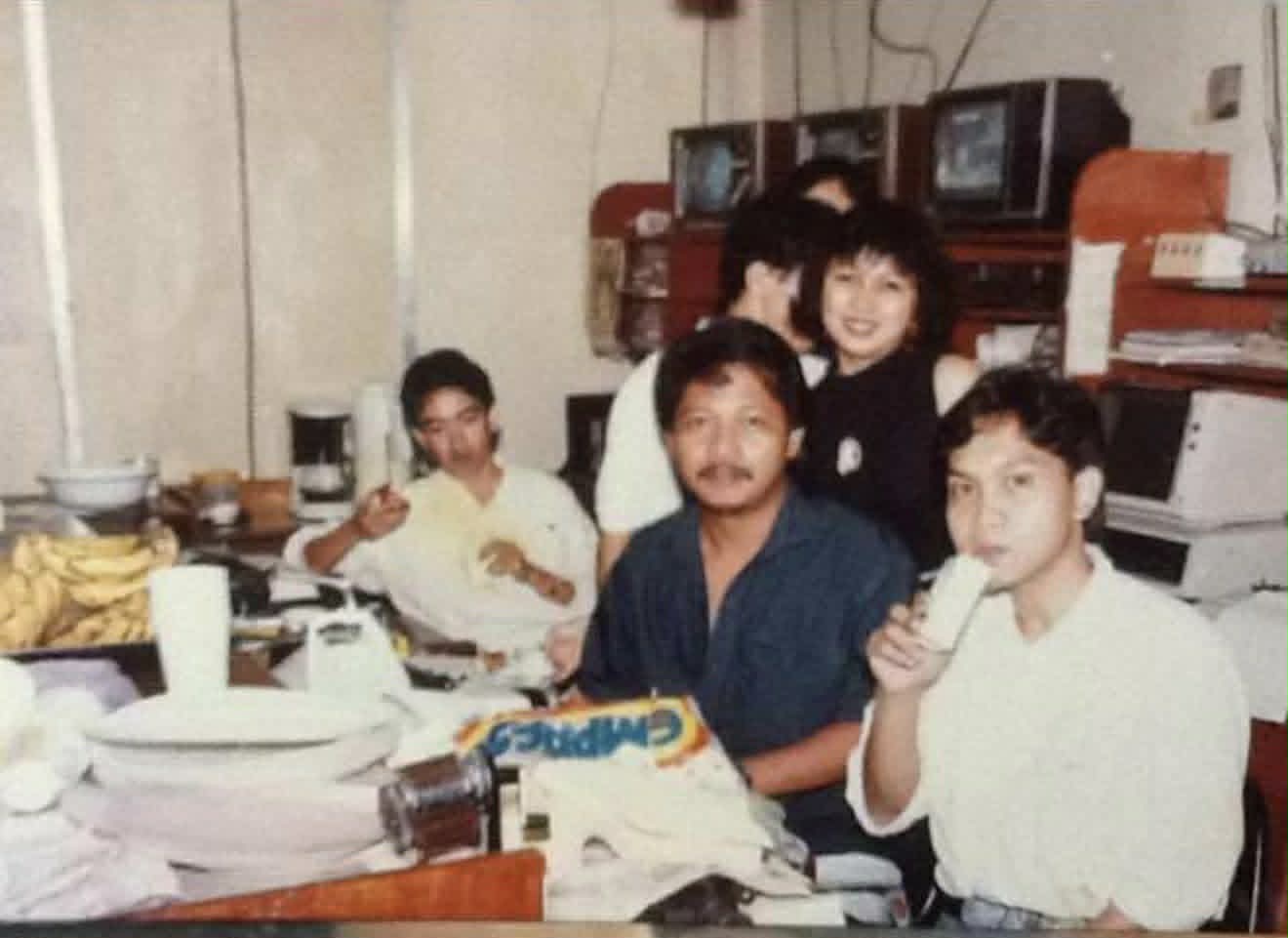
“DZRH became much more than my workplace. It became my training ground, my classroom, and my second home,” Chavez said in a message marking the station’s anniversary, reflecting on a career that began in his youth and never truly left the walls of MBC.
It was DZRH that first exposed Chavez to the machinery of power: to coups, crises, and the fragility of democratic institutions. It was that exposure, born in the newsroom and tested in the field, that drove him to understand not just how to report on conflict, but how to understand it at its roots.
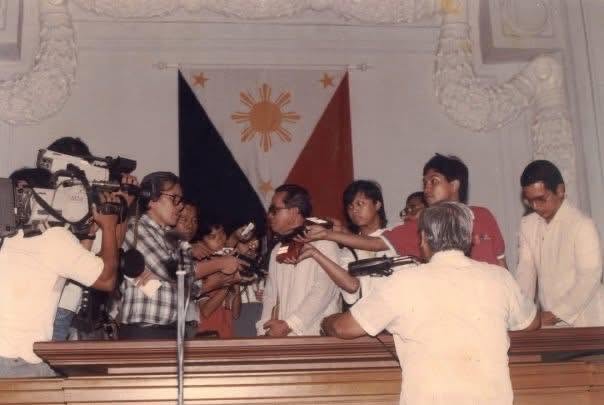
The station’s investment in Chavez went beyond airtime. DZRH made it possible for him to complete both degree and non-degree studies in the Philippines and overseas, giving him opportunities that, as he put it, “changed the course of my life.”
His years on the ground as a reporter eventually gave way to leadership.
Chavez rose through the ranks of MBC to become Director for News and Public Affairs, then Assistant Vice President, and eventually Vice President for News and Public Affairs—concurrently serving as Station Manager of DZRH Radio and DZRH News Television, and Head of Digital Media.
His experience covering five military coup attempts against President Aquino drove him to pursue an extraordinary range of military and security training and education that would define the next chapter of his life.
He completed the Intelligence Officer Basic Course, Intelligence Officer Advance Course, and Tradecraft Course—also known as the Military Intelligence Collection Course—at the Special Intelligence Training School of the Intelligence Service of the Armed Forces of the Philippines, as well as the Psychological Warfare Course at the Philippine Army in Fort Bonifacio, and the Command and General Staff Course at the Naval Education and Training Command of the Philippine Navy.
His academic pursuit of national security did not stop there. Chavez earned a Master in National Security Administration from the National Defense College of the Philippines at Camp General Emilio Aguinaldo, and a Doctor of Philosophy in Peace and Security Administration from Bicol University at its Camp Crame Extension Campus in Quezon City.
He also completed the National and International Security Program at the Harvard Kennedy School, Harvard University—rounding out a security education that spanned the barracks, the classroom, and one of the world’s most prestigious institutions of learning.
Those defining days in 1989 set the trajectory for a career that would go on to earn Chavez two KBP Golden Dove Awards for Best Public Affairs Host, a KBP Golden Dove Award for Best Public Affairs Program, two PMAP Best Public Affairs Host awards, two Rotary Club of Manila awards, and the 26th UP Gandingan’s Best AM Public Affairs Program Host award, among others.
“As DZRH celebrates its 87th anniversary, I celebrate not only the memories and the awards, but the institution that believed in me, invested in my growth, and gave me opportunities that changed the course of my life,” Chavez said.
“For all that it has done for my career, my education, and my journey as a broadcast journalist and public servant, I remain proud, and forever grateful, to have been part of the DZRH family,” he said.