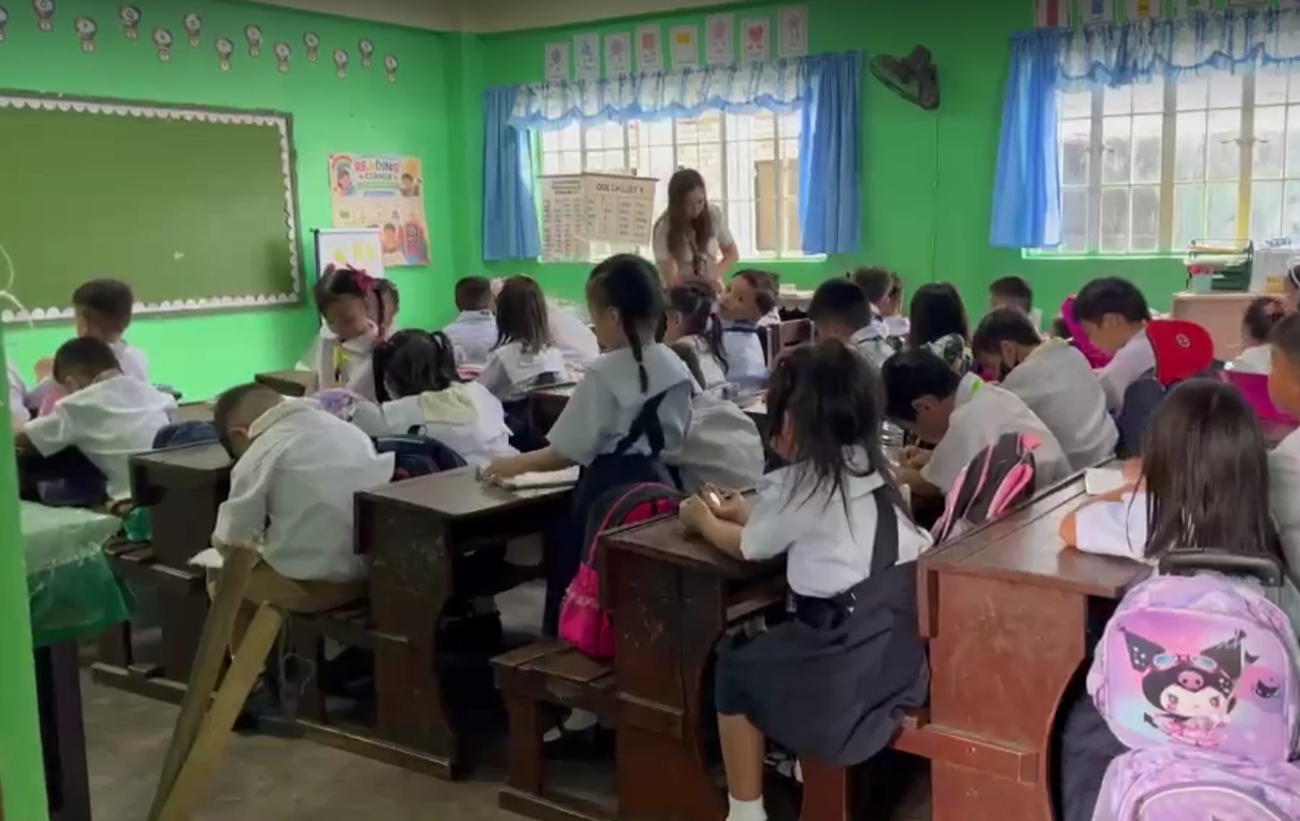
The Department of Education (DepEd) has opened School Year 2026–2027 with a comprehensive package of reforms aimed at improving student learning and strengthening support for teachers.
Education Secretary Sonny Angara issued guidelines covering the implementation of the agency’s three-term school calendar, learning continuity during emergencies, revised lesson planning and learning design, updated assessment and grading policies, and the rollout of a new senior high school curriculum.
Angara said the reforms are aligned with the directive of President Ferdinand Marcos Jr. to deliver quality education to Filipino learners.
“Mas titiyakin natin na maayos ang pagkatuto ng mga bata at mas suportado ang ating mga guro. Ginawa natin ang mga repormang ito upang gawing mas malinaw ang sistema, mas epektibo ang pagtuturo, at mas nakatuon sa pangangailangan ng mga mag-aaral,” he said.
Under the new school calendar, DepEd will transition to a 201-day academic year divided into three terms. The first term runs from June 8 to September 15, the second from September 16 to December 18, and the third from January 4 to April 8.
DepEd said the shift is expected to provide longer and more coherent learning periods, improve lesson pacing, and allow dedicated time for student enrichment activities.
In an interview a week before the start of classes, Angara expressed hope that the new calendar would lead to better learning outcomes.
“We’re hoping na mas maganda ang learning outcomes, dahil si teacher, mas may oras siyang maghanda, mas may oras siyang mag-train, at mas kaunti ang exams na ibibigay niya,” he said.
Aside from the calendar reform, DepEd also simplified lesson planning under the ILAW Framework (Intentions, Learning Experience, Assessing Learning, and Ways Forward), allowing teachers to focus more on instruction.
The department said the policy streamlines documentation, prohibits additional templates beyond prescribed standards, and allows teachers to use artificial intelligence as a support tool.
An improved curriculum is also being rolled out this school year, offering more flexible learning pathways, strengthening competencies, expanding elective options, and better preparing students for higher education, employment, entrepreneurship, and lifelong learning.
Meanwhile, teachers are set to receive a ₱10,000 teaching allowance under the Kabalikat sa Pagtuturo Act, aimed at reducing out-of-pocket expenses and increasing classroom support.
For the current academic year, DepEd reported more than 26 million enrollees in over 45,000 public schools, with nearly 900,000 teachers nationwide.
DepEd Assistant Secretary Joyce Andaya told DZRH’s Special on Saturday that more students are expected to enroll in the coming days.
To reach more learners, teachers have conducted door-to-door campaigns encouraging parents to send their children to school and avoid missing lessons.
“Marami silang mami-miss na lessons kung hindi sila papasok. Mas maganda kasi na pagpasok pa lang ng klase, handa na sila. Alam na nila ang requirements, para maka-engage na sila sa kanilang mga kaklase,” Andaya said.