Lawyer Manases “Mans” Carpio, husband of Vice President Sara Duterte, formally filed a criminal complaint before the Quezon City prosecutor’s office against officials of the Bangko Sentral ng Pilipinas (BSP), Anti-Money Laundering Council (AMLC) and four members of the House of Representatives.
Carpio is charging them with violating bank secrecy laws, the Anti-Money Laundering Act, and the Data Privacy Act for disclosing his and his wife’s financial records during last week’s impeachment hearings, his lawyer Peter Paul Danao said.
Named as respondents in the complaint are BSP Governor Eli Remolona Jr., who concurrently chairs the AMLC, and AMLC Executive Director Ronel Buenaventura. Also charged are House Committee on Justice chair and Batangas Rep. Gerville Luistro; Akbayan Rep. Chel Diokno; Akbayan party-list Rep. Percival Cendaña; and Mamamayang Liberal Rep. Leila de Lima, along with unnamed John and Jane Does.
In his complaint-affidavit, Carpio alleged that the respondents “conspired, cooperated and confederated with each other” to publicly disclose AMLC reports covering his and Duterte’s bank transactions spanning 2006 to 2025 — a 20-year period — despite his objections and a cautionary letter he had sent Buenaventura before the April 22 hearing.
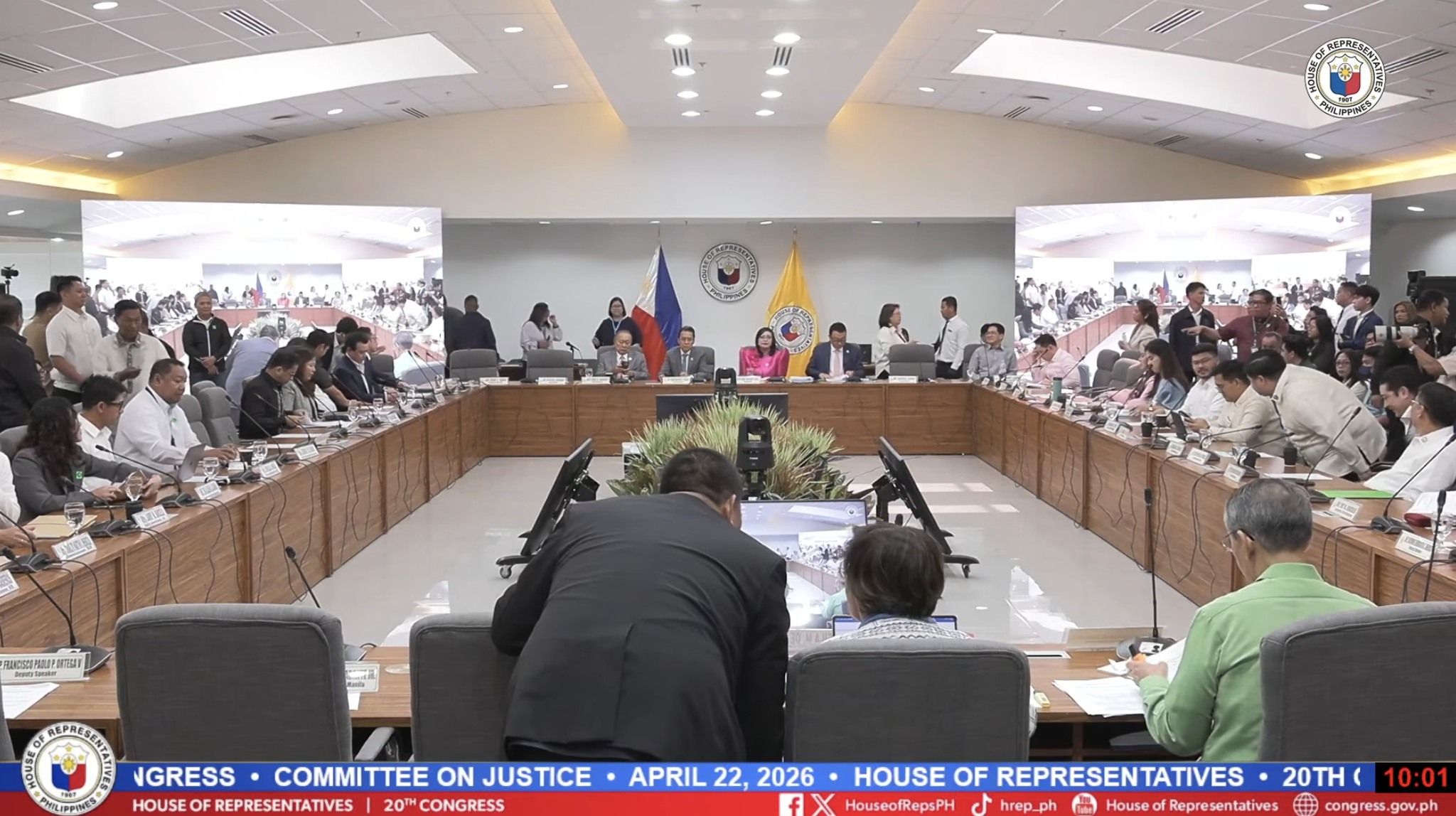
Carpio pointed to that hearing as the triggering event, during which Buenaventura testified before the House committee and disclosed covered transaction reports, suspicious transaction reports, financial intelligence reports, and investigation reports involving the couple.
“Neither I nor my wife VP Sara has ever consented to the AMLC or any of its officers and staff to make public any transaction reports in relation to our bank accounts,” Carpio stated in the affidavit.
The complaint zeroes in on Section 8(a) of the AMLA as amended, which bars the AMLC from revealing “in any manner, any information known to them by reason of their office.”
Carpio argued the prohibition is absolute and admits of no exception — and that not even a subpoena from a House committee can override it. “Absent any amendatory law, the prohibition must hold,” the complaint read.
Carpio also faulted each respondent individually. He accused Cendaña and Diokno of moving “with utmost precision, cooperation and unison” to get Remolona and Buenaventura subpoenaed and compelled to testify.
He accused Luistro of personally signing the subpoena and then presiding over the hearing without stopping the disclosure.
De Lima, as endorser of one of the impeachment complaints, had a “vested interest to substantiate the complaint,” the affidavit said.
Beyond the AMLA, Carpio charged the respondents with violating the Bank Secrecy Law, which classifies all bank deposits as “absolutely confidential,” and the Data Privacy Act, which penalizes the unauthorized disclosure of sensitive personal information with up to five years in prison and fines of up to two million pesos.
He argued that because the respondents acted outside any legal authority in committing the alleged offenses, they should be treated as private citizens — not public officers — under established Supreme Court jurisprudence.
Carpio said the complaint goes beyond his family’s case, warning that the alleged disclosure sets a “dangerous precedent” that puts every Filipino’s financial privacy at risk.
“AMLA is being weaponized to the max even if illegal and contrary to law, for pure black propaganda with a view to the 2028 national election,” he said in a statement.