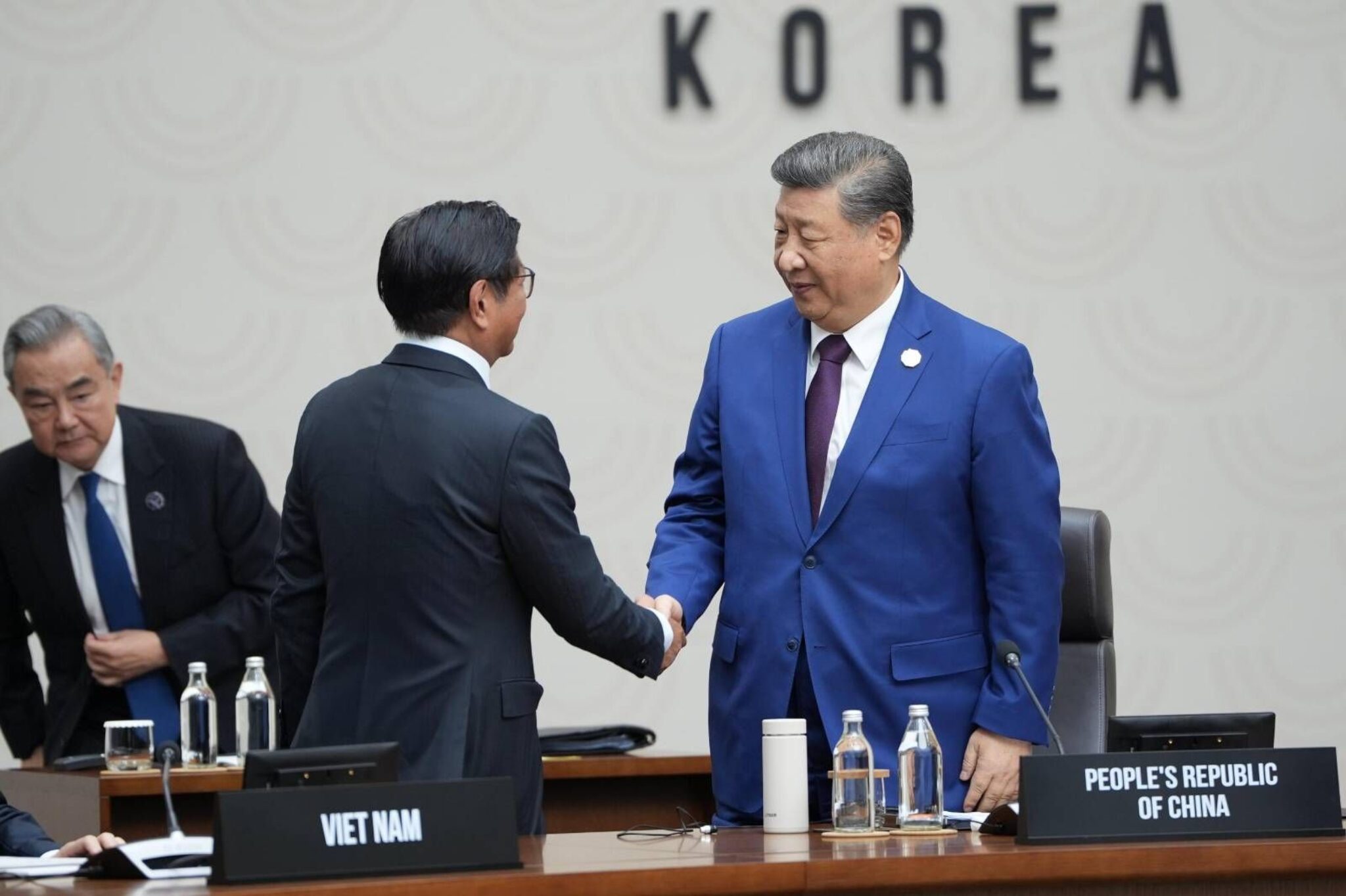
President Ferdinand Marcos Jr. made a striking claim in a television interview: a reset of the Philippines’ ties with China was, in his words, “happening now.”
Speaking to Bloomberg, he also said the ongoing conflict in the Middle East, which prompted him to declare a national energy crisis after Iran blockaded the Strait of Hormuz, might actually help Manila and Beijing finally jumpstart their long-stalled oil and gas cooperation in shared waters.
Following Marcos’ interview, South China Morning Post (SCMP) had reported that senior officials from both countries met in the Chinese city of Quanzhou last Friday and Saturday for two rounds of formal consultations — the first foreign ministry talks of their kind in three years. The agenda covered oil and gas cooperation, renewable energy, and coastguard communication.
But diplomatic activity and diplomatic progress are two different things. The Bilateral Consultation Mechanism on the South China Sea, designed to meet twice a year since its launch in 2017, had only last convened in January 2025. Reopened channels are not the same as resolved problems.
The history of joint energy development between the two countries offers little cause for optimism. A joint exploration agreement signed in 2018 ended with no progress by 2022. A fresh push backed personally by Marcos and Chinese President Xi Jinping in 2023 has since stalled.
The Philippine Supreme Court has voided a 2005 oil exploration deal involving China and Vietnam. And the Philippine Constitution restricts foreign participation in domestic resource exploration, a legal barrier that has complicated every previous attempt at a deal.
The urgency on Manila’s side is real. Production from the critical Malampaya gas field is in decline. China has urged both sides to “set aside differences and pursue joint development”, but repeated past failures stand as a caution against expecting a different outcome this time.
Whether Beijing sees the current moment as an opportunity is another matter. According to the SCMP, Chinese analysts who followed the Quanzhou talks were skeptical.
Ma Bo, deputy director at Nanjing University’s Collaborative Innovation Centre of South China Sea Studies, said the obstacles to any deal remain formidable — among them constitutional restrictions, sovereignty sensitivities, and the constraints of Manila’s alliance with Washington.
Bao Yinan, of the Huayang Centre for Maritime Cooperation and Ocean Governance in Hainan, was more pointed: “We should listen to what Manila says and observe what it does. In the past, the Philippines has repeatedly extended friendly gestures and proposed talks, but backtracked later.”
Both analysts, the SCMP reported, saw little near-term prospect for a joint oil and gas development agreement.
So is the reset happening? Talks are resuming and language is warming, but the legal barriers are unchanged and the record of previous attempts speaks for itself.
Marcos may believe something is shifting — but whether that shift leads somewhere real remains, for now, an open question.