In Manila, where space is scarce and land is expensive, securing a livable home has often meant leaving the city behind.
Under Mayor Francisco “Isko” Moreno Domagoso, that narrative is being challenged by a steady build-up of in-city housing projects that aim to keep families where their lives already are.
His housing program is not anchored on a single development, but on a growing network of communities spread across Sta. Cruz, Tondo, Binondo, San Andres, Quiapo, and Baseco. Each site adds to a citywide effort to provide shelter that is both accessible and rooted in place.
Domagoso’s strategy marks a departure from off-city relocation, which has often displaced families from jobs and access to basic services.
Instead, the city is investing in developments that allow residents to remain near their sources of livelihood while transitioning into safer and more organized communities.
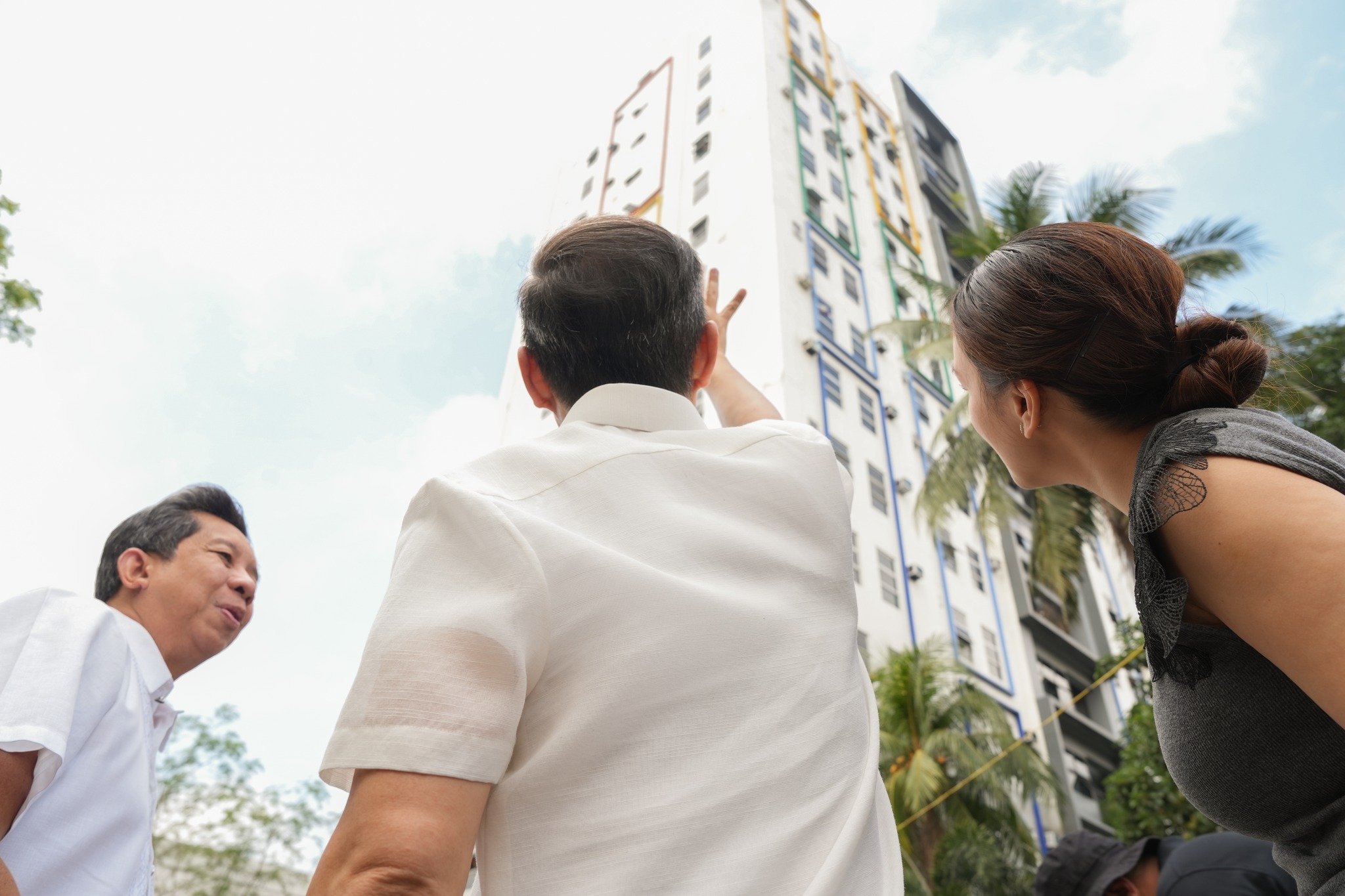
Projects such as San Lazaro Residences, Tondominium 1 and 2, Binondominium 1, Pedro Gil Residences, and San Sebastian Residences follow a consistent model of vertical housing built within dense urban districts.
San Lazaro Residences, for instance, rises 20 storeys in Sta. Cruz and is designed to house 382 families. The lower floors are allocated for public services such as administrative offices, a health center, and a public health laboratory, while residential units occupy the upper levels.
Across these developments, units typically measure between 40 and 42 square meters and include two bedrooms, a living and dining area, a kitchen, and a toilet and bath. The uniform layout reflects an effort to provide adequate space for families while maintaining affordability.
Many of the buildings also integrate amenities such as function rooms, swimming pools, livelihood centers, and open spaces for community activities. In several sites, health facilities are embedded within the complex, bringing essential services closer to residents.
Even in Baseco, where the city adopted a horizontal housing model, the same principles apply. The development features two-storey townhouse units measuring about 42 square meters, designed for 229 families within an organized community setting.
“Isa sa mga ipinagmamalaki kong nagawa ay ang pagtatayo ng mga in-city housing projects tulad ng Tondominium, Binondominium, at iba pang vertical housing developments,” Domagoso said, recalling his younger days growing up in an informal settler family in Manila, when they were uncertain if they would still have a home to return to.
“Ayaw kong tinitipid ang taumbayan, kaya’t tiniyak kong may sapat na espasyo at dignidad ang bawat tirahan. Para sa akin, ito ay seguridad at pag-asa para sa pamilya.”
The city structured the program to remain financially accessible. Monthly contributions are set at ₱2,000 for minimum wage earners and ₱3,000 for those earning more, with payments directed to a trust fund intended for maintenance and future housing developments.
Beneficiaries are selected through a regulated process under the city’s housing ordinance, prioritizing low-income residents without property and qualified government workers. The goal is to ensure that those who need housing the most are given access to these units.
Domagoso said the program is shaped by the people it serves. “Hinding hindi ko malilimutan ang ngiti at luha na aking nasaksihan sa mga naging benepisyaryo ng in-city housing projects tulad ng Tondominium, Binondominium at Basecommunity.”
Alongside the housing rollout, the administration has pursued broader reforms in city governance, including strengthening revenue collection and ensuring funding for social services such as healthcare and education.
“Sa mga ganitong sitwasyon, mas pinipili kong unahin ang basic services at palakasin ang mga sistema ng koleksyon at paggasta upang matiyak ang tuloy-tuloy na paghahatid ng serbisyo publiko sa mga Manileño,” he said.
Taken together, these projects show how the city is approaching housing as part of how Manila works and grows. The goal is to add more homes without breaking up communities, and to give families not just a unit, but a more stable place in the city.
The real test will be keeping these communities in good shape over time, from maintenance to day-to-day management.
For now, the Mayor’s direction is clear. Instead of pushing residents out, the city government is finding ways to keep them where they are, building homes in the same communities they have long called home.