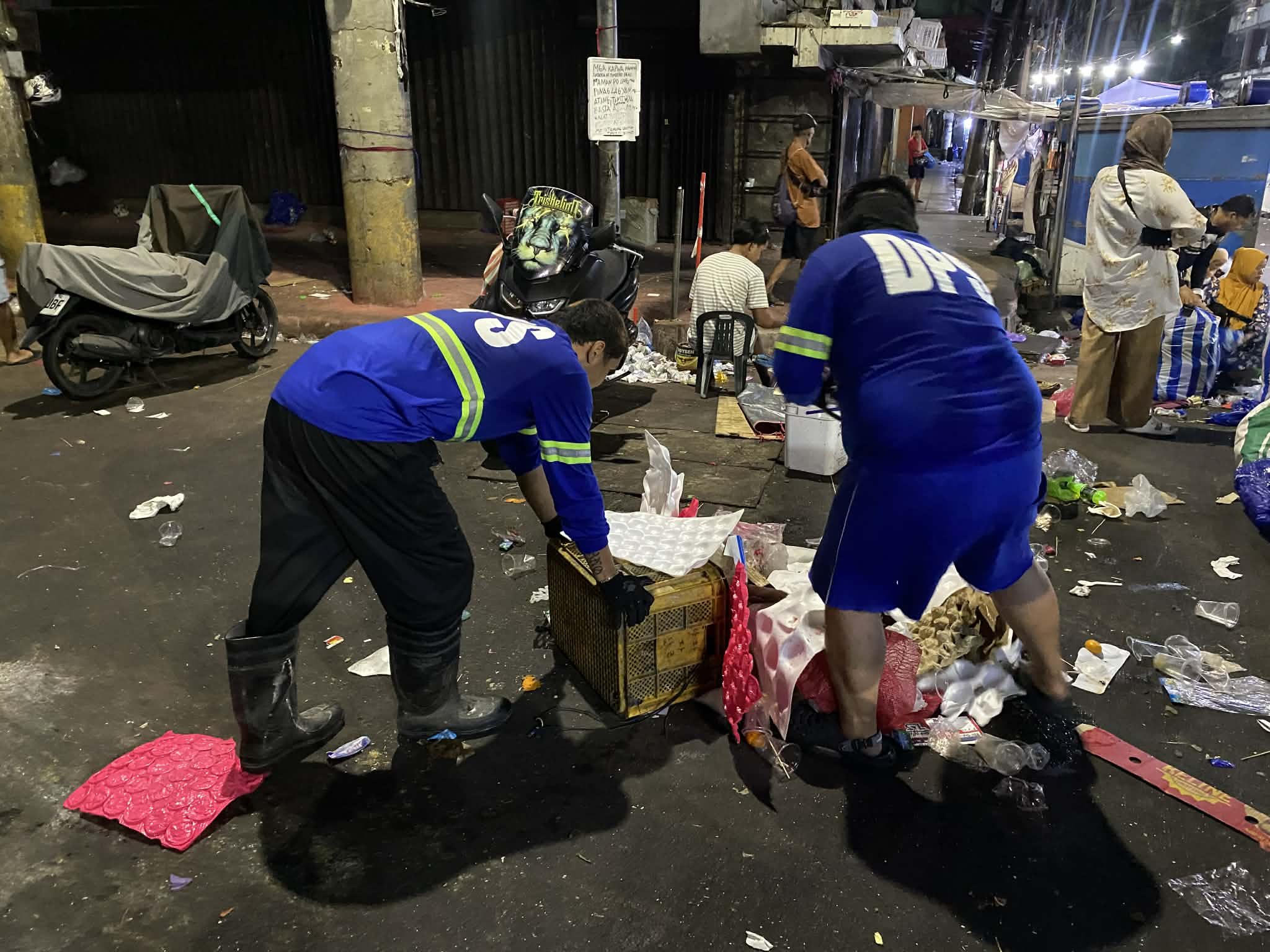
For the first time in more than a decade, the Manila City Government has updated its garbage collection fees, citing rising waste volumes, higher hauling costs, and the need to align city charges with actual service expenses under Ordinance No. 9151.
The ordinance, enacted by the City Council in November 2025 and approved by Mayor Francisco “Isko” Moreno Domagoso on December 1, revises garbage collection fees that had remained unchanged since 2013.
City Treasurer Atty. Paul Vega said the revised garbage fees were developed following a comprehensive study to align charges with current waste generation levels and service costs.
Vega clarified that the revised garbage fees apply only to businesses covered by the ordinance and will not affect residential households.
“The existing garbage fee rates were last updated in 2013, more than a decade ago, and no longer reflect current waste generation levels or service costs,” Vega said.
City Legal Officer Atty. Luch Gempis Jr. said the measure addresses a long-standing gap, noting that garbage collection fees in Manila had not been adjusted since 2013 despite major changes in operating costs.
“Ordinance 9151 was passed to update garbage collection fees, which remained unchanged also since 2013, to address the significant increase in the volume of waste generated from commercial and industrial sectors and increase in garbage hauling fees,” Gempis said.
He added that the city was advised by the Metropolitan Manila Development Authority to redirect its waste to the New San Mateo Sanitary Landfill in Rizal, resulting in higher hauling and transportation expenses.
“The City has been advised by the MMDA to redirect Manila’s waste to the New San Mateo Sanitary Landfill in Rizal, which will entail additional garbage hauling and transportation costs,” Gempis said.
Under the ordinance, garbage fees are based on the type of business and estimated waste output, with higher rates imposed on establishments that generate more garbage.
“The proposed adjustment was based on actual garbage production of each business industry; meaning, the higher the garbage generated for the industry, the higher the garbage collection fee,” Gempis said.
Separately, Gempis also addressed concerns related to real property valuation and assessment schedules, saying updates are required under national law.
“With respect to the increase in real property valuation and increase in assessment schedules, this is in accord with a national law — R.A. 12001 — which mandates LGUs to update their schedule of market values every three years to reflect current market conditions and standardized valuations with national government agencies,” Gempis said.
He noted that Manila had not updated its market values since 2013 and had been repeatedly reminded by the Bureau of Local Government Finance of the Department of Finance to comply, particularly as a requirement for the grant of the Seal of Good Local Governance.
“To mitigate its effect, the Manila LGU will adopt a transitory two-phased increase, aside from the existing amnesty programs and advance and prompt payment incentives,” Gempis said.
Bureau of Permits Director Levi Facundo said businesses seeking clarification on their garbage fee assessments may refer to the schedules provided under Ordinance 9151.
“The assessment stated in their eSOA is generated by the system based on the scheduled fees stated in the ordinance,” Facundo said, adding that further details may be obtained from the Department of Public Services.