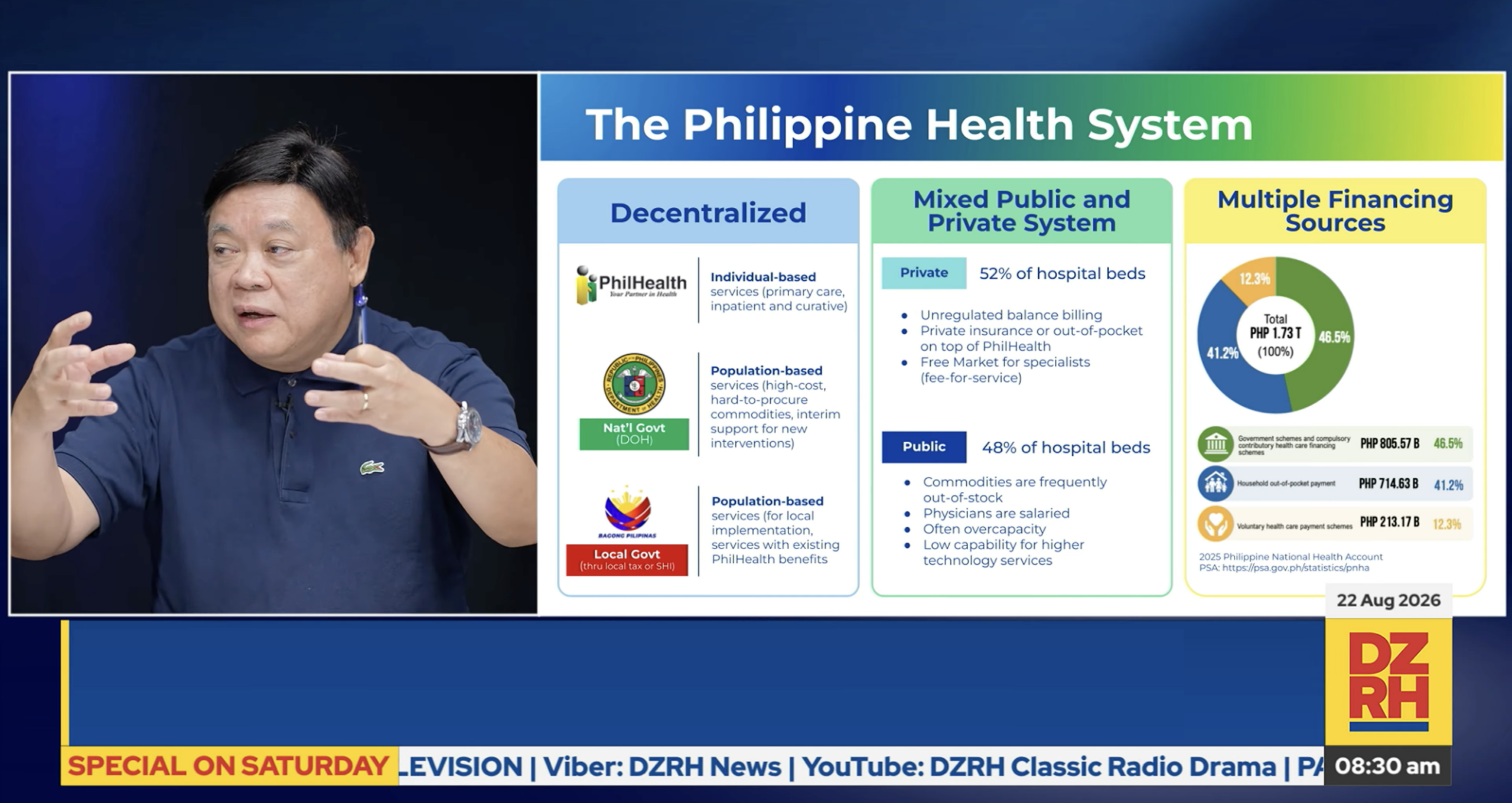
Local government units can now use the Special Health Fund—the pool of PhilHealth payments they receive for health services—to hire doctors, nurses, and other medical workers, a critical new provision that Health Secretary Edwin Mercado said Saturday will help address the country’s chronic shortage of public health workers.
Mercado made the disclosure in an interview on DZRH News program Special on Saturday on August 22, as part of the DZRH SONA 2026 Series featuring the Department of Health and PhilHealth.
He said the previous limitation on the Special Health Fund restricted its use primarily to infrastructure and equipment, leaving LGUs without a flexible funding source for the human resource component of their health systems despite receiving PhilHealth payments for services rendered.
“Meron tinatawag na Special Health Fund. Dun papasok yung payment ng PhilHealth. At ang alam ko, dati kasi may limitation na hindi pwedeng gamitin pang-augment ng manpower. I think meron na ngayong provision na pwede nang gamitin yung kinikita dun sa Special Health Fund to augment the local health system,” Mercado said.
PhilHealth President and CEO Beverly Ho confirmed that using the Special Health Fund for human resource hiring aligns with the vision of the Universal Health Care Act, which envisions LGUs having flexible funding to build complete, functional health systems rather than just facilities and equipment.
“‘Yun naman yung aspiration po under UHC Act na talagang gamitin nang maayos kung ano man yung revenues nila sa PhilHealth. Ito yung parang flexible na pera, ‘di ba? Mas maraming constraints yung actual budget. So ito yung parang flexible amount of money na hopefully ma-set up ng karamihan ng LGU itong Special Health Fund to really allow them more flexibility to spend, and definitely HR is one of that,” Ho said.
She said human resource availability is one of the biggest challenges she identified upon taking over as PhilHealth CEO, noting that even when benefit packages exist, they cannot be used if there are not enough providers to deliver the service.
Mercado said the DOH is also studying task shifting—training community health workers and paramedical graduates in specific functions currently reserved for licensed professionals—as a complementary strategy to stretch the existing health workforce further.