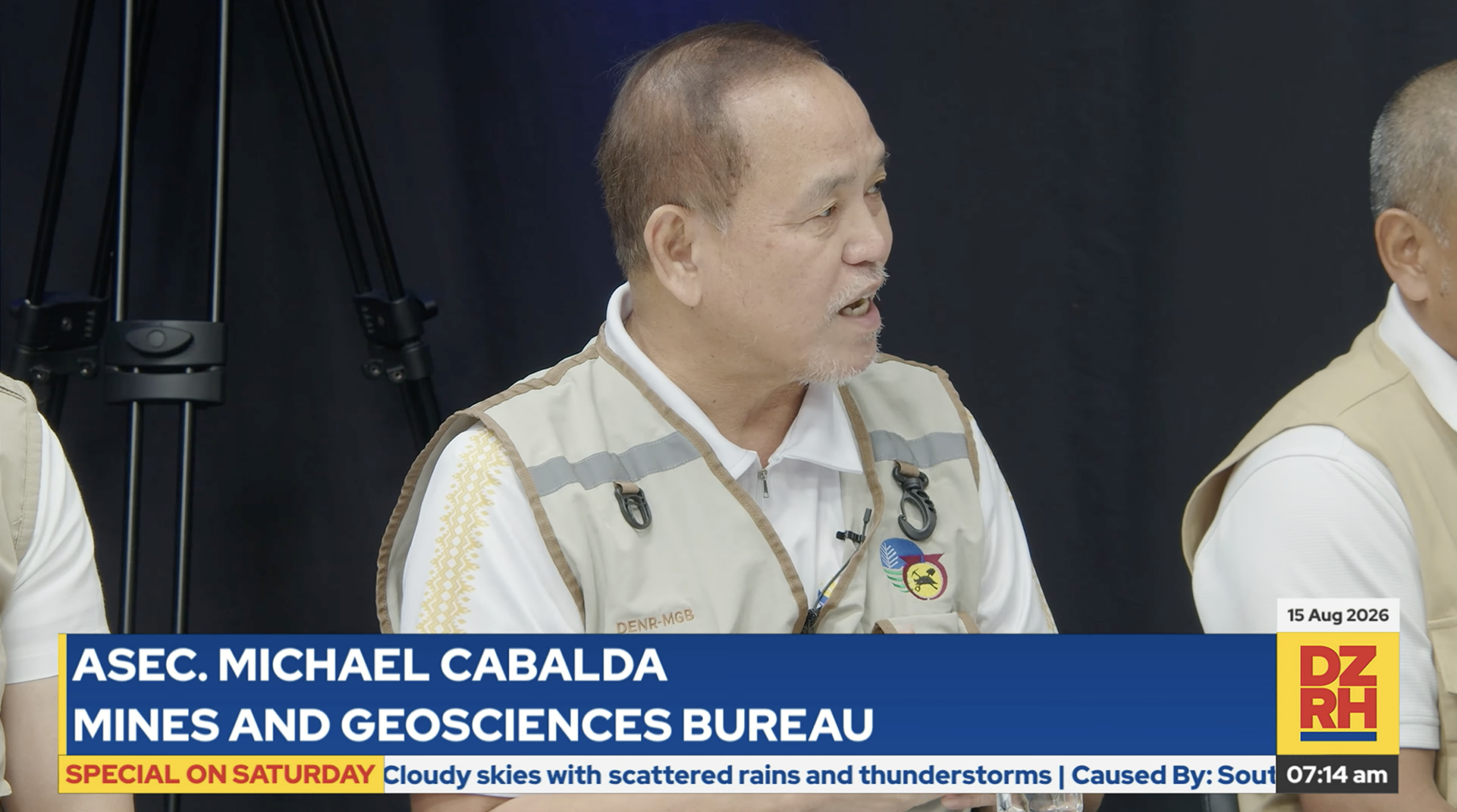
The Department of Environment and Natural Resources (DENR) has launched a mobile one-stop shop that brings permitting and registration services directly to small-scale mining communities, as part of a push to formalize a sector that remains largely outside the regulated economy despite its significant economic potential, DENR Assistant Secretary Michael Cabalda said Saturday.
Cabalda made the statement in an interview on DZRH News program Special on Saturday on August 15, as part of the DZRH SONA 2026 Series featuring the Department of Environment and Natural Resources (DENR).
He said small-scale miners represent what he described as low-hanging fruit for economic development—a large, productive sector that simply needs proper documentation and regulation to contribute meaningfully to the country’s economic output.
“Kailangan po nating i-formalize ‘yung ating mga small-scale at ito’y parang low-hanging fruits na pwede na natin talagang mai-harvest patungo roon sa kanilang pag-contribute sa ating economic development. Sayang eh, napakarami nila, kailangan lang ayusin at maging tama,” Cabalda said.
He said the mobile one-stop shop brings the government to the miners rather than requiring them to travel to regional or national offices, removing a longstanding barrier to formalization for communities in remote or mountainous areas.
Environment Secretary Juan Miguel Cuna said the Marcos administration’s policy direction for the mining sector is to maximize the country’s mineral wealth responsibly, noting that of the estimated 9 million hectares of mineral-bearing land in the Philippines, only about 2.65% is currently being operated—leaving enormous untapped potential.
He said formalizing small-scale miners is part of the same philosophy, ensuring that the sector contributes to government revenues, follows environmental standards, and benefits from legal protections that informal operators currently lack.
Cabalda said the mobile one-stop shop is one of several initiatives under the Marcos administration to make the permitting process more accessible, alongside the progressive rehabilitation requirements and the Final Mine Rehabilitation and Decommissioning Fund that are now mandatory for all mining operations.