The number of accused entering plea bargains with Department of Justice (DOJ) prosecutors is rising, Justice Secretary Fredderick Vida said Saturday, a direct consequence of the DOJ’s tougher evidentiary standard that has made it significantly harder for the defense to fight cases once they reach court.
Secretary Vida made the disclosure in an interview on DZRH News program Special on Saturday on July 11, as part of “The DZRH SONA 2026 Series,” saying the surge in plea bargaining is one of the clearest signs that the new standard is working.
“Pag nasampa na ng taga-usig, nagpi-plea bargaining na sila kasi tagilid na ‘yung laban nila. Napapansin namin sa datos din ngayon, dumarami ngayon ang nagpi-plea bargain sa ating mga taga-usig,” Secretary Vida said.
He said plea bargaining, long associated in the Philippines primarily with drug cases, is now being applied more broadly across the criminal justice system as accused individuals and their lawyers recognize that the evidence against them is strong enough to survive trial.
Secretary Vida said the DOJ counts plea bargains, settlements, and compromises as part of its prosecution success rate, not just outright convictions, because the goal is not simply to win in court but to ensure that the person who sought justice actually receives it.
“Ang sa dulo nito, nakamit ba ng litigant, nakamit ba ng Pilipino ‘yung katarungan na inaasam? Narinig ba namin ‘yung husgado na nagsabi o sa pag-uusap na, ‘Oo nga, parang napasobra ako, pero tanggap ko ito,'” Secretary Vida said.
He said the old measure of prosecutorial success, the sheer number of cases filed, has been replaced by a more meaningful metric: how many cases were resolved in a way that delivered actual justice to the Filipino who sought it.
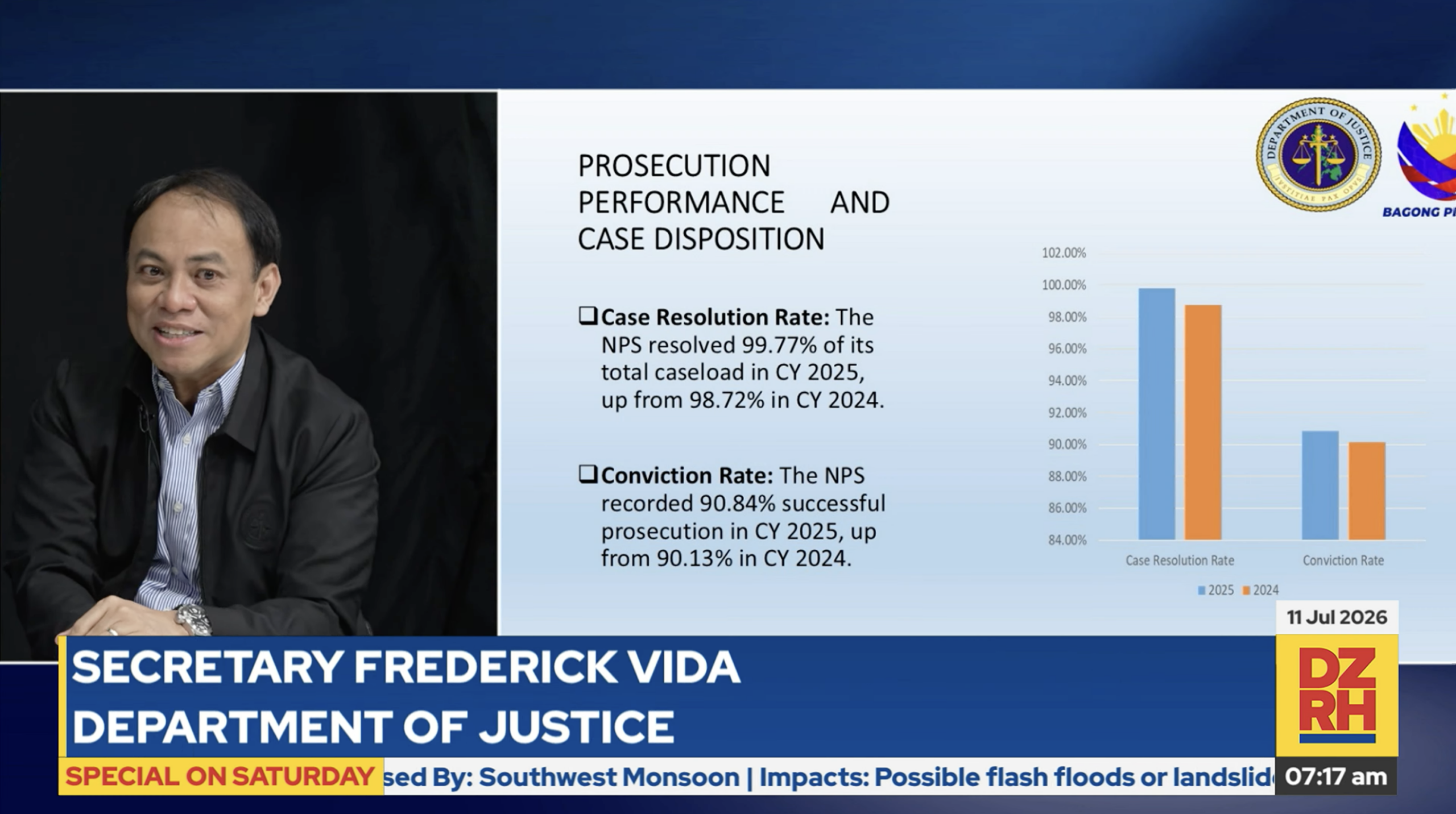
The National Prosecution Service (NPS) recorded a conviction rate of 90.84% in 2025, up from 90.13% the previous year, while resolving 99.77% of its total caseload, figures that Secretary Vida said reflect not just the quantity of cases handled but the quality of prosecution behind each one.