PhilHealth benefit payments are projected to reach ₱378 billion in 2026, nearly tripling the ₱119 billion recorded in 2023, as the state health insurer accelerates coverage expansion under the Universal Health Care law, its president and chief executive officer said Saturday.
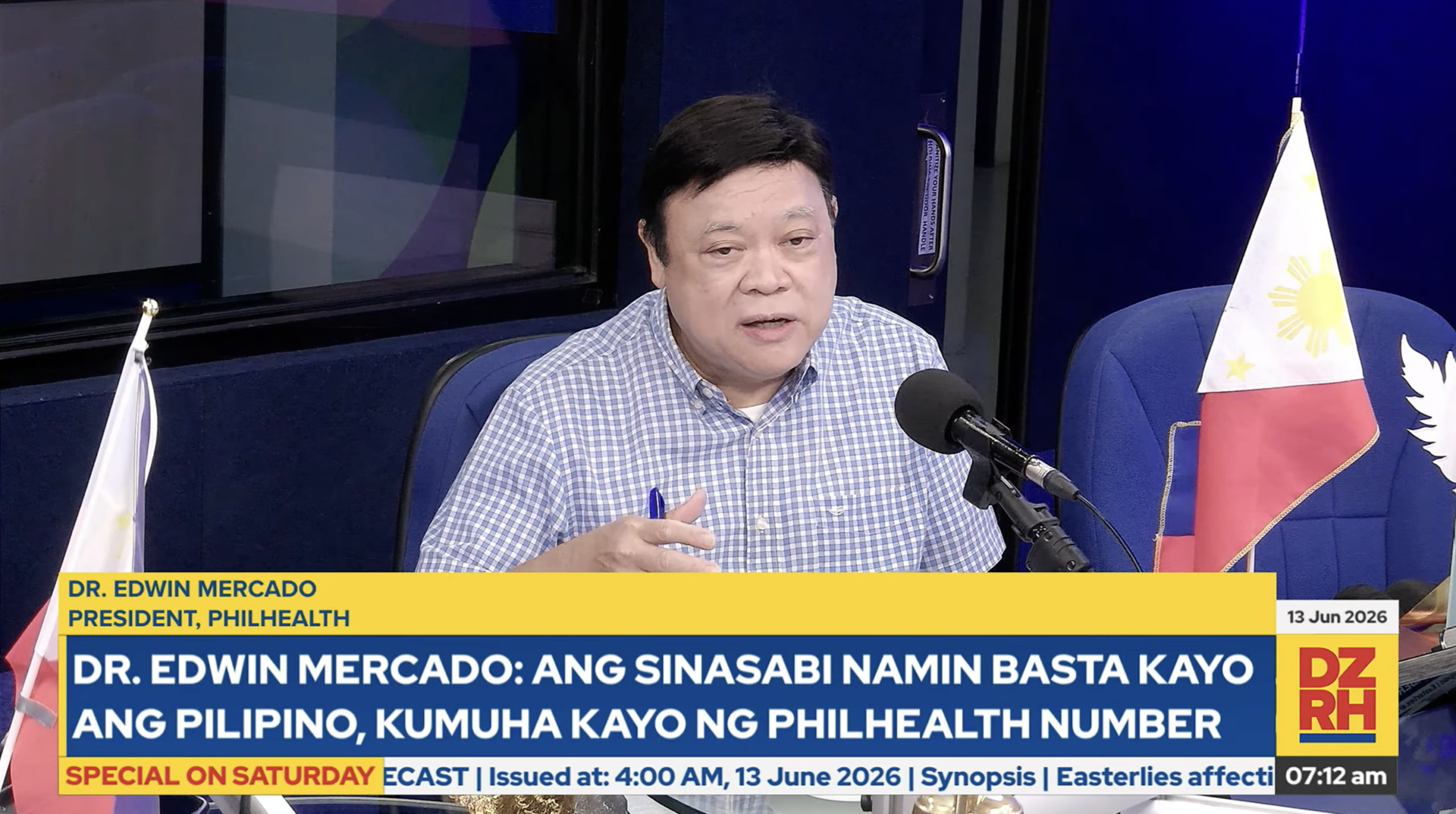
PhilHealth President and CEO Dr. Edwin Mercado made the disclosure in an interview on DZRH News program Special on Saturday on June 13, saying the surge was driven by across-the-board benefit increases of 30% in 2024 and 50% in 2025, compounding to a 95% increase across all coverage categories.
“Ang laki ng ating binabayarang benefit noong 2023 ay nasa 119 billion. Ngayong taong ito, ang projected namin ay 378 billion, so umaabot ng almost 250% more noong 2023,” Mercado said.
Alongside the benefit surge, projected claims are expected to nearly double from 13 million in 2023 to 22 million in 2026, which Mercado attributed primarily to expanded access points and increased awareness of coverage among Filipinos — particularly those in the informal sector who previously believed they had no benefits.
“Tingin namin iyon ay tip of the iceberg phenomenon na nakita lang natin noong una na itong nakalutang; ang dami pa palang nandito sa baba. Nang binigyan namin ng access at nai-communicate natin na covered lahat, tumaas ang utilization at maraming nag-avail,” Mercado said.
He said the expansion of accredited hospitals and clinics also played a key role, with providers now more willing to offer services—including for serious conditions like angiograms, open-heart surgeries, and kidney transplants—because PhilHealth’s faster payment cycle has given them confidence they will be reimbursed.
Mercado reminded all Filipinos that they are covered under the Universal Health Care (UHC) Law regardless of whether they have made premium contributions, saying obtaining a PhilHealth ID number is sufficient to access benefits under Republic Act 11223.
“Kahit wala kayong ambag, basta kayo ay Pilipino, kumuha kayo ng PhilHealth ID number at kayo ay mako-cover,” Mercado said.
He said informal sector workers—previously classified as indirect contributors who did not pay premiums—have been enrolled by the government under UHC, which he described as the correct approach to ensuring national productivity.