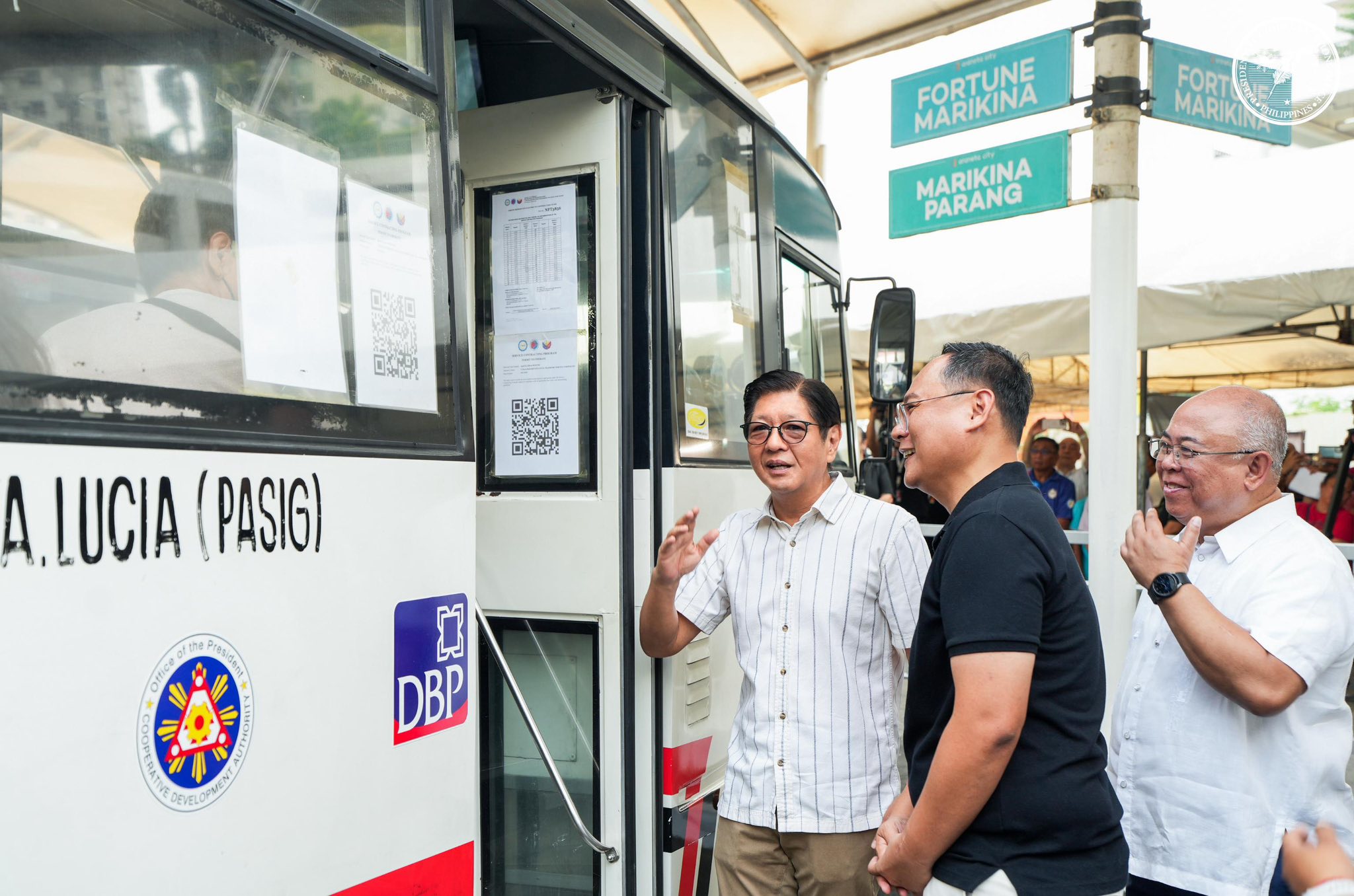
The Marcos administration will continue its fuel subsidy program for public utility vehicle operators for as long as oil prices remain elevated, with no fixed end date but projections running through the end of 2026, Malacañang said.
The Office of the Executive Secretary (OES) said the Department of Finance (DOF) and the Department of Budget and Management (DBM) are regularly monitoring available funds to sustain the program.
“Nakahanda po ‘yung ating pamahalaan na tuloy-tuloy ‘yung tulong na ibigay hanggang ang oil prices ay mag-stabilize,” Executive Undersecretary Georgina Hernandez-Yang told DZRH News program Special on Saturday on May 16.
The undersecretary said the government is projecting the fuel subsidy program to last through the end of the year, but stressed that the administration will continue assessing whether the current form of assistance remains the most effective response for the public transportation sector.
“Ang pino-project natin hanggang matapos ‘yung taon, handa pong tumulong ang pamahalaan pagdating po dito sa fuel subsidy program,” Yang said. “Pero ganunpaman, regular nating tinitingnan kung ito pa rin ba ‘yung kailangan at ano pa ‘yung ibang mga maitutulong natin sa public transportation sector beyond ayuda.”
The fuel subsidy program gives registered jeepneys and UV Express units a ₱10-per-liter discount, with a maximum benefit of 150 liters or ₱1,500 per week per vehicle.
Yang said the program, which was initially rolled out in select areas of Metro Manila in April, is now ready for nationwide implementation with over 400 participating gas stations set to expand to 2,000.
Drivers need only present or state their plate number at participating gas stations, where the system will show how much of their weekly discount allocation remains.
Yang noted that the ₱10-per-liter discount already exceeds the existing excise tax on diesel, which stands at ₱6 per liter, making it a more substantial form of targeted relief for the transport sector.
Executive Secretary Ralph Recto convened officials from the Department of Energy (DOE) and the Department of Transportation (DOTr) earlier this week to accelerate the program’s expansion and explore additional support measures for PUV operators beyond direct subsidies.