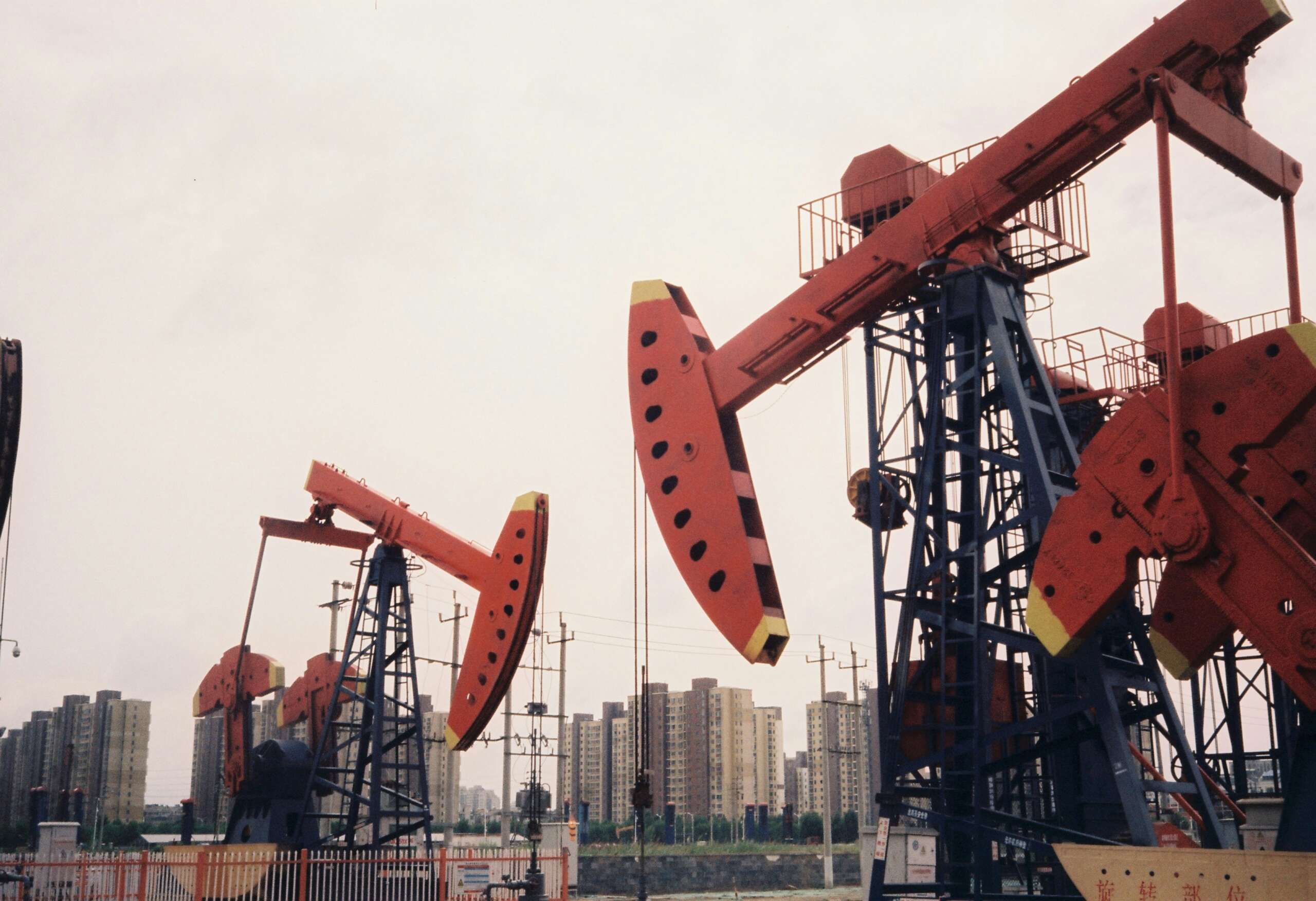
Before the first US-Israeli strikes on Iran in March, the world was not bracing for an oil crisis—it was sitting on too much oil. That is the argument an economist is making as he pushes back against the prevailing assumption that high fuel prices are a permanent new reality.
University of Asia and the Pacific (UA&P) economist and DTI Supply Chain and Logistics consultant Ronilo Balbieran told a forum on critical sectors Wednesday, April 29, that the global oil market was already deep in oversupply territory in the weeks before the Middle East conflict broke out—and that this context is being almost entirely ignored in the current discussion about prices.
“You will be surprised to know what the problem of the world was days before the attack,” he said. “It was actually a problem for six months by producers around the world: global oversupply. They were shouting at one another to cooperate and bring down production.”
The situation was bad enough, he said, that oil prices were on track to fall below $60 per barrel before the conflict began.
Saudi Arabia and the UAE had been refusing to coordinate production cuts with other OPEC members, he noted, partly because both countries had diversified their economies enough—particularly into tourism—that they were less dependent on keeping oil prices high.
The result was a market that was already heading downward when the attack flipped the narrative overnight.
Balbieran argued that this context raises a question nobody seems to be asking. “Nobody is answering the question: which one is larger—the global oversupply, or the portion of the production facilities that were destroyed?” he said. “Until we answer that, we won’t know if the high price is here to stay, or if people somewhere above are rejoicing because oil was actually about to slide to less than $60 per barrel before the attack.”
The destruction of some production infrastructure has dominated the headlines, but the pre-existing glut has largely disappeared from the conversation.
He also pointed to the UAE’s decision to pull out of OPEC as a signal that the unified production discipline needed to sustain high prices may already be fracturing.
Once one major producer breaks ranks, he suggested, the incentive for others to maximize volume at the expense of price coordination tends to follow.
“Everybody will say the high price of oil is here to stay because production facilities have been destroyed,” he said. “But nobody is answering the question.”
Balbieran drew a further comparison that he said should temper the current alarm. He noted that if you average oil prices over the full arc of the Ukraine-Russia war in 2022, the price level was actually higher than what the Philippines experienced in March and April of this year.
“How come we did not remember diesel prices tripling in 2022?” he asked. His point was not that the current crisis is trivial, but that fear—amplified by social media — has been doing as much work as the fundamentals in driving the public’s perception of the situation.
He was particularly pointed about the role of panic in making the crisis worse than it needed to be. The Philippines, he noted, has no government-held strategic oil reserve—no physical buffer that authorities could release to stabilize supply and calm markets during a shock.
In the absence of that buffer, panic-buying and hoarding filled the vacuum. “The self-fulfilling prophecy of higher oil prices was brought upon ourselves by mass-forwarding panic infographics on social media,” he said. Some Filipinos, he added with characteristic dryness, responded to the crisis not with alarm but with opportunity—hoarding diesel and gasoline in their backyards.
Balbieran was careful not to dismiss the oil shock entirely. He acknowledged that damaged infrastructure takes time to repair and that volatility will persist.
But his reading of the market—oversupplied before the conflict, fractured in its production discipline, and already seeing defections from OPEC—points toward prices that are more likely to ease than to entrench. The crisis, in his view, is real but temporary. The panic, he suggested, has been running well ahead of the facts.