Fifty years ago, two guys named Steve changed everything from a garage in California. Not in the way that phrase usually gets thrown around. Actually changed it.
On April 1, 1976, Steve Wozniak and Steve Jobs started a company with a fruit for a logo and an idea that, at the time, sounded almost naive: that computers could be personal. Not institutional. Not corporate. Yours.
Half a century later, Apple doesn’t just sit on your desk or in your pocket. It lives somewhere deeper than that — in how you move through the world, how you listen to music, how you find your way home, how you remember people you’ve lost.
That’s not really a tech story. It never was.
A machine that belonged to you
For most of computing’s early history, computers belonged to institutions — universities, corporations, government agencies. Big, cold, humming things behind locked doors that you visited, not owned. The Apple II changed that. For the first time, here was a computer a family could buy, bring home, and call theirs.
The Macintosh pushed it further. Its 1984 Super Bowl ad — the one with the lone woman hurling a hammer at a giant screen — made an argument that the tools you chose reflected the kind of person you were. Rebel or conformist. Creative or corporate.
Plenty of people bought into that argument. Many still do.
Apple formalized that idea in 1997 with its “Think Different” campaign — a series of ads that featured Albert Einstein, Muhammad Ali, and Martin Luther King Jr., among others, with no product in sight. Just the Apple logo and a quiet suggestion that the company and its customers belonged in that company. It was audacious. It also worked.
How Apple rebuild the music business
By 2001, the music business was in freefall. Napster had shown that people would take music for free if you gave them the chance, and nobody had figured out what to do about it.
Apple’s answer was the iPod and iTunes — elegant, simple, and shrewd. A dollar a song. Your whole library in your pocket.
It sounds ordinary now. At the time it was a lifeline for an industry that was drowning, and a revelation for everyone else.
The album started to fall apart as a format. The playlist took over. People became curators of their own soundtracks in a way they never quite had been before.
That shift — quiet, commercial, almost accidental — changed how a generation related to music entirely.
iPhone: The device that changed everything
Nothing else Apple has done comes close to the iPhone.
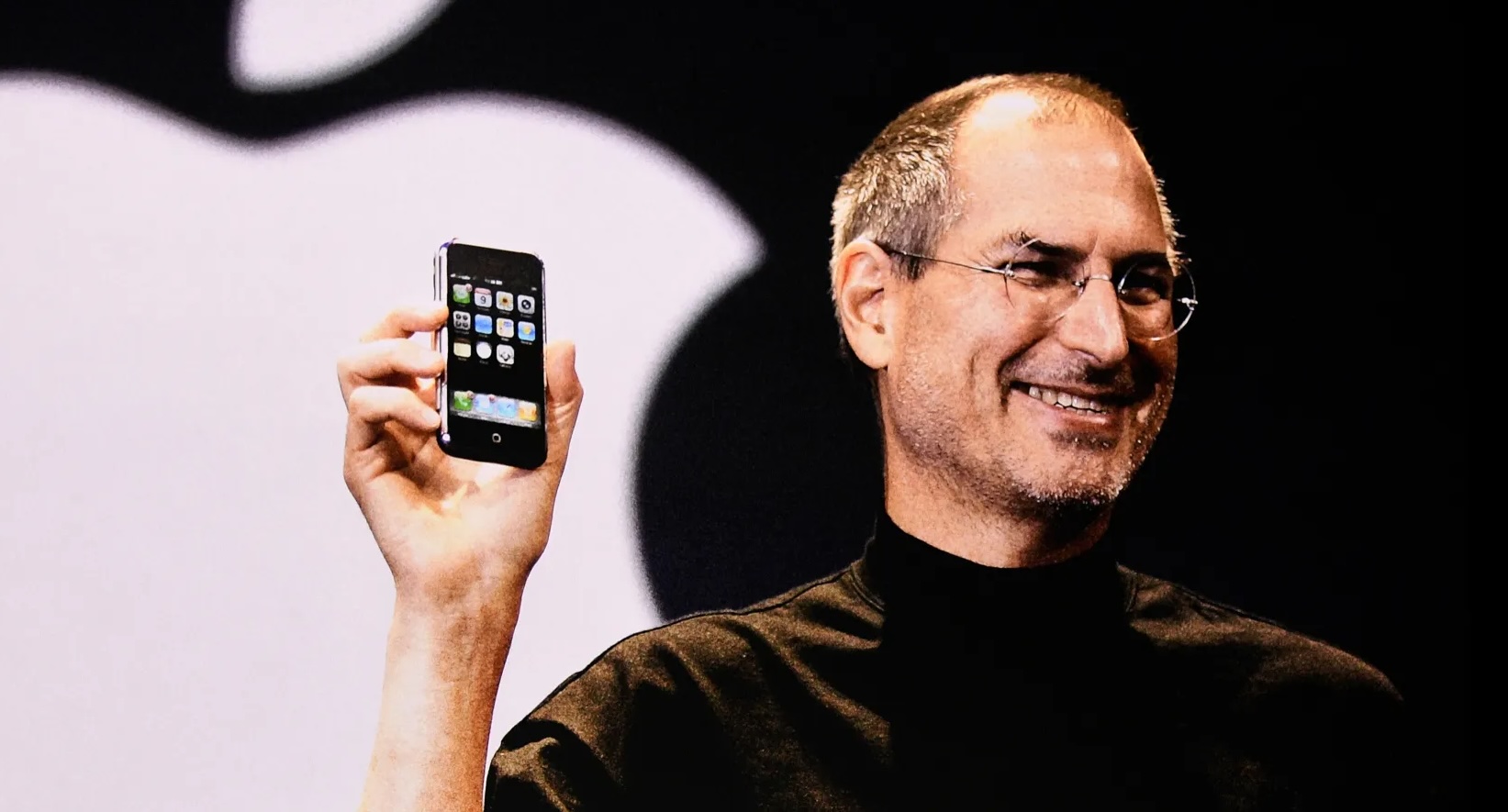
When Jobs announced it in January 2007, he called it an iPod, a phone, and an internet communicator rolled into one. The crowd laughed, a little giddily, like they weren’t sure if they were allowed to believe it yet.
They were. Within a few years, the smartphone had quietly dismantled dozens of industries and habits at once.
Maps you unfolded in the car. Classified ads in the back of newspapers. Browsing in an internet café. The compact camera on the shelf at the chemist. Gone, or nearly.
In their place: a single glass rectangle that knew where you were, remembered your face, and held more of your inner life than most people’s homes did.
The iPhone reset what people thought technology should feel like. Fast, smooth, beautiful — and if it wasn’t all three, something had gone wrong. That expectation spread far beyond Apple. Every app, every website, every competing phone eventually got measured against it.
Good enough was never good enough
Steve Jobs cared about the back of things. Circuit boards that nobody would ever see. The interior of a Mac tower. He reportedly made his engineers beautify parts of computers that would be hidden behind panels, in the dark, forever.
It sounds eccentric, but that obsession filtered into everything Apple made, and eventually into everything everyone else made too.
We now live in a world where the weight of a laptop lid, the click of a trackpad, the animation when you close an app — these things are taken seriously. Apple industrialized that expectation. Good design stopped being a bonus and became the price of entry.
The road ahead
Apple is not having an easy moment.
Artificial intelligence has reshuffled the technology industry faster than anything since the iPhone itself, and Apple has been slower to respond than most expected. A revamped Siri has been promised and delayed. Rivals are spending fortunes. Its stock has lagged behind much of the rest of big tech since ChatGPT arrived and changed the conversation in late 2022.
The question hanging over the company’s fiftieth birthday isn’t whether it remains popular — it clearly does.
The iPhone 17 is selling well. A $599 MacBook just launched to strong demand. But popularity and cultural relevance aren’t the same thing, and for most of its life Apple has had both.
Whether it can lead the AI era the way it led the smartphone era is something nobody, including Apple, seems entirely sure about yet.
One analyst put it plainly this week: the company made it fifty years without anyone truly copying what it had built. The next fifty years might depend on whether artificial intelligence turns out to matter as much as the smartphone did — and if so, whether Apple shapes that moment or arrives late to it.
The company that once told us to think different now has to show it still can.
Apple was founded on April 1, 1976. It turns 50 today.